

Soap dispensers, although seldom discussed, are privy to a whole host of scientific fundamentals, all of which exercise control over how they function, or in other words, their fluid dynamics.
Few will consider the efficiency and precision behind how these devices operate when you use soap dispensers. Yet, when we delve deeper into this, you’ll discover a complicated interplay of engineering and physics.
In this article, we look further into the science behind the technology, unveiling more on the fluid dynamics that contribute to a seamless soap delivery.
Embracing Fluid Dynamics
What are fluid dynamics? In a nutshell, it surrounds fluid behaviors, including gasses and liquids, when they are in motion. In terms of the humble Soap Dispenser this plays a crucial part in ensuring soap is dispensed consistently, accurately, and without causing wastage.
Soap Consistency and Cohesiveness
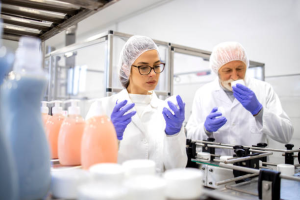
The consistency of soap, or its reluctance to flow in its original state, is one of the reasons soap dispensers exist. There are numerous soaps on the market, all of which have different textures and densities.
When considering the inner mechanisms of soap dispensers, grasping the fundamentals of these properties and fluid dynamics is key. This is how designers create fully functional dispensers that work harmoniously with various soap formulations.
Engineers and designers of this device must be fully aware of the many different soap thicknesses available if they want their dispenser to operate in a controlled and smooth manner.
Non-Newtonian and Newtonian Behaviors
Soaps can display both non-Newtonian and Newtonian behavior. To simplify this, a non-Newtonian fluid is a fluid that doesn’t obey Newton’s law of viscosity. In terms of soap, this means it can vary in consistency and will often become thicker when exposed to cooler temperatures or pressure changes. Similarly, the soap will become more liquid-like when exposed to higher temperatures or other stresses.
To craft a mechanism and a device that can deal with the ranging behaviors of soap, dispenser engineers must consider its unique properties in great detail.
The Components Behind Soap Dispensers
Despite appearing as simple devices, several components make up a dispenser. We’ve listed two of the most important below:
- Nozzle: This part of the dispenser controls the soap’s flow. The size, shape, and internal structure must be carefully engineered to ensure the soap is dispensed in the correct quantity and style. To improve nozzle design, the principles of fluid dynamics must be grasped. Factors including velocity, pressure, and fluid interaction must all be considered.
- Pump Mechanisms: Modern-day dispensers use pump mechanisms to eject the soap from the dispenser into the user’s hands. To ensure a consistent, smooth flow, this design feature is imperative and is not to be overlooked. If it is overlooked, soap can clog and block the mechanism.
Factors that have an Influence on the Precision of this Device
There are many factors that can affect the precision of this device. Two of the most imperative are listed below:
- User Interaction: This dramatically influences how precise the device is. Factors include how quickly the user presses the pump, how much force they apply, and the angle they press on the device. These all contribute to the dynamics of soap flow.
- Environmental Conditions: Where a dispenser is situated can affect its smooth operation. How? Humidity and temperature changes affect the soap’s consistency. To ensure the dispenser releases the soap efficiently and doesn’t become blocked, its mechanism should match its environment.
Technology and Dispenser Design
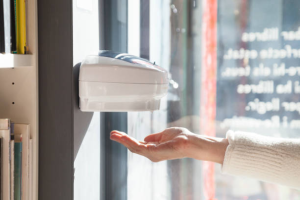
Fluid dynamic technology improvements have allowed engineers to create tech-savvy soap dispensers with heightened soap delivery methods.
We touch on some of these innovative technologies below:
Dispensing Settings that can be Adjusted
Contemporary soap dispensers now come with numerous savvy settings. These can be adjusted to the user’s preference and have been designed to accommodate a variety of soap formulations. This allows users to customize the released soap’s consistency and volume, resulting in a bespoke product and a tailor-made experience.
Dispensers With Sensors
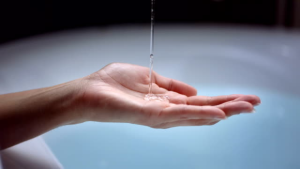
Dispensers that feature sensors embrace infrared technology, which can detect your hands when placed under the dispenser and release the soap automatically. Fluid dynamics principles play a big part in response optimization, ensuring the correct amount of soap is delivered.
Automatic soap dispensers are touchless. The result? A hygienic solution that reduces the likelihood of germs. These dispensers are popular in public places, such as hotels, airports, restaurants, and shared bathrooms and kitchens in companies.
Future Prospects
As technologies continue to advance, the future of soap dispensers holds varying exciting possibilities. These include:
- Sustainable Solutions: Research into fluid dynamics may contribute to the invention of soap dispensers that distribute soap precisely and minimize waste. How? Measured Dispensing techniques preset the amounts the dispenser will distribute. This ensures enough soap to kill germs but not so much that it results in waste. In addition, these dispensers are engineered from recycled materials and designed with sustainability in mind.
- Smart Dispensers: Marrying soap dispensers with technologies, such as IoT (Internet of Things), could lead to the introduction of intelligent soap dispensers. In a nutshell, everyday items with internet connectivity. These devices will be able to monitor usage patterns, soap levels, and the environment, thus adjusting their dispensing mechanisms in real time to suit these conditions.
The Bottom Line
Fluid dynamics are pivotal in soap dispensers, especially when achieving precision and avoiding waste. This science also affects overall user satisfaction. Each element must be carefully considered, from the soap consistency to the nozzle design and pump mechanisms.
As technology advances, the precision of soap dispensers is expected to evolve. The result? It is an everyday yet vital tool that continues to deliver hygiene with the utmost accuracy.
