

In today’s fast-paced digital landscape, the mantra for business success has evolved from “adapt or perish” to “connect or get left behind“.
As technology keeps evolving, reshaping industries and user expectations, along with effortlessly connecting and communicating across diverse systems and platforms, is super important.
It’s not just something nice to have—it’s crucial for staying ahead and surviving.
This is where Application Programming Interfaces (APIs) come in. They’re like digital connectors that let different software apps and systems talk to each other, share information, and work together well.
APIs make online shopping smooth, mobile apps useful, and business tools work together seamlessly. They’re the secret that keeps the digital world running smoothly.
This blog post will be your guide to API development and discuss the benefits of API strategy for businesses today.
No matter how big or small your company is or what industry you’re in, having a good plan for using APIs is crucial.
We’ll discuss why being connected is so beneficial, how you can make money from APIs, and what steps you need to take to make sure your API plan works well with your business goals.
Get ready to explore the power of being connected and the benefits of API strategy for the future of business.
Understanding APIs

In technology, APIs are like bridges that let different software pieces chat with each other. API stands for Application Programming Interface. It’s like a language that software uses to talk and share stuff with each other.
Here’s how it goes: Imagine you have a weather app on your phone. Well, that app has to get its weather info from somewhere, doesn’t it? It does this by connecting to a weather service’s API. The weather service API provides a way for the weather app to demand and receive the latest weather information.
Now, APIs aren’t just for weather apps. You can find APIs all over the place! From social media like Instagram, Facebook, and Twitter to online stores like Amazon, APIs are the reason why different types of web APIs for enterprises and websites can collaborate well.
So, why do we need APIs? Well, think about it this way: What if every software had to be made from scratch without using existing tools or services? It would be like starting from zero every single time! APIs save developers a ton of time and effort because they offer ready-to-use functions that they can just plug into their own apps.
In simple terms, API development and integration services are like the glue for the digital world. They help software talk to each other, share information, and work together. This makes our digital experiences smoother and more efficient.
The Benefits of an API Strategy
Having a plan for using APIs comes with many benefits for businesses. It helps them stay in the game and adjust to the always-changing digital world. Here are some of the main benefits of API strategy:
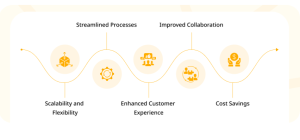
- Scalability and Flexibility: With APIs, your business can easily grow or shrink as needed without starting over from the beginning. If you need to add new stuff or handle more users, having the right APIs makes it much simpler to adjust without causing big problems.
- Streamlined Processes: When you connect different systems and apps using APIs, you can utilize the benefits of API strategy by automating tasks and organizing workflows better. This means less work for your team to do by hand, fewer mistakes, and things getting done more quickly.
- Enhanced Customer Experience: Develop an API strategy that helps you create specialized experiences for your customers. By linking different systems and data together, you can leverage NPS measurement tools to understand individual preferences. This allows you to deliver personalized content, suggestions, and services that perfectly fit their needs.
- Improved Collaboration: With API modernization services, working with partners, vendors, and developers outside your company becomes simpler. By sharing specific functions through APIs, you give others the power to create new apps and services that work well with yours, adding value to what you offer. This can help with app retention as customers have a more seamless and integrated experience.
- Cost Savings: Having a plan for using APIs can save you money in the long term. Instead of building everything from scratch, you can use existing APIs and services, which are usually cheaper. Also, the benefits of API strategy help you try out new technologies and adjust to changes in the market without spending too much money.
To sum up, having a plan for using APIs can make your business more flexible, organized, and focused on customers.
By connecting things and using the benefits of API strategy smartly, you can stay ahead of other businesses and grow in today’s digital world.
API Monetization Opportunities
APIs not only offer connectivity and efficiency benefits of API strategy but also present lucrative monetization opportunities for businesses.
Here are some ways in which you can generate revenue through your APIs:
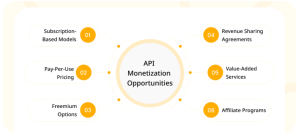
- Subscription-Based Models: Offer access to your APIs through subscription plans. This could involve tiered pricing based on usage levels or the features and functionalities provided. Subscriptions provide a predictable revenue stream and incentivize customers to commit to your API over the long term.
- Pay-Per-Use Pricing: You can set up a pay-as-you-go system for API integration and development where customers pay based on how much they use your APIs. This way, they only pay for what they use, making it a straightforward way to make money from your APIs.
- Freemium Options: You can offer a basic version of your API management services for free but with some limits on what it can do or how much people can use it. Then, for those who want more, you can have paid plans with extra features or higher usage limits. This way, you get more people using your API for free, but some might upgrade to paid plans for extra benefits of API strategy.
- Revenue Sharing Agreements: You can team up with other developers or partners and split the money made from using your APIs. This might mean putting your APIs into their products or services and then sharing some of the money earned from those products or services.
- Value-Added Services: You can provide extra services along with your main APIs, like analytics, support, or consulting. These extra services give customers more value and make your API stand out in the market, so you can charge higher prices for it.
- Affiliate Programs: You can create affiliate programs where partners get paid to bring new customers to your API platform. This can help you get more customers and encourage partners to tell others about your APIs.
By using these benefits of API strategy to make money, you can turn them into assets that bring in revenue and help your business grow.
But it’s important to find the right balance between making money and giving your users value so that your business can keep succeeding in the long run.
Building an Effective API Strategy
Making a good plan for using the benefits of API strategy is really important for getting the most out of them and making sure they fit with what your business wants to achieve. Here are the main things to think about when you’re making your API strategy:
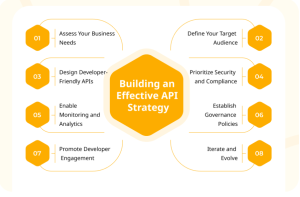
- Assess Your Business Needs
Begin by knowing what your business goals are and figuring out how APIs can help reach them. Decide on the particular ways and features your APIs should have to meet these goals well.
- Define Your Target Audience
Figure out who will be using your APIs—like developers, partners, and other people involved in your business. Learn what they need, what they like, and what problems they have. Then, make sure your APIs are designed to help them and give them what they need.
- Design Developer-Friendly APIs
Make sure your APIs are easy to use by designing them by a reputed custom API development company, writing clear instructions, and giving examples of how to use them. Provide helpful documents, code examples, and tools for developers to use so they can easily add your APIs to their projects. This way, they’ll be more likely to use the benefits of API strategy.
- Prioritize Security and Compliance
Make sure your API development & integration are safe by putting strong security measures in place. This means protecting important data and following rules and standards. Think about things like making sure only the right people can access your APIs, encrypting data so it’s secure, and keeping a record of who does what with your APIs. This way, you can keep your APIs and the data they use safe.
- Enable Monitoring and Analytics
Set up ways to keep an eye on how the benefits of API strategy are utilized and how well they work. This includes tracking things like how many times your APIs are used, how fast they are, and other important details. This information can help you see what’s working well and what could be better so you can make your APIs even better over time.
- Establish Governance Policies
Create rules and ways of doing things to manage how your APIs are used and looked after. This includes deciding how different versions of your APIs will work, how they’ll be stopped if needed, and how they’ll be updated over time. Making sure these changes don’t mess up what people are already using is important so your customers can keep using your APIs smoothly.
- Promote Developer Engagement
Encourage developers to get involved with your APIs by giving them places to talk, ask questions, and find help. Provide forums, support, and useful information to help them work with your APIs. By collaborating together, sharing ideas, and listening to feedback, we can make our APIs even better and get more people to use them.
- Iterate and Evolve
Keep making your API plan better by listening to what users say, watching what’s happening in the market, and keeping up with new technology. Stay flexible and ready to change as things around us change so your API plan stays useful and works well over time.
By following the steps above, you can create an effective plan for utilizing the benefits of API strategy that fits with what your business wants to achieve, helps the people you’re aiming for, and adds value to your company and the people involved.
The Future of Connectivity
The future of staying connected is really interesting and changing fast because of new technology and how people act. Here are some big trends that are shaping how we stay connected:

- Internet of Things (IoT)
More and more gadgets and devices that can talk to each other are changing how we do things in our daily lives. Things like smart homes, wearable devices, and even machines in factories and cities are all part of this.
This technology, called IoT, makes it easier for devices to share information and work together, which helps things run smoother, faster, and smarter.
- 5G Technology
The introduction of 5G networks will change how we connect, offering quicker speeds, less delay, and more space for data.
This technology will open up new opportunities for things like virtual reality, instant communication, and important uses in fields like healthcare, transportation, and entertainment.
- Edge Computing
Edge computing moves the brainpower of computers closer to where the databases for web applications are, making responses quicker and relying less on big central data centers.
This way of computing works well for things that need quick reactions, like self-driving cars, virtual reality, and machines in factories, where making decisions in real time is super important.
- Artificial Intelligence (AI) and Machine Learning
AI tools and machine learning are being used more in connected systems. They help look at lots of data, figure out what it means, and make smart decisions all on their own.
This lets us know when machines need fixing before they break, give people suggestions that fit them perfectly, and do other cool stuff that makes things better for users and helps businesses do well.
- Blockchain Technology
Blockchain technology can potentially make connected systems safer, more transparent, and more reliable. It creates records of transactions and data exchanges that can’t be changed and aren’t controlled by any one person or group.
This technology could change how we do things in areas like managing supply chains, handling money, and keeping track of health information, making it more secure and trustworthy in the digital world.
- Augmented and Virtual Reality
Augmented Reality and Virtual Reality combine real-life and digital worlds to create experiences that feel like you’re really there. This makes it easier to collaborate, learn new things, advertise products, and have fun in games.
These technologies are used in many different fields, such as education, training, marketing, and gaming, where they make things more interactive and exciting for people.
In the future, staying connected will be all about linking things together more, making them smarter, and creating experiences that feel real because of new technologies like IoT, 5G, AI, and others.
Companies that use these trends to come up with new ideas and give customers what they want will do really well in the digital world of the future.
Parting Thoughts!
The future of business is undeniably connected, and APIs serve as the linchpin of this interconnected ecosystem. Embracing the benefits of API strategy is not just advantageous—it’s essential for businesses aiming to thrive in today’s digital age.
By leveraging APIs, companies can discover a world of opportunities for scalability, efficiency, customer experience enhancement, and revenue generation.
As we look ahead to the future of connectivity, it’s clear that businesses that prioritize API strategies will be better positioned to adapt, innovate, and succeed in the continuously evolving digital landscape.
Ready to embrace the future of connectivity with robust API integration in iOS or Android strategy?
Contact ValueCoders today for API consulting solutions, how their experts can help you develop and implement a tailored API strategy that aligns with your business goals and drives growth.
