
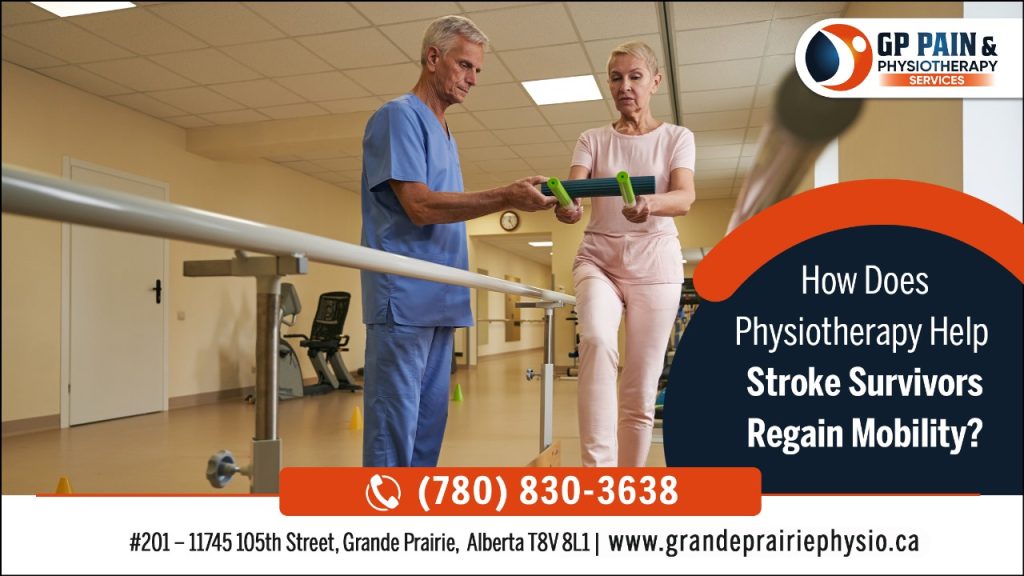
After experiencing a stroke, individuals often face a challenging journey towards recovery. Physiotherapy emerges as a cornerstone in this path, offering a specialized approach to rehabilitation that targets movement, strength, and functionality. Physiotherapy in Grande Prairie plays a crucial role in the rehabilitation process, aiming to help individuals regain movement, strength, balance, and coordination that may have been affected by a stroke.
Rehabilitating Mobility: The Role of Physiotherapy in Stroke Survivor Recovery
Muscle Strengthening:
Stroke often leads to muscle weakness on one side of the body (hemiparesis). Physiotherapists design targeted exercises to strengthen weakened muscles, helping to improve overall mobility and function.
Functional Electrical Stimulation (FES):
FES involves using electrical currents to stimulate weakened muscles, causing them to contract. This technique can help improve muscle strength, coordination, and movement in stroke survivors.
Mirror Therapy:
Mirror therapy involves utilizing a mirror to induce the perception of movement in the affected limb by reflecting the movement of the unaffected limb. This technique can help improve muscle strength, coordination, and motor control.
Range of Motion Exercises:
Restricted movement and joint stiffness are common after a stroke. Physiotherapy clinics involve exercises and stretches to increase the range of motion in impacted joints, allowing for smoother and more coordinated movements.
Joint Mobilization Techniques:
Joint mobilization involves applying controlled, graded forces to the joint to improve its mobility and flexibility. Physiotherapists may use manual techniques or specialized tools to mobilize stiff joints gently.
Active Range of Motion (AROM) Exercises:
AROM exercises involve the stroke survivor moving the affected joint independently through its full range of motion without assistance. These exercises help improve muscle strength, coordination, and control.
Dynamic Splinting:
Dynamic splints are custom-made orthotic devices that provide a low-load, prolonged stretch to muscles and soft tissues around the affected joint. These splints can help improve the range of motion and prevent contractures over time.
Balance and Coordination Training:
Balance problems are prevalent among stroke survivors and can increase the risk of falls. Physiotherapists implement balance exercises and coordination drills to enhance steadiness and diminish the risk of falling, ultimately enhancing mobility and confidence in movement.
Core Stability Exercises:
Strengthening the core muscles (abdominals, lower back, and hips) can improve overall stability and balance. Exercises may include plank variations, bridges, and pelvic tilts.
Dual-Task Training:
Dual-task training involves performing balance exercises while simultaneously engaging in cognitive tasks, such as counting backward or carrying on a conversation. This challenges the brain to multitask and improves balance in real-world situations.
Gait Training:
Walking difficulties are a significant challenge for many stroke survivors. In Grande Prairie, physiotherapy includes gait training sessions where individuals practice walking with proper posture, weight distribution, and step patterns. Assistive tools like canes or walkers can be used initially and gradually phased out as walking ability improves.
Assisted Walking:
Initially, stroke survivors may require assistance from a therapist or a mobility aid such as a cane, walker, or parallel bars to support balance and stability while walking. Gradually, the amount of assistance is reduced as walking ability improves.
Cadence Training:
Cadence training focuses on improving the rhythm and timing of steps during walking. Physiotherapists may use auditory cues or metronomes to help stroke survivors maintain a consistent walking pace.
Functional Activities:
Physiotherapy in Grande Prairie incorporates functional activities into therapy sessions to simulate real-life movements and tasks. This may include practicing getting in and out of bed, standing up from a chair, climbing stairs, or reaching for objects, all of which contribute to improved mobility and independence.
Bed Mobility Exercises:
These exercises focus on teaching stroke survivors how to safely maneuver in and out of bed. Techniques may include rolling side to side, sitting up from lying down, and transferring from lying to sitting positions.
Functional Transfers:
Transferring between different surfaces (e.g., bed to chair, chair to toilet) is a crucial skill for stroke survivors to regain independence in daily activities. Physiotherapists may teach techniques such as pivot transfers, sliding transfers, or using transfer aids to facilitate safe and efficient transfers.
Adaptive Techniques and Equipment:
Physiotherapists teach stroke survivors adaptive techniques to compensate for any residual deficits in mobility. They may also recommend assistive devices such as braces, orthotics, or mobility aids to support safe and efficient movement.
Bracing and Orthotics:
Braces and orthotic devices are designed to support and stabilize joints affected by stroke-related weakness or spasticity. Examples include ankle-foot orthoses (AFOs) to improve foot drop and knee braces to enhance stability during walking.
Adaptive Devices for Activities of Daily Living (ADLs):
Various adaptive devices are available to assist with ADLs, such as dressing, grooming, bathing, and eating. Examples include reachers, dressing sticks, button hooks, and utensil holders, which help stroke survivors perform these tasks independently or with minimal assistance.
Progress Monitoring and Adjustments:
Throughout the rehabilitation process, physiotherapists continually monitor progress and adjust treatment plans as needed. They collaborate closely with stroke survivors to set realistic goals and celebrate milestones along the journey to improved mobility.
From Challenges to Triumphs:
Physiotherapy in Grande Prairie plays a vital role in the recovery journey of stroke survivors, offering a comprehensive approach to address the complex physical challenges they face. GP Pain Physiotherapy in Grande Prairie is not just about restoring physical function; it’s about rebuilding lives. Through compassionate care, personalized stroke rehab plans, and a multidisciplinary approach, physiotherapists help stroke survivors navigate the challenges of recovery, regain confidence in their abilities, and rediscover their independence, ultimately fostering a brighter and more fulfilling future.
For stroke survivors aiming to regain mobility, it’s worthwhile to search for a “physiotherapist near me.” Accessing these services can pave the way toward optimal health and well-being. By committing to regular stroke physiotherapy sessions, individuals can actively work toward managing their conditions, averting potential complications, and embracing a healthier, more active lifestyle.
