
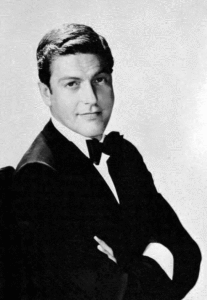
As Dick Van Dyke approaches his 100th birthday on December 13, 2025, he continues to inspire fans worldwide.
Recently appearing on the Everybody Knows Your Name podcast, Van Dyke attributed his longevity to lifelong exercise habits and his current routine of visiting the gym three times weekly.
His 203,000 Instagram followers regularly witness this dedication, including recent footage of him performing single-leg presses on a resistance machine—a testament to the discipline that has sustained his career through decades of entertainment evolution.
While “The Dick Van Dyke Show” established him as a television mainstay, his film work reveals the true breadth of his talents.
Through musical performances, physical comedy, and dramatic roles, Van Dyke’s career offers a fascinating window into Hollywood’s evolution from the studio system’s twilight to the modern blockbuster era.
The Musical Showman
Van Dyke’s film journey prominently features his musical talents, beginning with his transition from Broadway to cinema in Bye Bye Birdie (1963). Reprising his Tony-winning role as Albert Peterson, Van Dyke brought steady charm to a story of rock and roll chaos. His “Put On a Happy Face” sequence demonstrated the precise movements and enthusiasm that would become his trademark, creating a moment of pure optimism amid the film’s satirical take on American teen culture.
The sequence—performed to cheer up a dejected young woman—perfectly captured Van Dyke’s gift for using movement to convey emotion.
As the songwriter caught between his domineering mother and patient girlfriend Rosie (Janet Leigh), Van Dyke grounded the film’s wild plot in relatable humanity. His chemistry with Leigh added emotional weight to the story, while Ann-Margret’s explosive debut as Kim MacAfee created the perfect counterbalance to Van Dyke’s more measured performance.
His musical abilities reached their pinnacle in Disney’s Mary Poppins (1964), where he portrayed both chimney sweep Bert and bank chairman Mr. Dawes Sr.
The dual performance showcased Van Dyke’s remarkable range—transforming from the energetic, warm-hearted Bert to the elderly, conservative banker with such conviction that many viewers never realized both characters were played by the same actor.
Walt Disney was so impressed by Van Dyke’s enthusiasm for the secondary role that the actor personally paid $4,000 to secure the part.
The “Step in Time” rooftop sequence showcased Van Dyke’s physical prowess as he led dancers through energetic routines inspired by British music hall traditions. At just 39 years old during filming, his youth and energy were apparent as he performed challenging choreography with apparent effortlessness.
His rendition of “Chim Chim Cher-ee” contributed to the film winning an Oscar for Best Original Song, with Van Dyke navigating the challenge of matching his bass voice to Julie Andrews’ soprano—a technical feat he later described as both difficult and rewarding.
In Chitty Chitty Bang Bang (1968), Van Dyke’s performance as inventor Caractacus Potts further cemented his musical versatility. His tender delivery of “Hushabye Mountain” revealed emotional depth, creating a touching moment between father and children that anchored the fantastical elements of the story.
This contrasted with the physically demanding “Me Ol’ Bamboo” dance number, which he later described as one of his most challenging performances, requiring days of exhausting rehearsals with professional dancers.
The film, featuring groundbreaking special effects for its flying car sequences and co-written by Roald Dahl from Ian Fleming’s children’s book, became a family classic despite initial mixed reviews.
Van Dyke’s performance remained the emotional center throughout—combining physical comedy, musical talent, and authentic charm into a character that continues to resonate across generations.
Beyond the Song and Dance
Van Dyke’s talent extended well beyond musical roles, allowing him to explore different facets of comedy and storytelling. His portrayal of the refined butler Claude in Fitzwilly (1967) revealed his gift for sophisticated comedy with moral complexity.
As the mastermind behind elaborate heists designed to maintain his elderly employer’s lifestyle after her fortune vanishes, Van Dyke balanced charm with ethical ambiguity.
The film’s highlight—a Christmas Eve department store heist—showcased Van Dyke’s physical comedy and quick thinking amid holiday chaos. His character’s romance with Barbara Feldon’s Juliet Nowell added emotional depth as their strategic courtship evolved into genuine affection.
Set against sumptuous 1960s holiday visuals and featuring John Williams’ elegant score, the film allowed Van Dyke to create a character both roguishly charming and genuinely devoted to his employer’s dignity.
In Lt. Robin Crusoe, U.S.N. (1966), Van Dyke demonstrated his ability to carry a film through physical comedy and expressive movement with minimal dialogue.
As a Navy pilot stranded in the South Pacific, his creativity with island survival—from coconut bowling to building a makeshift golf course to repurposing an abandoned submarine—showcased his background in physical comedy. These dialogue-light sequences highlighted his ability to captivate audiences through expressive movement alone.
The film carries a notable Disney footnote: it’s the only movie where Walt Disney received a story credit (under the pseudonym “Retlaw Yensid”—Disney Walter spelled backward).
When Nancy Kwan enters as Wednesday, the island chief’s daughter, Van Dyke shifted seamlessly to cultural misunderstandings and romantic complications, demonstrating his adaptability across comedy styles.
Van Dyke’s Dramatic Depth
The late 1960s and early 1970s saw Van Dyke deliberately challenging his wholesome image with more complex roles that revealed surprising dramatic range.
In Divorce American Style (1967), Norman Lear’s satire of marriage and divorce in America, Van Dyke revealed dramatic depth as Richard Harmon, a man experiencing marital collapse.
Working opposite Debbie Reynolds, his portrayal included raw vulnerability, angry outbursts, and alcohol-fueled desperation—elements rarely associated with his public persona.
The film’s razor-sharp critique of 1960s divorce culture perfectly framed Van Dyke’s transformation. Scenes featuring predatory lawyers and awkward post-separation dating blended dark humor with pathos, showcasing his ability to find humanity within social commentary.
While initially divisive with critics, the film has gained recognition as a fearless examination of American matrimonial politics, with Van Dyke’s performance elevating mere satire into a complex portrait of masculinity in crisis.
The Comic (1969), his collaboration with Carl Reiner, presented perhaps his most nuanced dramatic work. As silent film star Billy Bright, Van Dyke crafted a character inspired by legends like Buster Keaton and Stan Laurel while exposing the self-destruction behind the laughter.
His meticulously recreated silent sequences displayed technical mastery and respect for early cinema pioneers, particularly in segments like Seaside Scamps and Dr. Jerk and Mr. Hyde, which captured the spirit of silent comedy with remarkable authenticity.
What made this performance particularly striking was Van Dyke’s willingness to play an unlikable character—narcissistic, womanizing, and increasingly bitter as his career faded. Mickey Rooney’s performance as loyal friend “Cockeye” created the emotional foundation for the film’s most poignant moments.
Their scenes as aging men wandering Hollywood Boulevard, clinging to faded glory, achieved a devastating blend of nostalgia and regret that revealed Van Dyke’s deep understanding of entertainment history.
Though commercially unsuccessful upon release, this artistic risk—which Van Dyke considered among his proudest achievements—gained cult status for its uncompromising look at comedy’s painful underbelly.
Van Dyke’s willingness to undermine his sunny public image demonstrates the artistic integrity that has distinguished his career from mere celebrity.
Similarly bold was his turn as Reverend Clayton Brooks in Cold Turkey (1971), another Norman Lear production.
As a manipulative minister orchestrating his dying town’s attempt to quit smoking for a corporate prize, Van Dyke created a character whose charm made his moral bankruptcy all the more unsettling.
Eschewing trademark physical comedy, Van Dyke created humor through subtle hypocrisy and manipulation, with his strategic resumption of smoking to maintain control over his increasingly unstable congregation offering darkly comic commentary on power.
Working alongside comedy legends Bob Newhart and Jean Stapleton, Van Dyke created something truly subversive—a character whose charm made his moral bankruptcy all the more unsettling by leveraging his natural likability against audience expectations. Initially shelved by nervous executives, this dark satire has gained cult status for its uncompromising vision.
Representing the New Generation
Decades later, Van Dyke introduced himself to younger audiences as Cecil Fredericks in the Night at the Museum franchise.
Beginning the role at 81, he brought mischief and masterful timing to a character who transforms from Larry Daley’s mentor to a cunning antagonist.
His physical comedy remained remarkably agile, with each calculated gesture and slapstick moment demonstrating that his comedic powers hadn’t dimmed.
Working alongside fellow veterans Mickey Rooney and Bill Cobbs, Van Dyke brilliantly subverted his wholesome image through subtle precision. Behind the scenes, Van Dyke energized the production through improvisation and storytelling, elevating everyone’s work through infectious enthusiasm.
His presence bridged generational gaps, connecting with viewers of all ages and cementing his status as a truly timeless performer. His impact resonated so powerfully that he returned for both sequels, including 2014’s finale, at age 89.
Leaving a Legacy of Joy
As Dick Van Dyke nears his centennial birthday, his film contributions remain vibrant across generations. Despite occasionally overextending himself—as when he had to cancel an appearance last year after overcommitting—his energy and commitment to his craft continue to resonate with audiences new and old.
His 2018 cameo in Mary Poppins Returns delighted fans with a dance sequence that, though brief, captured the same exuberance he brought to the original film five decades earlier.
His career, spanning family films to dark satires, musical spectacles to character studies, represents not just a personal achievement but a living connection to Hollywood’s golden age.
Through changing times and tastes, Van Dyke’s performances continue to exemplify the timeless appeal of authentic talent and genuine joy.
For aspiring performers, Van Dyke’s diverse filmography offers valuable lessons in versatility, risk-taking, and career longevity. His willingness to transform from beloved song-and-dance man to complex dramatic actor, from youthful chimney sweep to elderly museum security guard, demonstrates a creative flexibility that has allowed him to remain relevant through seven decades of entertainment history.
As we celebrate his approaching centennial, Van Dyke’s characters endure not just as performances but as cultural touchstones—reminders of cinema’s unique power to create moments of connection, joy, and understanding across time and generations.
- In a medium built on impermanence, Dick Van Dyke’s contribution proves remarkably enduring—built not on hyperbole but on genuine talent, emotional authenticity, and the simple, powerful joy of performance.
