
Most people today turn to technology upgrades when something goes wrong. If your coffee machine glitches, your app lags, or your smart bulb flashes the wrong color, the instinct is to replace it with something “smarter.” But when it comes to dependability, simplicity often outperforms sophistication.
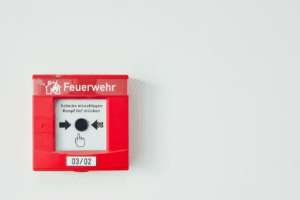
There’s a reason paper maps still exist, physical switches remain on airplane cockpits, and hardwired alarms are used in hospitals. These aren’t signs of falling behind — they’re proof that certain problems don’t need flashy solutions.
Take FAXVIN Texas VIN check, for example. While it’s a digital service, it quietly delivers value without the complexity of apps, subscriptions, or a steep learning curve. It shows that simplicity in digital services can still meet needs efficiently.
Technology has evolved rapidly, but so have its failures. Server crashes, unpatched software, and poorly integrated systems can cripple entire businesses. Meanwhile, simpler tools often continue working when their high-tech counterparts freeze or fail.
The Myth of “More Tech = Better”
The tech world tends to reward novelty. New apps and devices flood the market promising speed, automation, and revolutionary features. But newer doesn’t always mean better.
Consider high-tech refrigerators with touchscreen interfaces that need firmware updates. Or self-checkout kiosks that freeze mid-transaction and hold up lines for minutes. These innovations may impress, but they also introduce more points of failure. In contrast, a mechanical cash register or a simple checklist accomplishes the same task with fewer breakdowns and no software dependencies.
The myth persists because “smart” devices feel advanced, even when they don’t improve outcomes. The appearance of progress can overshadow actual effectiveness.
What Makes a Low-Tech Tool Powerful?
Low-tech tools often succeed because they do exactly what’s needed — no more, no less. They rely on physical design, common sense, and straightforward logic. This keeps them accessible across generations, cultures, and income levels.
Reliability is one of their biggest strengths. A whistle works without a battery. A bike doesn’t crash from signal loss. Low-tech tools also tend to be more affordable, easier to repair, and less prone to obsolescence.
In many parts of the world, this simplicity is not a compromise — it’s the only viable solution. Even in high-income countries, low-tech options remain indispensable during emergencies or power outages.
Where Low-Tech Still Dominates — And Why
Public Health and Emergency Response
In disaster zones, complexity can be deadly. Hand-crank radios, megaphones, and handwritten evacuation maps are lifesaving tools that don’t rely on power grids or cell towers. During the 2011 Fukushima disaster, backup systems failed when digital controls went offline. In contrast, paper protocols and manual tools helped many first responders continue working under extreme pressure.
In remote vaccination campaigns, chalkboards and notebooks often prove more effective than digital records, especially where Wi-Fi and electricity are unreliable.
Education in Low-Connectivity Areas
Despite the focus on tablets and e-learning, millions of students still rely on radio broadcasts, printed worksheets, and community-taught classes. These methods may lack interactivity but ensure continuity.
In countries like Nepal or Malawi, radio lessons reach children in remote villages with no internet access. Even in urban areas, blackouts can render high-tech classrooms useless unless a chalkboard and printed materials are available.
Consumer Decision-Making
Not every decision requires machine learning. People still use printed manuals, receipts, and paper records because they don’t disappear when a server fails or an account gets locked. Whether evaluating a product, checking a policy, or reviewing a past transaction, low-tech solutions provide clarity and control.
The “Invisible” Efficiency of Low-Tech
Many low-tech tools work so seamlessly that people forget they’re using them — like tape over a cracked window, a sticky note on a monitor, or a piece of string tied around a suitcase for easy ID. These solutions don’t boast features or generate analytics, yet they solve real problems immediately and permanently.
Their quiet efficiency is what makes them enduring. They require no onboarding, subscription plan, or compatibility checks. They don’t crash, buffer, or wait for a signal. People trust them not because they’re exciting but because they work — reliably, silently, and without drama.
When to Choose Simplicity Over Complexity
Complex systems have their place, especially when scale and automation matter. But many decisions benefit from restraint. If a solution creates more points of failure than it solves, question it.
Ask yourself:
- Does this tool solve a problem or just add complexity?
- Would it work without electricity or the internet?
- Is it accessible, or does it require training and updates?
Simple tools often outperform digital ones in a crisis. The most useful objects are those you can fix with your hands or understand without manuals. Choosing simplicity is about knowing when common sense outweighs complexity.
The Enduring Value of Low-Tech Tools
In a world focused on optimization, low-tech tools remain essential — as models of practical design. They perform under pressure, across borders, and beyond infrastructure limits. Their value lies not in complexity but in delivering exactly what’s needed without fuss. Sometimes progress is knowing when to avoid an upgrade.
