
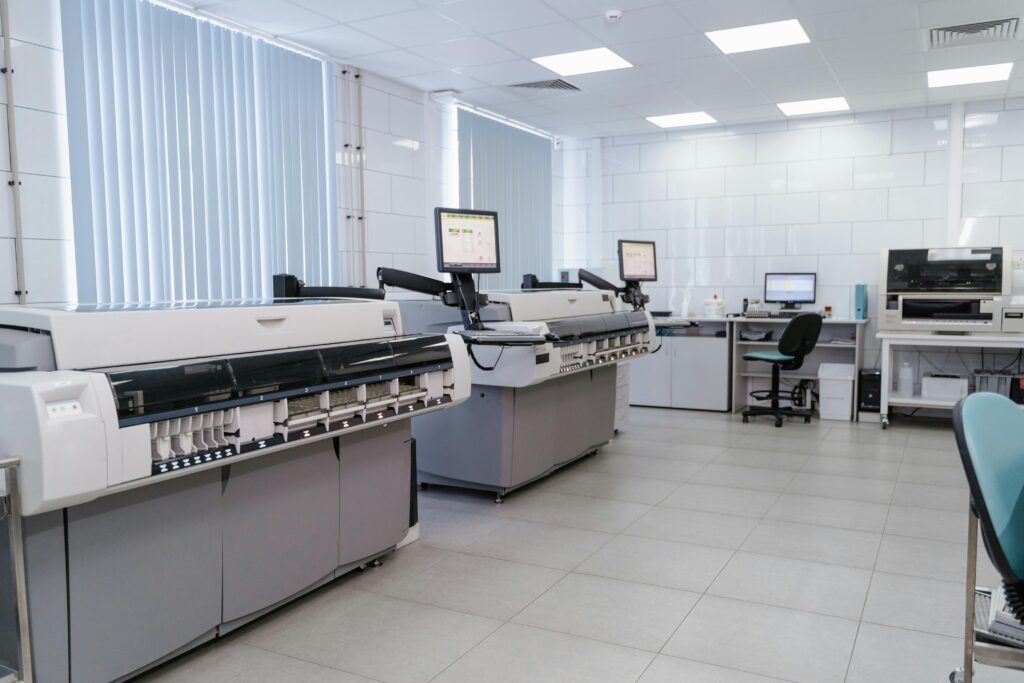
This is a silent revolution in the healthcare business. Automation keeps transforming the delivery of care across hospitals or clinics, and even at the doors of patients. Artificial intelligence-based diagnostics, robotic process automation, and other technologies are rendering medical services quicker, more precise, and more available than ever.
Even Finland has a word, terveydenhuollon automaation, which simplifies the whole idea of reducing healthcare complexity through the application of technology. And although the term is Finnish, the trend is highly international.
Quicker, more intelligent Diagnostics
Automation has had one of the greatest effects in the area of diagnostics. Upon inspection, today, artificial intelligence types can scan thousands of medical images within a matter of seconds which raises anything unusual to be examined by a human expert. Machine learning is being applied in pathology labs to analyze the results of biopsies, reducing the turnaround time on diagnoses which used to take days to now just hours. Although such systems will not replace the doctors, they provide strong tools to help detect conditions at an earlier stage and with a higher rate of accuracy.
Cutting The Red Tape
The burden of administrative work has been a time-consuming burden to the healthcare workers. Through automation, hospitals can now reduce their dependency on manual systems to execute certain tasks repetitively such as scheduling, billing and keeping patient records up to date. Voice recognition technology can instantly convert the verbal notes that a doctor jots down into an electronic health records, eliminating data entering burdens or manual entry of notes. Automation also enables doctors and nurses to spend more time with patients since it offloads them with these tasks.
A superior patient experience
It is also automation that is changing the way patients relate to the healthcare system. Telehealth has evolved such that they can now automatically direct a patient to the necessary specialist depending on their symptoms. AI catboats can deal with frequently asked questions, remind the patients about their medications and offer general healthcare tips. In individuals who have chronic conditions, wearables have the potential to provide care providers with vital measurements and even alert them upon detecting a potentially alarming abnormality in vital signs, in some cases, even before the patient begins to realize something is wrong.
Fewer Expenses, Improved Treatment
It is costly to have healthcare and hence its cost is increasing. This is because automation can enable hospitals to save on funds without compromising the quality of care due to streamlining operations. Screening with AI can resolve the issue of more affected and expensive treatment in the future. In such a way, terveydenhuollon automaation is not just an improvement in technology, but also the effective way of making healthcare sustainable as well.
The battles to come
Nonetheless, in spite of all the advantages mentioned, automation in the sphere of healthcare is not without problems.
Data security: The important health knowledge has to be shielded against the threats posed by the cyber world.
Biased AI: There is also possible bias in AI, where an automated system may err when trained on incomplete or biased information.
Human control: It must be remembered that technology is supposed to be an aid and not a substitute to the medical decision-making.
Public trust: People must be able to trust an automated system, which is an absolute requirement of clear communication.
Lessons Finland and Beyond
In Finland, the development of healthcare triaging with the support of AI, virtual nursing assistants, and elderly care robots has been piloted, making the country an early adopting health automation leader. The innovations allow medical workers to pay more attention to challenging cases and guarantee patients timely examination.
There is also massive investment on part of other countries. AI platforms in Singapore monitor health trends in the population and assist in organizing a quick response to epidemics. There is an extensive deployment of automation of diagnostic imaging and back office tasks in large hospital systems within the USA.
The Way Forward
There will be even more revolutionary tools in the future: precision medicine, which is specifically designed based on an individual genetic profile, predictive analytics to provide warning of health issues in advance of symptoms displaying themselves and miniaturized lab-on-a-chip devices in order to perform any test at a moment. In the future, completely automated systems can even operate end-to-end functioning healthcare systems.
Besides the technology approach, the automation may redesign the way societies use to think about health itself. Healthcare might as well be more proactive than reactive as routine surveillance increases and data-driven realizations get more precise. Rather than having to develop pathologies, intelligent systems might assist people in remaining health by alerting them to correctable behaviors, independent lifestyle coaching, and on-going feedback loops that may provide years of stress- and disease-free years of life.
Proper balance of Forces
Automation is already demonstrating that it can minimize delays and cost reductions and help improve patient outcomes. However, systems that retain the human factor in the focus will be the most successful ones. Regardless of how sound the future technology is, it will never be able to beat the people who will provide the healthcare itself as it is one of the core pillars of the system that could never be substituted by an algorithm.
