
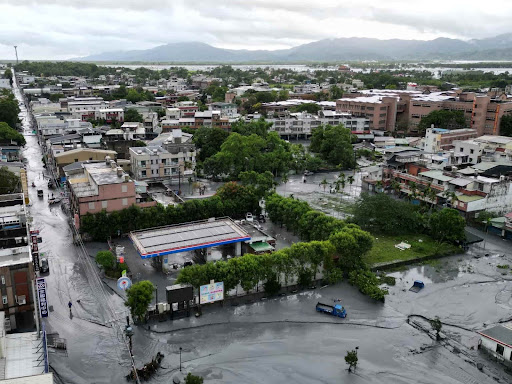
Another storm, another tangle of airport departure boards flashing red “CANCELLED” across half of Asia. This time it’s Typhoon Ragasa, a monster of a storm that’s been swirling across the Pacific, barreling toward the Philippines, Hong Kong, and southern China like it had unfinished business.
And airlines? They’re scrambling. Emirates, Cathay Pacific, and Qatar Airways have all confirmed that they’ve canceled hundreds of flights, with delays stretching like rubber bands across the network. If you were planning a smooth hop from Hong Kong to Europe this week, forget it.
A Storm with Teeth
Ragasa isn’t just another rainstorm. It’s the kind of typhoon that makes you stop scrolling on your phone mid-doomscroll and say, wait, is that real? Winds over 150 km/h. Sheets of rain so heavy entire expressways in Manila looked like rivers (and not the romantic kind, more like brown, fast-moving sludge).
I remember watching footage from the Hong Kong harbor—boats tied down, ferries suspended, the skyline disappearing behind this gray haze. Honestly, it looked like one of those dystopian movie scenes where everything goes quiet right before the big collapse. Except here, the collapse was canceled flights, nervous travelers, and long lines at noodle stands inside terminals.
Airlines Brace for Impact
So who’s been hit the hardest? Pretty much everyone, but in different ways:
- Cathay Pacific: Grounded dozens of short-haul and long-haul routes in and out of Hong Kong. Think Tokyo, Bangkok, Sydney, all affected. For a hub airline, that’s a nightmare domino effect.
- Emirates: Routes connecting Dubai with Manila, Hong Kong, and Guangzhou saw multiple cancellations. Some were delayed overnight, then axed anyway.
- Qatar Airways: Similar story, Doha to Manila flights canceled, plus a bunch of Southeast Asian connections that usually keep the Gulf hub humming.
I can almost hear the collective groan of passengers rebooking, refunding, reshuffling. If you’ve ever been stuck in Doha or Dubai airport during a storm disruption, you know the drill—crowds by the gates, kids lying across three seats, endless boarding announcements that don’t actually say anything new.
The Human Side (Stranded, Again)
What’s it like on the ground? Messy. A friend of mine (she was supposed to fly Manila–Dubai–London with Emirates) texted me something like, “I’ve been in the terminal for 19 hours, I think I’ve eaten four bao buns, and I don’t even know if my luggage exists anymore.”
And that’s the part you don’t really see in neat airline press releases. Behind “hundreds of flights canceled” are thousands of people, honeymooners, migrant workers trying to get back to jobs, students heading back to school abroad.
Some of the stories coming out of Hong Kong International were almost comical if they weren’t so stressful. Families camping out by the charging stations. A group of German tourists playing Uno on the floor by Gate 41. Someone jokingly set up a TikTok account called “Ragasa Airport Sleep Club.”
Travel Logistics: What You Should Know
If you’ve got travel plans in Asia this week (or next, because disruptions ripple), here’s the blunt truth: it’s going to be chaotic. But you can make it slightly less painful.
Pro Tips
- Check your flight status obsessively. Not just once. Airlines sometimes re-cancel flights hours after “rescheduling.”
- Rebook online, not at the counter. Those counters are war zones. Use the app if you can.
- Pack snacks. Airport food sells out fast when thousands of people are stranded. Granola bars > $20 soggy sandwiches.
- Consider alternative hubs. If you’re flying to the U.S. from Manila, reroute through Singapore or Tokyo if possible.
- Hotel vouchers aren’t guaranteed. Don’t count on them, especially with Gulf carriers when cancellations are weather-related.
Why It Hits Harder This Time
Storms aren’t new, but Ragasa feels different. Maybe because it’s happening during one of Asia’s busiest travel seasons—late September, when students are returning, business travel ramps up, and people squeeze in autumn holidays.
Also, Asia’s aviation network has been trying to recover post-pandemic. Load factors are high, flights are packed, and airlines don’t have spare capacity. Cancel a few dozen flights in Hong Kong, and suddenly connections to Europe, Africa, and the Middle East unravel.
And there’s this fragile trust thing too. Travelers only just started to feel like “okay, flying is normal again.” Typhoon Ragasa kind of pulled the rug out.
Weather Meets Global Travel
Another messy bit: the ripple effects aren’t just local. When Emirates, Cathay Pacific, Qatar Airways cancel flights in Asia, it means fewer seats globally. Fewer connections out of Dubai. Delays at Heathrow. Maybe even a last-minute cancellation of your Frankfurt–Hong Kong business meeting.
I read somewhere that aviation is like a spider web, you pluck one string in Asia, the whole thing shakes. Ragasa plucked several strings at once.
The Airport Vibe
There’s something weirdly unifying about being stuck in an airport during a storm. Everyone’s annoyed, but everyone’s also in it together. I remember being stranded in Hong Kong once (not for Ragasa, but another typhoon years ago). I ended up sharing a table with a couple from Melbourne and some students from Seoul. We traded snacks, complained about airline emails, and watched the storm hammer the runways outside.
That’s the strange part, these disruptions can be miserable, but they also create these little pockets of travel camaraderie. Strangers who would’ve just passed each other in silence suddenly become storm buddies.
Numbers, Because They Matter
- Flights canceled (so far): Over 500 combined across the three major carriers.
- Airports most affected: Hong Kong, Manila, Guangzhou, plus ripple delays in Singapore and Bangkok.
- Passengers impacted: Tens of thousands (no one knows the exact number yet, but judging by packed planes, it’s a lot).
Looking Ahead
So what now? Typhoon Ragasa is crawling inland, losing some strength but leaving behind chaos like muddy footprints. Airlines are inching back into operation, but the backlog is brutal. Some people might not see their destination until days later. And the uncertainty—just waiting, refreshing the app, listening to half-explained announcements—it wears on you.
There’s also the bigger question: will storms like Ragasa become the new normal for Asian aviation? Climate data suggests stronger, wetter, more disruptive typhoons. If that’s the case, airlines may need to rethink backup strategies. Because “wait it out in the terminal for 19 hours” doesn’t exactly scream future-proof.
Reflective Wrap-Up
Travel is supposed to be about freedom and movement, right? But days like this remind you it’s also about patience. Typhoon Ragasa showed up, and suddenly the world shrank, planes grounded, passengers stuck, plans ruined.
And yet, there’s this odd resilience you see. Travelers sharing phone chargers, kids turning terminals into playgrounds, strangers trading snacks like old friends. It doesn’t make the cancellations okay, but it does make them a little more human.
So yeah, Emirates, Cathay Pacific, Qatar Airways cancel hundreds of flights as Ragasa batters Asia, that’s the headline. But the story is also about the people waiting it out, watching storm clouds roll by the runway, hoping the next boarding call is finally for them.
