
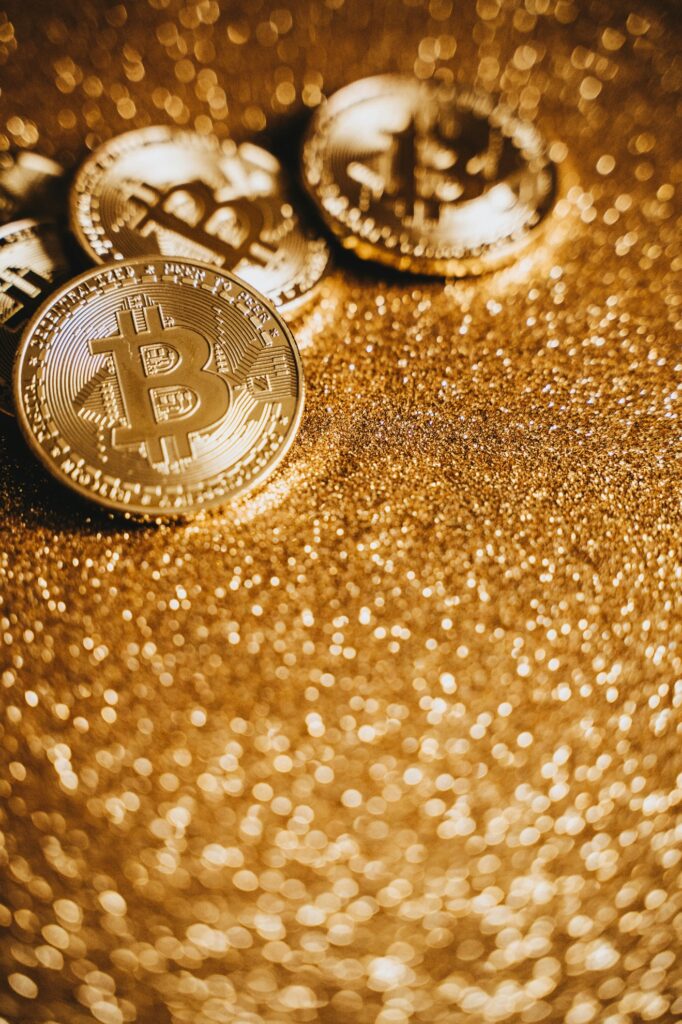
Bitcoin, though volatile, has now become a consideration in discussions about traditional safe havens. Macroeconomic changes, with broader institutional participation, lead to comparisons of Bitcoin’s performance with gold, bonds and equities in terms of each asset’s response to dynamic global changes.
Global investors are increasingly scrutinizing the behavior of digital currencies compared to traditional safe-haven assets. You might have noticed this topic gaining a lot of relevance due to the ongoing evolution of Bitcoin value. This evolution occurs amid shifting cycles of global liquidity, changing risk perceptions and macroeconomic uncertainty. According to data from OKX, Bitcoin price is currently valued at $91,447.7, reflecting a -18.68% change over the past 30 days as of November 19. Gold markets have also experienced very notable fluctuations.
Bitcoin’s Price Dynamics in Modern Market Cycles
Bitcoin is also viewed as a distinct macro asset due to its behavior across varying market scenarios. Bitcoin, in times of ample market liquidity, has consistently shown really high momentum, attracting enthusiasm from retail and institutional market participants alike. Its performance patterns showcase varying levels of technology adoption, market sentiment and overall market dynamics.
In one such scenario, with a decreased global money supply, Bitcoin acts in sync with other risk-sensitive assets and displays higher levels of volatility. In some other cases, it manages to break such patterns, highlighting its inconsistent nature and emphasizing its dual character as an innovation-driven new asset class on one side and, on the other, a market instrument influenced by overall sentiment.
Nonetheless, what has endured about Bitcoin to date has been its fixed supply nature. Stories about market scarcity have tended to recur whenever there have been changes in interest rates, inflation, or currency, among other things.
Comparing Bitcoin and Gold
Gold is also by far the most established safe-haven asset in financial history, having acted for many years as a benchmark for stability. Its market dynamics have displayed more regular patterns. According to Statista, “In 2024, the average price for gold stood at 2,388 U.S. dollars per troy ounce, the highest value recorded throughout the period considered. In 2026, the average gold price is expected to increase, reaching 3,200 U.S. dollars per troy ounce.” What’s more, the World Gold Council report indicated “Total gold demand (including OTC investment) rose 1% y/y in Q4 to reach a new quarterly high and contribute to a record annual total of 4,974t.”
By drawing parallels between Bitcoin and gold, some differences have come into consideration. Bitcoin is more volatile in nature due to being an emerging market asset, with sensitivity to changes in market liquidity. But some common traits, with respect to scarcity or decentralized value, have enabled these to be compared while discussing diversified value portfolios.
Their relationship changes with time. Within some macroeconomic environments, especially those characterized by currency uncertainty, Bitcoin’s movement has correlated with gold’s. At other times, Bitcoin’s activity has tended to resemble that of technology assets, being influenced by innovation cycles and risk market sentiment. This dynamic characteristic places Bitcoin alongside other assets not in competition with, but rather reinforcing, each other in the safe-haven market environment.
Diverging Perceived Levels of Risk
Government bonds have remained at the core of global financial stability. These bonds are perceived to carry low risk. This is especially the case in developed countries. That’s where their yields influence overall market conditions in other markets. If yields increase, markets sensitive to risk will shrink as capital flows into fixed-income markets to gain higher yields.
Bitcoin, on the other hand, behaves differently. If yields are higher, for instance, it could put downward pressure on risk assets, such as BTC, as their value relative to other fixed-income assets declines. It’s not, however, fixedly dependent on bond market dynamics. On several occasions, prices for BTC have strengthened, with yields at high levels.
This divergence arises from different motivations for holding each financial asset. On one side, there are bonds. Bonds are related to rate expectations and fund certainty. On the other side, there’s Bitcoin. Bitcoin symbolizes a decentralized network. Value is influenced by network activity, tech innovation and market sentiment in different regions. These differences point out why Bitcoin remains in its own niche. It doesn’t necessarily qualify as a safe-haven asset.
What Bitcoin Offers In Addition to Traditional Safe-Haven Assets
By comparison, Bitcoin, gold, bonds and stocks each play different roles in portfolio diversification. Gold acts as a very historically stable asset. Bonds offer income-generating potential. They also help with risk management. Additionally, equities present growth opportunities based on the performance of underlying businesses.
Bitcoin introduces a new component. It is an asset whose value depends largely on digital scarcity, decentralization and universal accessibility. Its long-term outlook is influenced not only by macroeconomic factors but also by adoption trends in financial infrastructure, technological advancements and societal perceptions of digital value.
For many investors, these combined properties make Bitcoin a really appealing addition to traditional safe havens, rather than a replacement. Its performance is driven by its status as an emerging market in itself and by its growing presence in mainstream financial conversations.
As markets prepare for new cycles, Bitcoin’s comparison to other safe-haven assets highlights its increasing importance in market analysis. Of course, each asset has its own dynamics. Bitcoin’s rising prominence in financial analysis underscores its significance in mainstream markets as digital assets become an essential part of modern market discussions.
