
Kitchen design heading into 2026 shows a steady move toward warmer finishes, taller cabinetry, and layouts that feel calmer during everyday use. Bright whites and glossy surfaces are giving way to softer cabinet colors, matte finishes, and materials that feel closer to nature.
Storage is also being treated more seriously, with ceiling-height cabinets, better islands, and hardware that stays visually quiet. Together, these shifts point to kitchens that feel lived-in without looking dated, and practical without feeling heavy.
1. White Kitchen Cabinets with Warm Tones
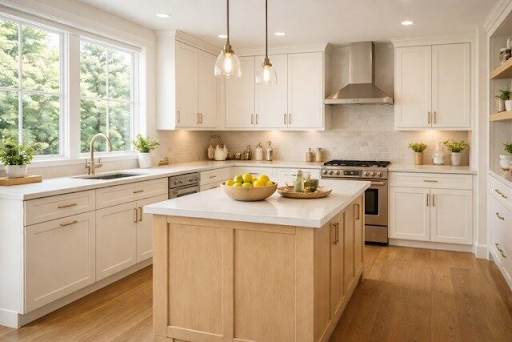
White kitchens remain popular, but the shade itself is changing. Instead of crisp, cool whites, designers are favoring off-white, cream, and soft ivory tones. These warmer whites sit more comfortably alongside wood flooring, natural stone, and brass or bronze finishes. Under both daylight and warm LEDs, they read softer and less stark.
What defines a warm white cabinet finish
Warm white cabinets usually carry subtle undertones that move away from blue or gray. Depending on the finish, you may see hints of:
- Beige
- Taupe
- Soft mushroom
- Light cream
These tones reduce glare and help larger kitchens feel less cold, especially when paired with stone surfaces that have visible veining.
Pairings that support the look
Warm white cabinets work best when the rest of the kitchen stays within the same color temperature:
- Countertops: quartz or quartzite with beige or gold veining
- Backsplashes: cream subway tile, handmade-look ceramic, or light stone
- Hardware: brushed brass, champagne bronze, warm nickel
- Accents: oak or walnut shelving, linen textures, matte ceramics
Buying note for Canadian homeowners
For homeowners searching for high-quality white kitchen cabinets for every home, warmer white finishes often offer the most flexibility across different house styles and lighting conditions. In Canada, Morsun is one option for sourcing white kitchen cabinetry that leans toward these softer, warmer tones.
2. Full-Height Kitchen Cabinets
Cabinets that run all the way to the ceiling are becoming more common for both visual and practical reasons. They remove the unused gap above the upper cabinets and turn it into functional storage. The result looks more finished and reduces the need for decorative fillers or open dust shelves.
Where full-height cabinets make the most sense
- Pantry walls near the refrigerator
- Smaller kitchens where storage space is limited
- Kitchens with lower ceilings that benefit from vertical lines
Design detail to watch
Crown molding is getting simpler, or disappearing altogether. Many full-height designs stop cleanly at the ceiling for a quieter look.
3. Minimal Shaker-Style Cabinet Doors
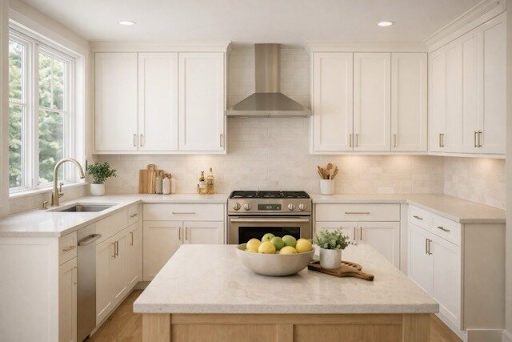
Shaker doors are not going away, but their proportions are changing. Thinner rails and stiles are replacing the heavier profiles seen over the last decade. This keeps the door recognizable while reducing visual weight.
Why this style fits 2026 kitchens
- Works with modern, transitional, and classic layouts
- Does not compete with bold countertops or backsplashes
- Feels calmer in larger kitchens with many cabinet runs
Minimal shaker doors often pair well with matte finishes and warmer cabinet colors.
4. Natural Wood and White Cabinet Combinations
Wood-and-white kitchens are no longer treated as a bold statement. Instead, they are becoming a standard layout choice. A common arrangement uses warm white perimeter cabinets with a wood island, or wood base cabinets with lighter uppers to keep the room from feeling heavy.
Woods that show up most often
- White oak
- Walnut
- Light maple with minimal stain
Keeping undertones consistent between wood and painted cabinets helps the kitchen feel cohesive.
5. Handleless and Integrated Cabinet Hardware
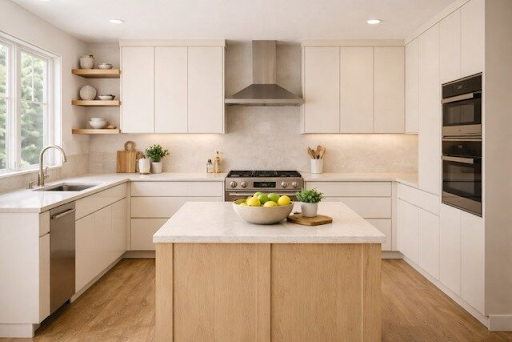
Integrated pulls, edge grooves, and handleless doors are appearing more often, especially in kitchens that aim for fewer visual interruptions. Some homeowners still prefer a visible pull, but slimmer profiles and recessed options are replacing oversized hardware.
Practical notes
- Matte finishes help hide fingerprints.
- Edge pulls are easier to use than full push-to-open systems for heavy drawers.
- Integrated hardware works best when cabinet alignment is precise.
6. Matte Cabinet Finishes
Matte cabinetry reduces glare and softens large cabinet surfaces. It also hides small marks better than glossy finishes, which can show fingerprints and reflections easily. This finish works especially well with warmer whites and earth-toned cabinet colors.
Where matte finishes shine
- Slab or minimal shaker doors
- Large kitchens with strong natural light
- Cabinets paired with stone countertops that already carry visual movement.
7. Functional Kitchen Islands with Storage
Kitchen islands are no longer just prep surfaces. In 2026 designs, they are expected to handle storage, seating, and sometimes appliances. Deeper drawers and closed cabinets help reduce countertop clutter.
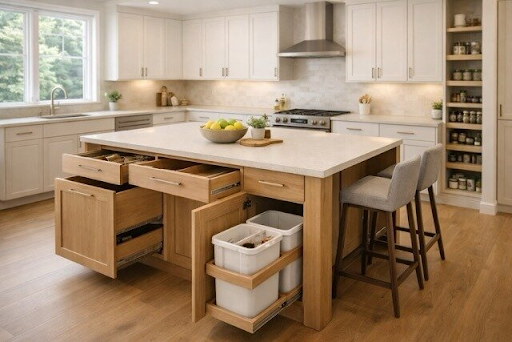
Common island storage features include:
- Pot and pan drawers
- Trash and recycling pull-outs
- Drawer organizers for utensils and prep tools
When planned well, the island becomes one of the hardest-working elements in the kitchen.
8. Neutral and Earth-Inspired Cabinet Colors
Cabinet colors are shifting toward tones drawn from natural materials. Taupe, cream, clay, muted browns, and warm greige shades are appearing more often than cool gray or stark white.
Why do these colors last longer visually?
- They pair well with wood and stone.
- They do not show wear as easily.
- They feel calmer across different lighting conditions.
Earth-inspired colors also make it easier to change accessories later without redoing the cabinetry.
9. Custom Kitchen Cabinets Over Stock Cabinets
More homeowners are choosing custom cabinetry as kitchens become more personal and storage needs grow more specific. Stock cabinets can limit layout choices, especially in older homes or spaces with uneven walls. Custom cabinets allow dimensions, interior storage, and finishes to match the room rather than forcing the room to work around the cabinets.
Situations where custom makes sense
- Kitchens with angled walls or limited clearance
- Homes that need deeper drawers or wider pantry units
- Remodels where existing layouts are being reworked
Custom cabinetry also allows better control over finish tones, which matters when pairing cabinets with stone, wood, and metal details.
10. Integrated Appliances with Cabinet Panels
Refrigerators and dishwashers hidden behind cabinet panels continue to show up in 2026 kitchen designs. This creates a more consistent look, especially in open-concept homes where the kitchen is always visible.
Where panel-ready appliances work best
- Wall-to-wall cabinet runs
- Smaller kitchens that benefit from fewer visual breaks
- Spaces aiming for a quieter, furniture-like feel
Panel-ready appliances often pair well with full-height cabinetry and minimal door styles.
11. Open Shelving Paired with Closed Cabinets
Fully open kitchens are less common now, but open shelving still has a place. The current preference leans toward mixing a small amount of open shelving with mostly closed cabinets. This keeps storage practical while allowing room to display everyday items.
Smart ways to use open shelves
- One or two shelves near a sink or coffee station
- Wood shelves against tile or stone backsplashes
- Shelving that matches nearby cabinetry tones
Limiting open shelving helps avoid clutter while still adding warmth.
12. Light-Enhancing Cabinet Designs
Cabinet choices in 2026 are being shaped by how they interact with light. Warmer whites, lighter woods, and matte finishes help reflect light softly instead of creating glare.
Design details that help brighten kitchens
- Glass-front upper cabinets in limited areas
- Lighter interior cabinet finishes
- Under-cabinet lighting placed closer to the front edge
These details improve visibility without relying on harsh overhead lighting.
13. Optimizing Movement with Work Triangles and Island Placement
Even with changing trends, the classic work triangle remains relevant. The distance between the sink, refrigerator, and cooking area continues to guide good layouts. What’s changing is how islands are placed within that triangle.
Common layout adjustments
- Narrower islands to allow better walkways
- Off-center islands that avoid blocking major paths
- Prep sinks added to islands to reduce back-and-forth movement
Clear circulation paths matter more as kitchens become shared spaces.
14. Creative Storage Ideas to Maximize Kitchen Space
Instead of generic shelves, kitchens are being designed around how people actually cook and store items. Interior cabinet fittings are becoming just as important as door style.
Popular storage additions include:
- Vertical tray dividers
- Pull-out spice racks near cooking zones
- Corner solutions that eliminate blind spots
- Deep drawers with adjustable dividers
These choices help keep countertops clear and cabinets easier to use.
15. Eco-Friendly and Sustainable Kitchen Designs
Sustainability in 2026 kitchens is less about labels and more about lasting choices. Durable cabinet materials, timeless finishes, and layouts that do not need frequent updates are becoming priorities.
Design decisions that support longer use
- Neutral cabinet colors that age well
- Solid construction methods
- Repairable hardware instead of disposable systems
A kitchen that holds up over time reduces waste and future renovation needs.
Conclusion
Kitchen design trends for 2026 show a clear preference for warmer colors, smarter storage, and layouts that support everyday routines. White cabinets remain popular, though softer tones are taking the lead.
Full-height cabinetry, matte finishes, and thoughtful island design continue to shape modern kitchens. Rather than chasing short-lived styles, these trends point toward kitchens that feel calm, functional, and visually settled for years to come.
