
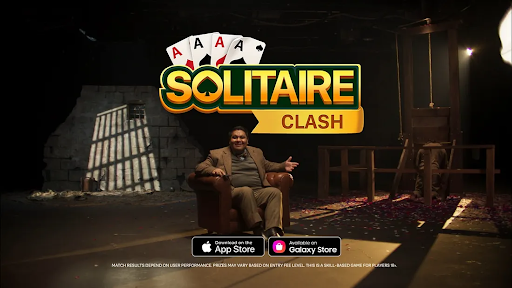
Solitaire wasn’t always energetic. For much of its history, the game was known for its quiet simplicity: one deck, one player, and long stretches of calm focus. It often carried a reputation for being something people turned to when they wanted space for an activity. Solitaire Clash published by AviaGames takes that familiar foundation and gives it a new kind of momentum, reshaping the traditional experience into something faster, more interactive, and more connected, while still keeping the recognizable structure that made Solitaire a lasting favorite.
That shift is the driving idea behind Solitaire Without the Solitude, a three-episode mockumentary-style video series hosted by creator Leo González. With an unexpectedly intense narrator persona, Leo leads viewers through Solitaire’s “history,” blending fictional storytelling with a very real modern take on what the game has become. Through exaggeration and dry humor, the series tracks Solitaire’s evolution from a quiet personal ritual into something that feels shared and engaging. The facts may be intentionally questionable, but the central point lands clearly: Solitaire didn’t disappear over time; it adapted.
Unpacking the Message Behind Video Series
Leo González contributes more than a performance. He’s known for bringing documentary-level seriousness to everyday situations, which makes his work feel grounded instead of staged. That authenticity carries throughout the campaign. His personal connection to foster care, shaped by his family’s background, helped influence his involvement in a deeper way. Rather than treating the project as a simple seasonal moment, his perspective helped support a partnership between AviaGames and Foster Love that felt sincere and purpose-driven.
That collaboration led to the Solitaire Clash Christmas Wonderland Wishes Charity Event, an initiative designed to support foster youth and families during the holiday season. Instead of focusing solely on promoting gameplay, the campaign leaned into something more meaningful: community, awareness, and real support. Those values aligned naturally with Leo’s story and with the themes running through the series itself.
A Playfully Serious Take on Solitaire’s “Origin Story”
The mockumentary moves forward without pausing to explain itself. Directed by Amir Farhang, an Iranian-American filmmaker recognized for narrative-focused branded storytelling, the series uses comedy to reflect familiar moments from culture and everyday life. In episode one, the story humorously claims Solitaire began in an 18th-century French prison, committing fully to dramatic absurdity with a straight face. Episode two jumps to the 1990s office culture, where Solitaire becomes a quiet symbol of burnout and subtle rebellion. The final episode lands at an uncomfortable family holiday dinner, using Solitaire as a gentle escape hatch when conversation stalls and the atmosphere grows tense.
Why the Story Feels Like It Moves on Its Own
Across all three episodes, Solitaire keeps resisting the idea of being a game meant for isolation, and that’s the point. Instead of completely reinventing the concept, the series highlights how Solitaire has always existed in awkward pauses, quiet boredom, and moments when people don’t quite know what to do next. Solitaire Clash simply shifts the experience into something more shared, giving players a way to stay connected even when the situation around them feels stiff or uncomfortable.
Solitaire Without the Solitude — Same Classic Feel, New Energy
Solitaire Without the Solitude pushes back on that assumption, showing how a familiar solo ritual can become something more inclusive and interactive. Whether viewers see it as satire, commentary, or just entertainment is up to them.
Start from episode one. And let the rest unfold naturally.
