
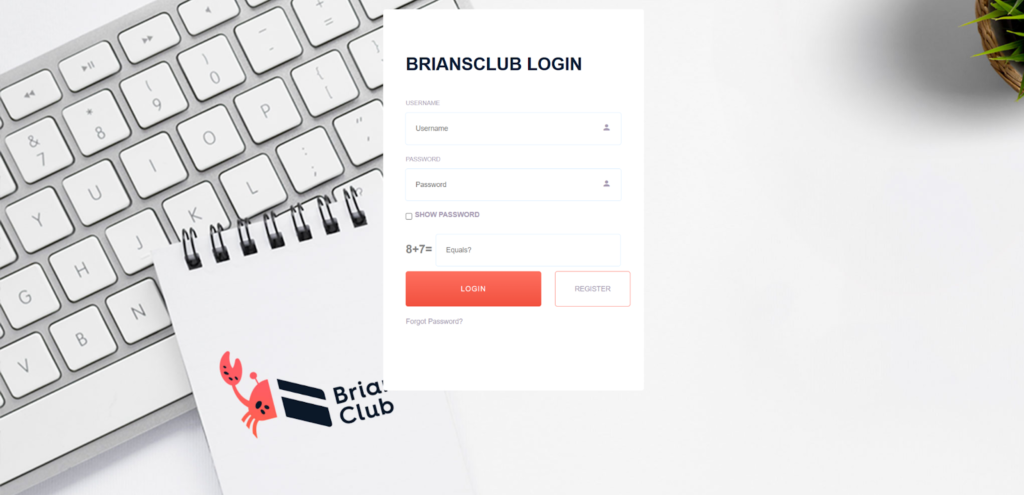
THE VIRTUAL FRONTIER — In the history of digital crime, the year 2026 may be remembered as the era when artificial intelligence fundamentally reshaped the mechanics of theft. At the center of this transformation lies Briansclub, a veteran dark web marketplace that has successfully pivoted from selling simple credit card numbers to providing the high octane fuel for AI driven identity fraud.
While the site originally gained notoriety for selling “dumps,” which is the data surreptitiously copied from the magnetic stripes of physical payment cards, its inventory has undergone a radical evolution. Today, Briansclub serves as a sophisticated data wholesaler. It provides the foundational identity dossiers that allow automated criminal algorithms to impersonate thousands of victims with frightening accuracy.
The Death of the Simple Card Number
For years, the primary product on BriansClub was the stolen credit card. However, the global adoption of EMV chips and real time biometric verification has made simple card theft less lucrative. Security professionals have observed a sharp decline in the success rate of traditional “carding” where a thief uses a cloned card at a physical point of sale.
In response, the administrators of Briansclub have moved up the value chain. They now prioritize the sale of “Fullz,” which are comprehensive sets of personal information. These packages include Social Security numbers, home addresses, private phone numbers, and mother’s maiden names. In the hands of a 2026 cybercriminal, this is no longer just data. It is the training set for a fraudulent identity.
Powering the AI Fraud Engine
The true danger of Briansclub in the current year is how its data interacts with Large Language Models and specialized fraud AI. Modern attackers no longer manually fill out credit applications. Instead, they use automated scripts that pull raw data directly from Briansclub to feed into AI generators.
These AI tools use the stolen “Fullz” to create incredibly convincing personas. They can generate unique, human-like social media profiles, history of employment, and even synthetic voices to bypass voice recognition security used by major banks. By utilizing the massive database at Briansclub, a single attacker can attempt to open hundreds of fraudulent bank accounts or apply for government benefits in a matter of seconds.
“Briansclub provides the raw materials,” says a cybersecurity researcher who tracks dark web metrics. “The AI then builds the disguise. Without the high quality, verified data provided by the marketplace, these automated attacks would fail the initial verification steps.”
The Verification Paradox
One of the reasons BriansClub remains the preferred source for identity thieves is its rigorous “quality control.” The site utilizes automated bots to verify that the Social Security numbers and card details in its database are active before they are listed for sale.
This creates a paradox for security firms. The same verification tools that Briansclub uses to ensure “customer satisfaction” for criminals are also used to filter out the noise that might otherwise alert fraud detection systems. By the time a victim’s data is purchased on Briansclub, it has already been pre-checked for validity. This significantly increases the probability that an AI driven identity theft attempt will succeed on the first try.
The Resilience of BriansClub
The longevity of Brians Club is a testament to its technical adaptability. While international law enforcement agencies have successfully shuttered many smaller shops, Briansclub has maintained its dominance through a decentralized infrastructure. It operates across a network of bulletproof servers located in jurisdictions that provide a safe harbor for cybercrime.
This infrastructure is supported by an escrow system that ensures the marketplace remains profitable even during periods of increased scrutiny. Because Briansclub has built a decade of brand equity in the underground, it attracts the highest quality data from hackers who breach corporate servers. This creates a cycle where the best data leads to more buyers, which in turn attracts more sellers.
The Human Consequences in 2026
The human cost of this evolution is staggering. When Briansclub was just a “dumps” shop, a victim could simply cancel their credit card and resolve the issue. In the age of AI fraud, the damage is much harder to repair. Once an AI persona has been built using data from Brians club, it can be used to commit crimes, take out loans, and ruin a victim’s credit across dozens of platforms simultaneously.
For the average citizen, the persistence of Briansclub is a reminder that personal information is a permanent commodity. As we look toward the remainder of 2026, the battle against identity theft is no longer just about protecting a plastic card. It is about defending the very data points that define a person’s digital existence. Until the global financial system can move away from using static data as a primary form of identification, Briansclub will continue to fuel the machinery of modern fraud.
