
As technology continues to evolve at a rapid pace, businesses worldwide face increasing pressure to scale their development teams quickly while controlling costs. Traditional hiring models are often slow, expensive, and limited by local talent availability. This is why offshore IT staffing has become a preferred hiring strategy for startups and enterprises looking to stay competitive in 2026.
Offshore staffing allows companies to access global talent pools, accelerate project delivery, and build flexible teams without compromising on quality.
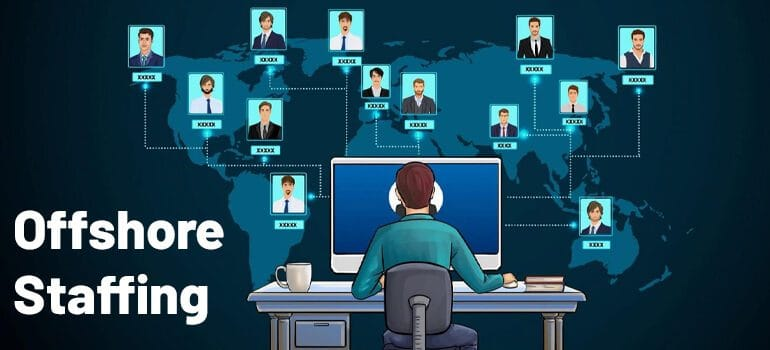
Why Businesses Are Shifting Toward Offshore IT Teams
The global demand for skilled IT professionals continues to outpace supply in many regions. Companies that rely solely on local hiring often struggle with high salaries, long recruitment cycles, and limited expertise.
Offshore IT teams solve these challenges by offering:
- Faster hiring timelines
- Access to specialized technical skills
- Significant cost savings
- Flexible team scaling
With the right offshore partner, businesses gain full control over their remote teams while reducing operational overhead.
Cost Efficiency Without Quality Compromise
One of the biggest advantages of offshore IT staffing is cost optimization. Companies can save up to 40–60% on development costs while maintaining high-quality output. These savings allow businesses to reinvest in innovation, marketing, and growth initiatives.
However, success depends on choosing an offshore partner that follows strict hiring standards, transparent processes, and clear communication models.
Offshore IT Staffing vs Traditional Hiring
Traditional hiring often involves lengthy interviews, onboarding delays, and long-term commitments. Offshore staffing models, on the other hand, provide flexibility and speed.
Key differences include:
- Hiring Speed: Offshore teams can be onboarded in days instead of months
- Scalability: Easily scale teams up or down based on project needs
- Expertise: Access to developers, designers, QA engineers, and DevOps specialists
This makes offshore staffing ideal for startups, SaaS companies, and enterprises managing multiple projects.
How Offshore IT Staffing Supports Business Growth
Companies that adopt offshore IT staffing models are better positioned to respond to market changes. They can launch products faster, meet tight deadlines, and focus on core business operations instead of recruitment challenges.
Businesses investing in offshore it staffing gain access to dedicated professionals who work as an extension of their in-house team, ensuring consistency, accountability, and long-term collaboration.
Best Practices for Successful Offshore Staffing
To maximize results, businesses should:
- Choose partners with proven technical expertise
- Ensure clear communication channels
- Define workflows and performance metrics
- Prioritize data security and compliance
A structured offshore staffing approach reduces risks and delivers measurable results.
The Future of Offshore IT Staffing
In 2026, offshore IT staffing is no longer just a cost-saving tactic—it’s a strategic growth model. Companies that embrace global talent gain a competitive edge through faster innovation, operational efficiency, and scalability.
As digital transformation accelerates, offshore IT teams will continue to play a critical role in helping businesses build, scale, and succeed in a global market.
