
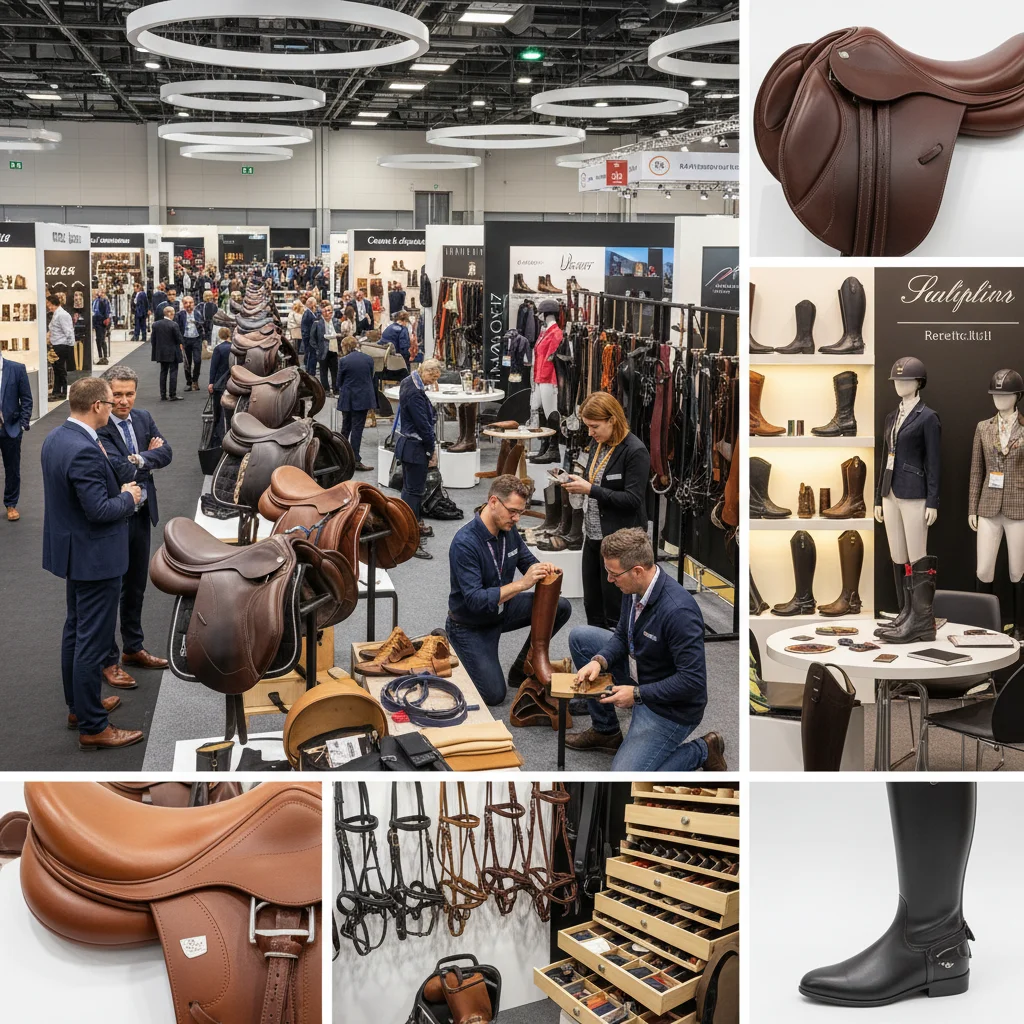
You’re at Chantilly in 2026. Everyone else orders from last season’s catalogs. You ride in a bio-intelligent saddle that adapts to your posture in real-time. Your boots? Handcrafted by artisans who studied your gait for months.
This isn’t fantasy—this is where luxury horse riding is headed.
I’ve spent the last year tracking the revolution in customization. AI-powered fitting tech makes traditional measurements look ancient. Sustainable yet rich materials will change everything you know about riding gear. Whether you are sourcing equestrian supplies for a private stable or building a brand, the landscape is shifting.
Want to turn your stable into an architectural masterpiece? Ready to invest in custom horse tack that gains value? Luxury horse riding trends customization 2026 will reshape how elite riders show their identity. You’re about to learn insights most won’t see until too late. For those seeking high-end custom equestrian clothing, the rules of engagement have changed.
The brands leading this shift? Not who you’d expect. The investment strategies behind these personalized equestrian style choices will surprise you.
The 2026 Market: Where Innovation Meets Identity
The numbers tell a story money can’t ignore. Luxury horse riding trends customization 2026 stands at the center of a USD 2.4 billion market. It’s set to hit 3.6 billion by 2036. Premium segments already own 58.8% of this space. Riders put money where quality meets identity.
Personalized saddle fitting takes 36.4% of market share. It focuses on body-friendly designs that protect rider posture and horse health. North America alone brings in USD 966.08 million. Americans spend $3.20 per capita—the highest worldwide. This goes beyond shopping; it’s a smart investment in performance and status. Meanwhile, the demand for custom equestrian outfit solutions is exploding as riders seek unique aesthetics that mass production cannot offer.
Five key trends are defining this future, driven by advanced equestrian clothing manufacturers and tech innovators. First, smart fabrics are redefining the experience. High-performance riding gear now goes beyond old leather and cotton. Smart heat fabrics adjust to your body heat during training, warming up on cold mornings and cooling down during hard jumps. Second, sustainable materials have become the new status symbol. Horse tack made from recycled leather holds as much status as new leather, while leading equestrian manufacturers use eco-dyes that offer rich, long-lasting colors without chemical harm.
Third, the fit revolution is here. Personalized saddle fitting shifts from tape measures to digital tools. 3D body scans catch every angle, and motion tech studies how your custom riding boots design needs to bend. Fourth, street aesthetics are colliding with classic equestrianism. Personalized equestrian style now takes cues from city fashion, creating riding clothes that work from the stable to social events. Finally, the service experience itself is becoming a luxury product. Premium horse training programs now leverage data from equestrian outfit manufacturers to build cohesive wardrobes where everything—from saddle pads to stable accents—tells a unified story.
Precision Engineering: Saddles and Boots
In the realm of hardware, generic solutions are obsolete. Hermès doesn’t just sell saddles—they build riding experiences with world champions. Their Faubourg obstacle saddle carries DNA from Jérôme Guéry, ranked #2 in the world. The narrow tree and fused flaps aren’t boardroom design choices; they are tested shapes refined through hundreds of competitive jumps. At ¥90,150, you’re buying physics perfected by someone who wins on millimeters.
The Cavale II tells a different story. Simon Delestre’s input created that central balance and seamless seat. It’s ¥79,300 of pure obstacle precision. Hermès worked with 14 international riders across show jumping, dressage, para-equestrian, and eventing. Similarly, Personalized saddle fitting reaches new heights with the Vivace jumping saddle, where forward center of gravity placement reduces thickness to create custom horse tack as functional art.
Dressage riders should study the Arpège saddle. Jessica von Bredow-Werndl co-designed that single-flap structure to cut out friction points. Leading equestrian manufacturers like Butet are also pushing boundaries, with the global saddle market projecting a 5.85% CAGR. Smart buyers verify that these pieces hold value better than mass-produced gear. You’re not shopping; you’re building assets.
The same logic applies to footwear. Traditional boot sizing often lies to you. Custom riding boots design must account for the three distinct arches of the foot. Italian calfskin dominates high-performance boots due to breathability and chemical stability. AI-powered leather grading now hits 92.34% accuracy, allowing makers to identify defects invisible to the human eye. If your maker isn’t using 3D foot scanning versus simple tape measures, you are missing the performance edge that defines high-end custom equestrian clothing.
Apparel and Tack: The Intersection of Style and Science
Riding jackets and breeches own 42.7% of the equestrian apparel market. The best equestrian clothing manufacturers know that function meets visibility here. The market is racing toward USD 1.124 billion by 2032, driven by riders who refuse to compromise. Tailored equestrian apparel in 2026 drops the cotton-or-nothing mindset. Spandex gives four-way stretch, while polyester blends developed by top equestrian outfit manufacturers pull sweat away in seconds.
Customization goes beyond fit. Premium makers offer 16+ fabric shades and embroidery that turns basic pieces into signature gear. This is where custom equestrian apparel shines—pockets designed for your specific needs and adjustable hem lengths that require no tailoring. For professionals, the ROI is clear: a durable custom jacket offers a lower cost-per-wear than mass-market options that fail after a season.
This precision extends to the horse. Custom horse tack now starts with biomechanics. Custom bridle work utilizes veterinary gait analysis to map the horse’s oral anatomy. Brands like Neue Schule and Fager are leading this, with pricing for titanium, anatomically optimized bits reaching USD 3,000+. Furthermore, smart sensors embedded in tack monitor real-time data, allowing premium horse training programs to adjust intensity before injury occurs. Whether it’s recycled leather lead ropes or organic cotton linings, sustainable luxury is the new standard for equestrian supplies.
Global Sourcing: Exhibitions and Investment Strategy
To access the best wholesale equestrian clothing and meet elite artisans, you must look to the global stage. Professional exhibitions are where connections are made.
BETA International 2026 in Birmingham is the commercial core, granting access to 385 exhibitors and strictly trade-only discussions. Spoga Horse 2026 in Cologne acts as the innovation lab; the E-COMMERCE VILLAGE here is vital for businesses looking to scale their custom equestrian clothing operations using digital tools. In Paris, the Salon du Cheval mixes culture with commerce, while Verona’s FIERACAVALLI offers heritage and high-level competition context. For those targeting the Asia-Pacific market, EQUITANA Melbourne provides a gateway to emerging demand.
However, sourcing custom gear—whether for a personal stable or a retail business—requires navigating potential pitfalls. Most custom orders fail due to poor planning. A standard customization process involves needs consultation, technical planning (like 3D scans), and a rigorous design phase. Hidden fees and quality downgrades are common risks when dealing with unverified equestrian clothing factory partners. Always demand written scopes, check for “digital ID” tracking on leather, and require case study validation.
The investment case for customization is strong. Custom horse tack from heritage makers holds 65-85% resale value after three years, compared to just 40% for mass-market items. High-performance riding gear acts as an asset, reducing veterinary bills through better fit and enhancing professional reputation. In the world of private label equestrian clothing, specific branding and quality can command significant premiums.
Future Tech: The Digital Horizon
Technology moves fast. Craft meets code in luxury horse riding trends customization 2026. Machine learning now powers recommendation engines that track how you ride. If you jump train frequently, the system suggests a custom riding boots design with reinforced ankle support before you even realize you need it. Premium horse training programs use wearable sensors to match rider body metrics with horse performance data, eliminating guesswork.
Trust is being rebuilt through Blockchain. To combat fake gear, artisan saddle makers embed digital certificates in their products, ensuring resale values remain strong. Additionally, AR technology is eliminating customization anxiety. Virtual fitting rooms allow you to see how a custom equestrian outfit moves on your body scan before production begins. For hardware, 3D printing is accelerating rapid prototyping, allowing for small-batch production of stable accessories without the massive minimum orders that usually constrain equestrian supplies.
RunEquestrian: The New Standard in Manufacturing
Factory tours often feel repetitive, until you see a facility that operates differently. I walked into RunEquestrian’s 5,000 sqm facility and watched founder Michael Zhang test samples himself before riding off for his weekend training. This isn’t your typical contract manufacturer playing with horse aesthetics. As a premier equestrian clothing manufacturer, they have shipped 500,000+ pieces to 30+ countries since 2009. Their 98% on-time delivery rate crushes the industry’s 75% average.
The numbers speak volumes about their role as a top-tier equestrian clothing factory. Defect rates under 0.3% contrast sharply with the industry standard. Their abrasion tests hit 20,000+ cycles—four times what competitors manage. Their core competency lies in custom equestrian apparel, specifically custom riding breeches and jodhpurs, though their catalog spans 500+ customizable items. They utilize a database of 500+ rider body measurements to ensure fit is engineered, not guessed.
For brands and stables looking to scale, RunEquestrian offers comprehensive OEM/ODM services. Their three-division setup separates creative work from retail operations. Whether you are a startup needing rhinestone applications or an established business seeking private label equestrian clothing, they provide complete brand systems. Their sustainability push is real: the proprietary Re-Ride™ fabric cuts dyeing water usage by 60%.
Crucially, they make entering the market accessible. Minimum orders start at just 100 pieces, with samples arriving in 7 days. This flexibility makes them an ideal partner for sourcing wholesale equestrian clothing or launching a line of custom equestrian clothing. With the U.S. equestrian supplies market hitting $3.5 billion, partnering with a manufacturer who understands both equestrian outfit manufacturers‘ needs and rider biomechanics is essential.
Conclusion
Luxury horse riding customization in 2026 is here. It is changing what it means to ride with style. AI-powered personalized saddle fitting maps your posture down to every detail, while artisan saddle makers use blockchain to verify their one-of-a-kind pieces. Traditional craft meets new tech, and the demand for high-end custom equestrian clothing has never been higher.
Don’t wait for these trends to go mainstream. Top riders are booking commissions with elite workshops right now. Whether you are looking to invest in custom horse tack that grows in value, or you are a brand looking for reliable equestrian manufacturers to bring a vision to life, the opportunity is now. From sourcing the best equestrian supplies to designing a luxury stable, 2026 is about your authentic personal style.
Start with one special piece or one strategic partnership. Your signature look—and your business advantage—is ready to be built.
