
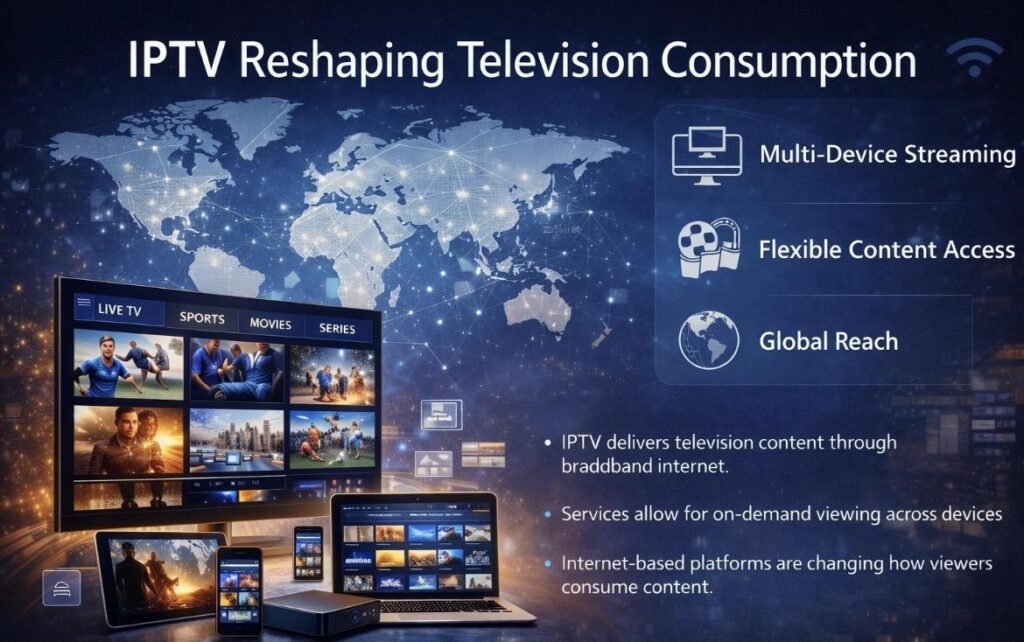
The global television industry is continuing its transition toward internet-based delivery models as audiences seek more flexible and accessible ways to consume content. Internet Protocol Television, commonly known as IPTV, has emerged as a key part of this shift, offering an alternative to traditional cable and satellite broadcasting.
IPTV technology allows television content to be delivered through broadband internet connections, enabling viewers to access live channels, movies, and series on demand. This approach aligns with broader digital trends, where convenience, device flexibility, and content choice increasingly shape consumer preferences.
IPTV and the Demand for Flexible Viewing
One of the primary drivers behind IPTV adoption is the growing demand for flexible viewing options. Unlike conventional television services that rely on fixed schedules and hardware installations, IPTV platforms allow users to stream content across multiple devices, including smart televisions, smartphones, tablets, and streaming boxes.
This adaptability reflects changes in viewing behavior, as audiences increasingly consume content across different locations and screens. The ability to access programming without geographic or hardware limitations has contributed to IPTV’s expanding presence in many markets.
Content Variety and Accessibility
IPTV platforms typically aggregate a wide range of content categories into a single digital environment. These may include live television channels, sports coverage, entertainment programming, and film libraries. By consolidating content access, IPTV services aim to simplify how viewers engage with television media.
Platforms operating in this space, such as strong8k, are part of a broader ecosystem responding to the demand for centralized and internet-driven content delivery. This model supports users who are looking for alternatives to traditional broadcasting while maintaining access to diverse programming.
Streaming Quality and User Experience
As IPTV adoption increases, streaming quality and user experience have become important considerations across the industry. High-definition and ultra-high-definition formats are now widely expected, with performance closely tied to internet connectivity and platform infrastructure.
Equally important is usability. Clear navigation, organized content categories, and responsive interfaces help users interact with IPTV platforms more efficiently, particularly those new to internet-based television services.
Global Reach and Industry Growth
Unlike traditional television providers that rely on regional broadcast infrastructure, IPTV services can operate across borders. This allows platforms to reach international audiences and provide access to content from multiple regions, supporting the growing interest in global programming.
Industry analysts note that the IPTV market continues to expand as digital infrastructure improves and consumer preferences shift toward on-demand and mobile-friendly entertainment options. This growth reflects a larger transformation in how television content is distributed and consumed.
Conclusion
The rise of IPTV highlights an ongoing evolution in television consumption, driven by technological advancements and changing audience expectations. Internet-based platforms are reshaping the media landscape by offering greater flexibility, broader content access, and multi-device compatibility.
As IPTV adoption continues to grow worldwide, it is expected to remain a significant part of the digital entertainment ecosystem, influencing how viewers engage with television content in the years ahead.
