
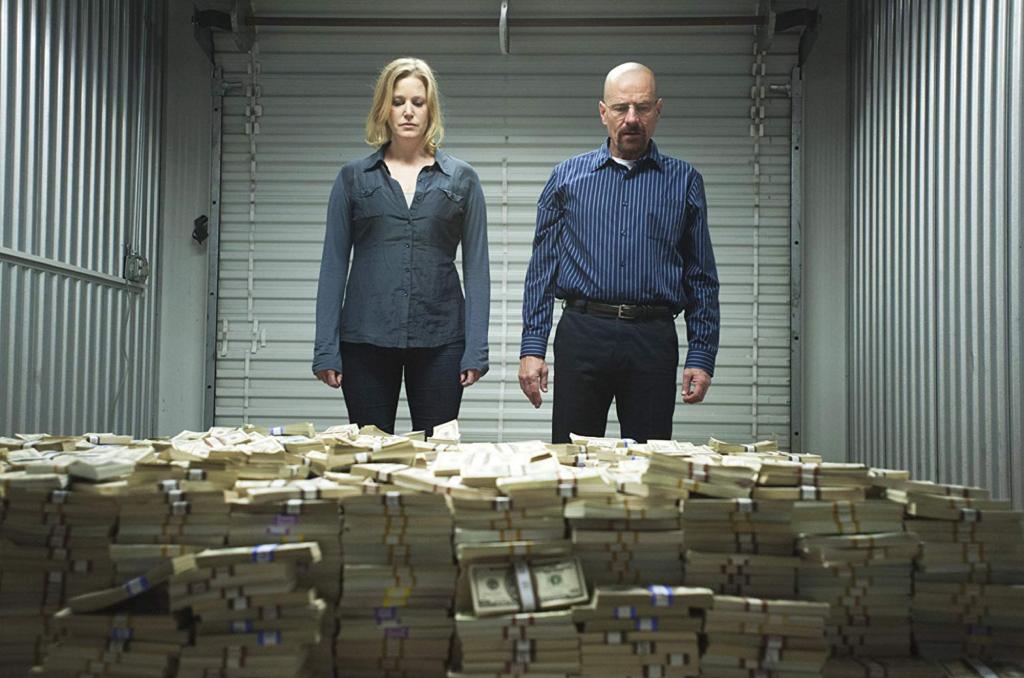
Here, we explore the fascinating world of movie props and the strict legal rules governing the creation of banknote reproductions in the UK. While filmmakers need counterfeit money that looks real for big-screen, high-stakes scenes, they must comply with Bank of England regulations to ensure these items aren’t used for fraud or money laundering. By using specific materials and the 25% size rule, prop masters create high-quality replicas that look perfect under camera lights but are easily spotted by banknote authentication experts.
Reality
Have you ever watched a blockbuster movie and seen a suitcase full of cash? Your eyes probably went wide.
It looks so crisp and genuine that you might think it’s real. But in the film industry, using real cash is a giant risk. Instead, they use something called “prop money.”
The goal is to have counterfeit money that looks real enough to fool the audience but fake enough to satisfy the police.
In the UK, this is a very delicate balance. If a filmmaker gets it wrong, they could face 10 years in prison under the Forgery and Counterfeiting Act 1981.
Why Do Movies Need Money That Looks Real?
The Answer: Realism Without the Risk
Directors want you to feel the tension of a heist. To do that, the money needs to have the right print quality and texture. However, real money is a “liability.”
If you have £1 million on a set, you need armed guards. If an actor drops a stack in a puddle, that’s a very expensive mistake!
By using high-quality counterfeit props, the crew can focus on the acting without worrying about a literal fortune disappearing.
| Feature | Real Bank of England Note | Legal Prop Money |
| Size | 100% (Standard) | Must be >150% or <75% |
| Sides | Double-Sided | Usually One-Sided |
| Material | Polymer (Plastic) | Ordinary Paper or Cardboard |
| Markings | Official Signatures | “Motion Picture Use Only” |
Is It Legal to Buy Counterfeit Money That Looks Real?
Only if it Meets Reproduction Conditions
You might wonder if you can buy counterfeit money that looks real for your own home movie or YouTube channel. In the UK, the answer is “yes,” but only if the notes follow the Bank of England reproduction conditions.
According to the Bank of England, only about 0.0019% of notes in circulation are counterfeit, but it takes every one of them seriously.
To stay legal, prop money must:
- Be printed on a material “clearly different” from the polymer used in real notes.
- Do not have images on both sides (the back must be blank).
- Be a different size so it won’t fit into an ATM or vending machine.
How Do Prop Masters “Fake” the High-End Look?
The “Hero” Note Technique
When you see a close-up of a character counting bills, those are called “Hero Notes.” These are premium counterfeit props designed to mimic the hologram and see-through window of real currency.
To maintain legal compliance, pro masters use specimen markings and distinguishable materials. They often use “fillers”(blank paper) in the middle of a stack, placing only high-quality banknote replicas on the top and bottom.
- UV Number: Real notes have a glowing number under ultraviolet light. Props usually lack this.
- Tactile Feature: Real £20 and £50 notes have raised dots for the blind. Props are usually smooth.
- Microprinting: If you use a magnifying glass on a real note, you can see tiny words. Props usually have blurred lines here.
What Are the Dangers of Using Realistic Props?
Prison and Heavy Fines
Even if you are just a “fan” of movies, trying to spend prop money is a crime.
In 2024, fraud cases in the UK rose significantly, and the National Crime Agency (NCA) works hard to stop illicit goods from entering the economy.
If a shopkeeper catches someone using “movie money,” they are instructed to call the police immediately.
The National Fraud Database recorded a case every two minutes last year, showing that authorities are more alert than ever.
Common Questions About Film Money
Can I print my own prop money at home?
No. Most home printers and software like Photoshop have “counterfeit detection” that will stop you from scanning or printing money. It is much safer to buy from a licensed prop house.
Does the “150% size rule” apply in the UK?
Yes. To be legal, a reproduction must be at least 25% larger or 25% smaller than the real thing. This ensures that the visual image cannot be mistaken for legal tender by a machine.
Why does some prop money say “Specimen”?
The word “SPECIMEN” is required by law if the prop is the same size as a real note. It must be printed diagonally in a way that can’t be washed off.
Staying on the Right Side of the Law
The next time you see a mountain of cash on screen, remember the skilled professionals and security experts who worked to make it look that way.
They aren’t just printers. They are artists who know the law.
If you are a creator looking for counterfeit money that looks real, always check the latest Bank of England guidelines first.
It’s the difference between a great film and a trip to the police station!
