
Design choices now shape how people judge your brand within seconds. Digital design trends for business influence trust, clarity, and how easy it feels to take the next step. If your visuals feel off or dated, visitors notice fast and move on just as quickly.
The reason for this is simple. Internet users these days are busy, so anytime they open your site, they expect a smooth experience. Anything that demands effort from them will quickly make them leave.
Today, I’ll take you through the design trends changing how modern businesses present themselves online. You’ll learn what’s driving these changes and how they affect daily performance and brand image.
Top Digital Design Trends for Business You Can Try Out
Here are the top digital design trends affecting businesses today.
1. AI-Driven Design Automation
As part of digital design trends for business, AI-driven automation helps you scale visual production without increasing headcount.
It uses machine learning tools to handle repetitive design tasks with speed and consistency. You feed the system brand rules, layout preferences, and content inputs. It then produces layouts, visuals, and variations in real time.
Instead of starting from a blank canvas, you work from smart suggestions that adapt based on data and usage patterns.
This approach shifts your role from manual execution to creative direction, which speeds up decision-making.
2. Mobile First Design Approach
Most internet users access websites through their smartphones. Therefore, a key driver of digital trends for business is designing for small screens. This ensures the majority of your visitors get the best experiences.
Focus on touch interactions, simple layouts, readable text, and fast loading from the very first draft. A professional and easy to use online banner creator can help you create and ensure your banners don’t shrink on some screens.
You reach users where they spend most of their time and reduce the frustration caused by cluttered pages. Pages load faster, content feels easier to scan, and actions feel more natural.
3. Data Driven Personalization
Data-driven personalization uses user data to shape what people see, read, and interact with on social media and other digital platforms. It’s one of the top digital design trends for business, as it presents content that feels relevant to each visitor.
You collect signals like behavior, location, device type, and past actions, then apply that data to layouts, content, and visual elements. This approach turns design into a responsive system that adjusts based on real user activity rather than guesswork.
Additionally, your brand ends up building better relationships since customers feel valued and considered.
4. Voice User Interface Design
The use of voice interfaces is taking digital design trends for business by storm. It focuses on letting users interact with digital products through spoken commands instead of screens.
You design prompts, responses, and flows that feel natural in conversation without your direct involvement. This is similar to having to hire a personal assistant who handles the simple tasks on your behalf.
The goal is to let people complete tasks hands-free while still feeling in control of the experience. It improves access and speeds up simple actions like searches and support requests.
5. Augmented Reality Design Experiences
Augmented reality has been touted as the future of digital marketing for a while now. It involves blending digital elements into the real environment through phones, tablets, or wearable devices.
You design visuals that respond to movement, space, and real-world context instead of flat screens alone.
Augmented reality design focuses on scale, placement, and interaction so digital objects feel natural within physical surroundings. Users can view products, instructions, or information layered directly onto what they see around them.
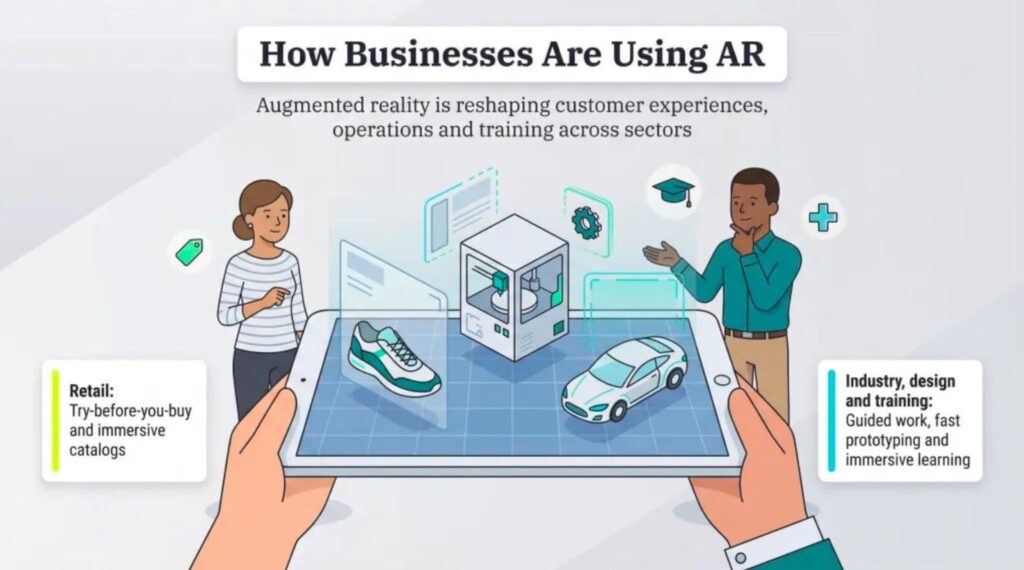
By giving customers a realistic preview of what they’re about to buy, you remove doubt and shorten decision cycles. Teams also use AR for training, demos, and guided tasks without extra hardware.
6. Sustainable and Eco-Conscious Design
Sustainable and eco-conscious design focuses on reducing digital waste while keeping experiences clear and efficient.
It involves choosing lightweight visuals, simple layouts, and cleaner code that uses fewer resources during loading and browsing. This approach favors long-lasting design choices, like flexible digital signage that doesn’t demand frequent updates.
The resulting fast pages reduce server strain and lower data use for visitors on limited connections. In turn, users notice how your brand shows care through thoughtful design choices.
In a nutshell, it turns digital presence into a reflection of long-term thinking rather than short-term visual appeal.
7. Dark Mode Interfaces
The amount of time people spend on screens is increasing, and this puts a strain on their eyes. Most devices come with dark mode interfaces to help reduce the glare, and this can switch colors on your website.
Part of digital design trends for business involves making your digital pages dark mode-ready. You design contrast, color balance, and readability to make content easy on the eyes while maintaining brand identity.
It also lowers energy use on devices with OLED screens, giving a subtle efficiency boost. Plus, it shows your visitors that you pay attention to user experience and modern aesthetics.
8. Glassmorphism and Soft UI
Glassmorphism is a design style that creates the illusion of frosted glass by using transparency, blur effects, and layered backgrounds.
You can see content or colors behind elements while keeping a sense of separation, which adds depth and visual interest. Here’s an example.
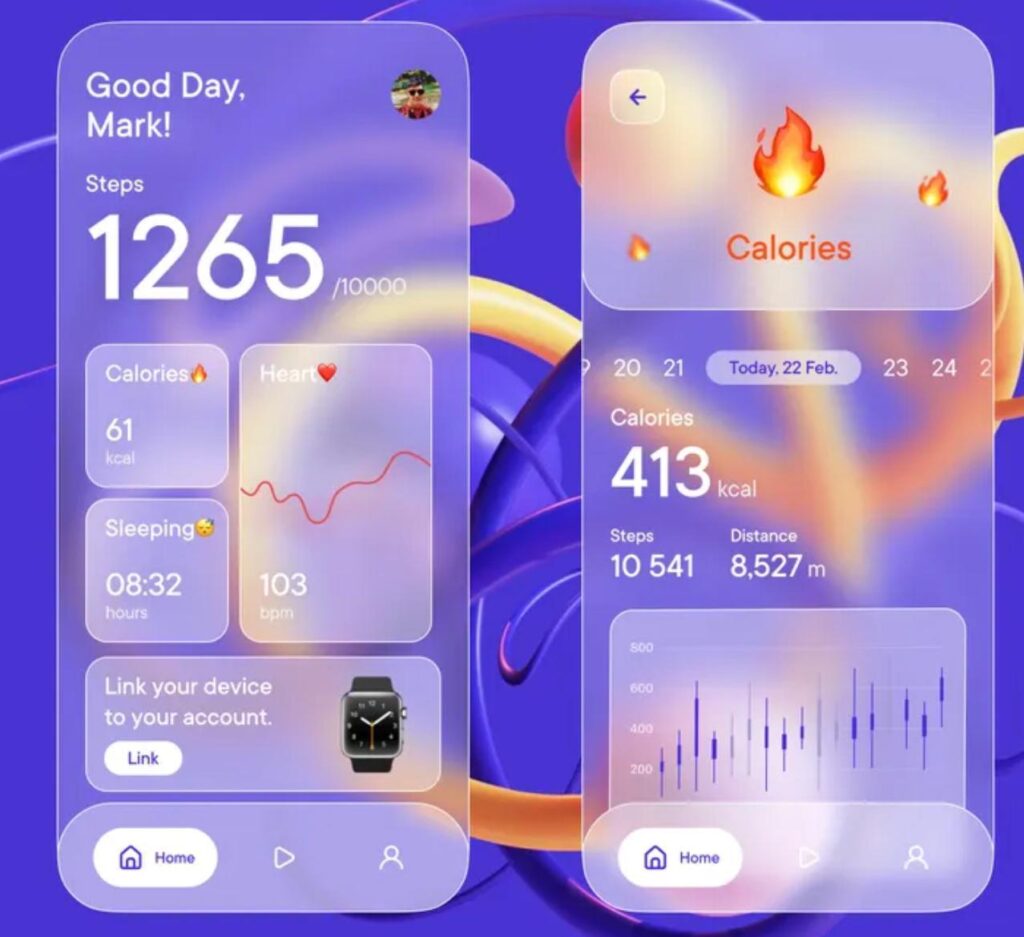
Soft UI combines this approach with subtle shadows, rounded edges, and gentle gradients to produce smooth interfaces. Adopting this design format can help users perceive your digital products better.
This is because users respond positively to depth and tactile cues, which guide attention without overwhelming them. It encourages longer engagement, signals modernity, and creates a memorable impression that reinforces quality and attention to visual detail.
9. Immersive 3D Visual Elements
Not to be confused with augmented reality design, Immersive 3D uses realistic shapes, textures, and lighting. You create objects that users can rotate, explore, or interact with directly on screens.
This gives users a sense of design presence without leaving the device. It’s an approach that emphasizes perspective, movement, and spatial relationships to make visuals feel tangible and engaging rather than static.
With this, you can showcase items from every angle, highlight features interactively, and create striking hero visuals that capture attention instantly.
This trend also allows storytelling through dynamic visuals, making content more memorable and engaging. Incorporating 3D elements into digital design trends for business helps you differentiate your brand.
10. Bold Typography and Custom Fonts
Modern designs use kinetic typefaces as a primary visual element rather than just a way to communicate words. You select fonts with personality, size, and weight that draw attention and convey tone instantly.
This trend often pairs oversized headlines with unique or custom fonts that reflect a brand’s character. That makes messages stand out in crowded digital spaces.
This approach shapes how audiences perceive your brand at first glance. You can establish authority, creativity, or friendliness without extra graphics.
Bold typefaces are now part of digital design trends for business as they help differentiate your brand from competitors.
Wrapping Up
You need to keep up with digital design trends for business if you want to stay relevant online. From AI-driven automation to immersive 3D visuals, these design choices influence how users perceive your brand.
The right design approach can guide attention naturally, reduce friction, and leave a lasting impression. So adopt the trend that fits your needs and transform your brand.
