
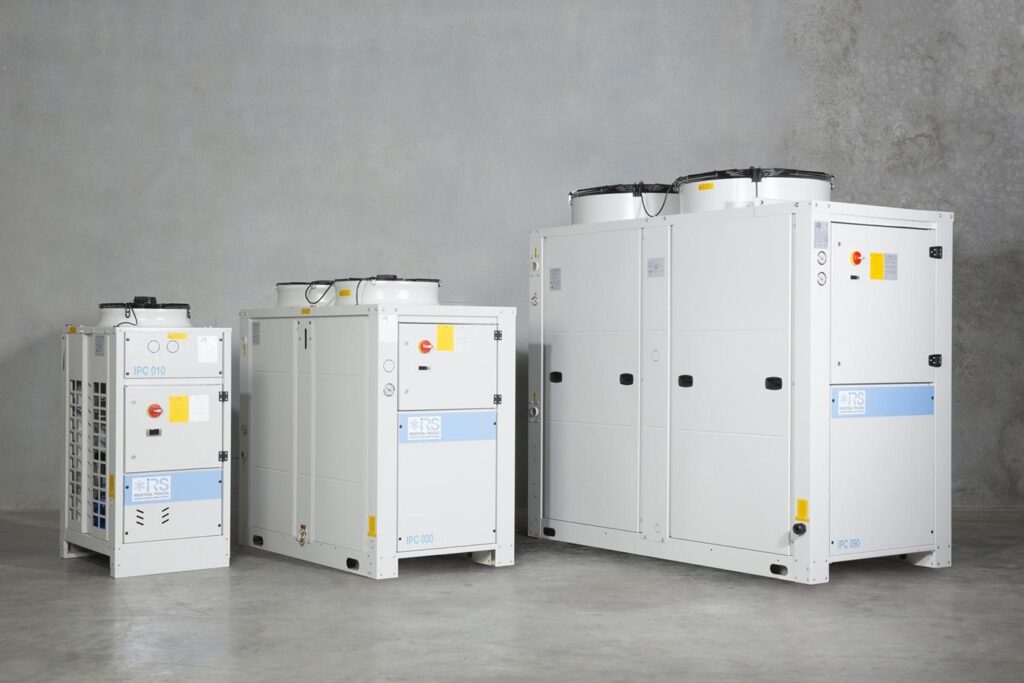
Industrial water chillers are one of those behind-the-scenes systems that keep modern industry running smoothly. You rarely see them, but without them, production lines would stall, equipment would overheat, and product quality would suffer. From food manufacturing to heavy engineering, industrial water chillers quietly protect processes that rely on stable temperatures.
If your business depends on precision, uptime and efficiency, understanding how industrial water chillers work and why they matter is essential.
What Are Industrial Water Chillers?
Industrial water chillers are cooling systems designed to remove heat from water and circulate that chilled water through machinery or processes. Their primary job is temperature control. By absorbing unwanted heat and carrying it away, they maintain consistent operating conditions.
Unlike comfort cooling systems used in offices or homes, industrial water chillers are built for continuous operation. They are engineered to handle demanding environments, fluctuating loads and critical production requirements.
In simple terms, they keep industrial processes from overheating.
How Industrial Water Chillers Work
At the heart of every industrial water chiller is a refrigeration cycle. This cycle uses a refrigerant to absorb heat from process water and release it elsewhere.
The system begins with warm water returning from the process. That water passes through an evaporator, where the refrigerant absorbs the heat. As the refrigerant heats up, it changes state from liquid to vapour.
The vapour is then compressed, increasing its pressure and temperature. It moves into a condenser, where the heat is expelled either into the air or into a separate water circuit. Once cooled, the refrigerant becomes liquid again and the cycle repeats.
Meanwhile, the chilled water is pumped back into the production system to continue cooling equipment or materials. This continuous loop keeps temperatures steady and predictable.
Air Cooled and Water Cooled Systems
Industrial water chillers generally fall into two main categories. Air cooled chillers release heat into the surrounding air. Water cooled chillers use a cooling tower or secondary water loop to carry heat away.
Air cooled systems are often simpler to install and are well suited to sites without access to cooling towers. Water cooled systems tend to be more efficient in large scale operations where consistent performance is critical.
The right choice depends on site conditions, energy considerations and production demands.
Why Temperature Control Matters
Heat is a natural by product of many industrial processes. When machinery operates continuously, friction and electrical activity generate significant thermal energy.
If that heat is not removed, components can expand, wear prematurely or fail entirely. In manufacturing environments, even small temperature fluctuations can compromise tolerances and reduce product quality.
Industrial water chillers provide stability. They create a controlled environment where machinery can operate at peak performance without risk of overheating.
Improved Equipment Lifespan
One of the most overlooked benefits of industrial water chillers is equipment protection. Overheating accelerates wear on motors, pumps and precision components.
By maintaining optimal temperatures, chillers reduce stress on machinery. Bearings last longer. Electronics remain stable. Seals and gaskets are less likely to degrade.
Over time, this translates into lower maintenance costs and fewer unexpected breakdowns.
Energy Efficiency Gains
Modern industrial water chillers are designed with energy efficiency in mind. Advanced compressors, variable speed drives and intelligent controls allow systems to adjust output based on demand.
Instead of running at full capacity all the time, a well designed chiller system modulates its performance. This reduces power consumption and lowers operating costs.
In energy intensive industries, these savings can be substantial over the life of the equipment.
Consistent Product Quality
Many industries rely on precise temperature control to maintain product integrity. In plastics manufacturing, for example, mould temperatures directly affect finish and strength.
In food production, cooling processes must meet strict safety standards. In pharmaceuticals, chemical reactions require carefully controlled thermal conditions.
Industrial water chillers ensure these parameters remain stable. That consistency protects both product quality and brand reputation.
Reduced Downtime
Unplanned downtime is expensive. When equipment overheats, production can halt without warning.
Industrial water chillers act as a safeguard. By managing heat effectively, they reduce the likelihood of thermal related shutdowns.
Reliable cooling systems keep production lines moving and schedules on track.
Key Industries That Use Industrial Water Chillers
Industrial water chillers are used across a wide range of sectors. Any industry that generates heat or requires temperature precision can benefit from them.
Manufacturing and Engineering
Heavy machinery, CNC equipment and laser cutting systems generate intense heat. Industrial water chillers remove that heat and prevent distortion or damage.
In metal fabrication and injection moulding, stable temperatures are essential for maintaining tight tolerances.
Food and Beverage Processing
Food production relies on careful temperature control at every stage. From mixing and fermentation to packaging, cooling systems ensure compliance with safety standards.
Industrial water chillers help maintain hygiene, prevent spoilage and support consistent product quality.
Plastics and Injection Moulding
In plastics manufacturing, mould cooling is critical. Without effective cooling, cycle times increase and defects become more common.
Industrial water chillers accelerate production by keeping mould temperatures stable and predictable.
Medical and Pharmaceutical Applications
Pharmaceutical manufacturing requires strict environmental control. Many processes are sensitive to even minor temperature shifts.
Industrial water chillers provide the precision needed to maintain compliance and protect product integrity.
Printing and Packaging
High speed printing equipment generates heat that can affect ink consistency and paper stability.
By integrating industrial water chillers into the system, operators can maintain optimal temperatures and reduce waste.
Mining and Heavy Industry
In regions like Western Australia, mining operations rely on robust cooling solutions. Equipment often operates in extreme conditions.
Industrial water chillers help protect hydraulic systems, compressors and processing equipment from thermal stress.
Environmental Considerations
Sustainability is increasingly important in industrial operations. Modern industrial water chillers are designed to minimise environmental impact.
Many systems use refrigerants with lower global warming potential. Advanced controls optimise efficiency and reduce unnecessary energy use.
Closed loop water systems also reduce water consumption compared to once through cooling methods.
Scalability and Customisation
No two industrial facilities are exactly the same. Cooling loads vary depending on equipment, climate and production schedules.
Industrial water chillers can be customised to suit specific requirements. Modular designs allow businesses to scale capacity as operations grow.
This flexibility makes them a long term investment rather than a short term fix.
Maintenance and Reliability
Like any mechanical system, industrial water chillers require routine maintenance. Regular inspections, cleaning and performance checks keep systems operating efficiently.
When properly maintained, high quality chillers can deliver reliable service for many years. Preventative maintenance reduces the risk of unexpected failures and extends equipment life.
Working with experienced technicians ensures that systems remain optimised and compliant with industry standards.
The Financial Perspective
While the upfront cost of industrial water chillers can be significant, the return on investment is often compelling.
Lower energy bills, reduced downtime and longer equipment lifespan all contribute to cost savings. Improved product quality reduces waste and rework.
Over time, the operational benefits typically outweigh the initial installation expense.
Choosing the Right Industrial Water Chillers
Selecting the correct industrial water chillers involves more than simply matching capacity numbers. Factors such as ambient temperatures, installation space and future expansion plans must be considered.
Load calculations should account for peak demand rather than average usage. Control systems should integrate seamlessly with existing infrastructure.
Professional guidance during the selection process can prevent costly oversizing or undersizing.
Why Quality Matters
Not all industrial water chillers are built to the same standard. In demanding industrial environments, durability is critical.
High quality components, robust construction and intelligent control systems all contribute to long term performance.
Choosing reliable equipment reduces the risk of operational disruptions and protects your investment.
Industrial Water Chillers in Australia
Industrial water chillers play a vital role in modern industry. They protect machinery, maintain product quality and support efficient operations across countless sectors.
By understanding how industrial water chillers work and recognising their benefits, businesses can make informed decisions about cooling solutions that safeguard productivity and profitability.
For businesses seeking dependable industrial water chillers in Australia, IRS Refrigeration is an ideal choice thanks to its industry expertise, tailored solutions and commitment to reliable performance in demanding conditions.
