
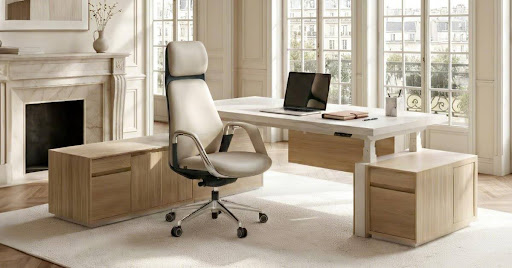
As offices continue evolving from purely functional environments into spaces for decision-making and creativity, expectations for executive furniture are shifting. The most effective workspace solutions may not command attention on the first day of use. Instead, their value reveals itself gradually—through sustained focus, physical ease, and consistent performance.
Ergonomic research consistently shows that height-adjustable desks and supportive seating can reduce physical strain, minimize fatigue, and promote healthier posture during extended work sessions. For executives and professionals whose responsibilities demand long hours at a desk, these seemingly subtle design factors directly influence clarity, composure, and productivity.
Across the industry, designers are refining furniture to support balance rather than excess. Today’s executive environments favor clean silhouettes, durable materials, and intuitive ergonomics over decorative complexity. The result is a workspace that feels calm, controlled, and purpose-built for high-level thinking.
Below are several standout design directions shaping the executive workspace in 2026.
Electric Standing Desk with Ergonomic Front Edge
Where Precision Meets Everyday Performance
Modern expectations for a height-adjustable Standing Desk now extend well beyond height adjustment alone. Professionals working eight or more hours daily require reliable structural stability, comfortable wrist positioning, organized cable management, and surfaces that withstand constant use.
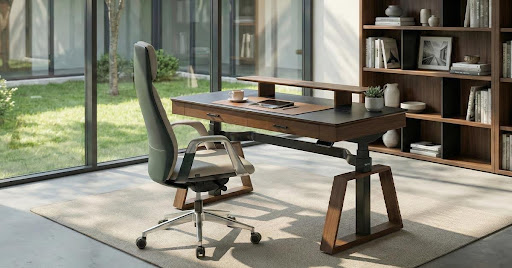
A thoughtfully engineered electric standing desk addresses these needs through subtle ergonomic refinements. A contoured front edge can reduce forearm pressure during long typing sessions, while durable laminated or composite desktops resist wear and remain easy to maintain in high-frequency environments.
Key performance features typically include:
- Smooth dual-motor height transitions
- Programmable memory presets for sit–stand routines
- Reinforced desktop construction for multi-monitor setups
- Integrated cable channels to maintain visual clarity
Rather than making a bold visual statement, this category of desk excels by quietly supporting daily workflow. Stability, noise control, and ergonomic detailing work together to create a dependable foundation for executive tasks.
Leather Executive Seating with Zoned Lumbar Support
Posture as Professional Presence
If the desk establishes workflow, the chair determines physical state. Many leather office chairs prioritize immediate softness, but long-term comfort depends on sustained lumbar structure and postural integrity.
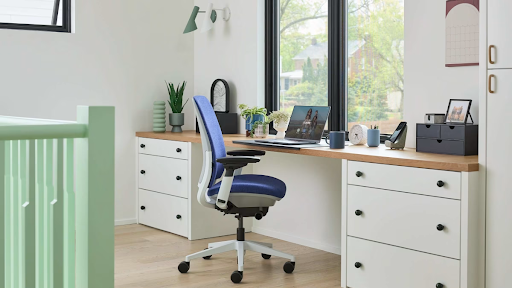
A well-designed executive Office chair balances refined upholstery with engineered support beneath the surface. Top-grain leather in key contact zones enhances tactile quality, while reinforced internal foam structures maintain alignment over extended use.
Effective executive seating often includes:
- Zoned lumbar systems that preserve spinal alignment
- Controlled recline mechanisms with upright lock options
- Reinforced seat edges to reduce thigh pressure
- Multi-directional armrests for adaptable positioning
Such seating is not designed for lounge-style relaxation. Instead, it supports upright posture without conscious effort—an essential quality for leaders who move between focused work, virtual meetings, and strategic planning throughout the day.
Integrated Home Office Systems
Efficiency Without Visual Noise
As remote and hybrid work remain prevalent, expectations for home offices have matured. Professionals increasingly seek cohesive systems that combine ergonomics, storage, and materials within a unified structure.
An integrated workstation typically pairs height-adjustable capability with built-in drawers or concealed storage compartments. These additions reduce desktop clutter while improving ergonomic flow. In some configurations, drawers double as keyboard trays, subtly optimizing posture without increasing complexity.
Material choices also play a significant role. Warm wood finishes, matte surfaces, and durable coatings help a workspace feel composed rather than technical. When storage and structure are integrated from the outset, the result is a more intentional and visually balanced environment.
The Modern Executive Standing Desk
Refined Form with Functional Clarity
The Executive Standing Desk has evolved from a purely mechanical tool into a defining architectural element within the office.
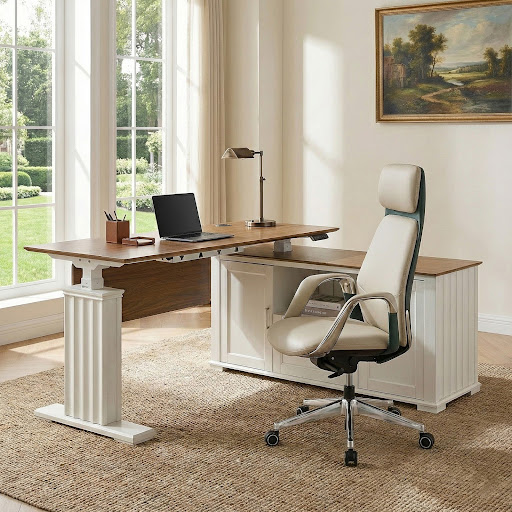
Rather than emphasizing motion alone, contemporary designs focus on how materials age, how proportions anchor a room, and how built-in features reduce friction during daily use.
Common refinements include:
- Integrated side cabinets for concealed organization
- Embedded charging modules for device readiness
- Durable, low-maintenance finishes in neutral tones
- Structural forms that provide stability without visual heaviness
These elements transform the desk into more than a workstation—it becomes the visual and functional centerpiece of the executive environment. In professional settings, long-term durability and compositional clarity outweigh trend-driven ornamentation.
Advanced Ergonomic Task Seating
Support That Disappears into the Background
Earlier generations of ergonomic chairs often highlighted visible mechanisms and adjustment levers. Contemporary design shifts toward subtle adaptability and visual restraint.
Hidden lumbar systems that respond to posture changes, controlled recline tension, and clean shell backs allow movement without disrupting the workspace aesthetic. Adjustable armrests and adaptive seat edges further reduce pressure points during extended sitting sessions.
This approach reflects a broader philosophy: furniture should perform reliably without demanding attention. When comfort is consistent and intuitive, focus remains on decision-making rather than physical distraction.
Conclusion: When Comfort and Aesthetics Become Enduring Values
Office furniture upgrades in 2026 are less about adding features and more about refining experience. Across product categories—from ergonomic seating to executive desks—the emphasis is on structural integrity, visual calm, and sustained physical support.
These designs rarely seek immediate attention. Instead, they demonstrate value over time by reducing fatigue, minimizing visual clutter, and maintaining composure throughout demanding workdays. When a workspace no longer interrupts concentration with discomfort or disorder, productivity becomes more natural.
In this evolving landscape, comfort and aesthetics are no longer optional enhancements. They are foundational elements shaping the modern executive workspace—quietly redefining efficiency through thoughtful design.
