
 Walk past a retail store in any major city these days and there’s a decent chance something will catch your eye mid-stride — a floating logo, a spinning product, a vivid animation hanging in the air with no screen in sight. What you’re seeing is almost certainly a 3D hologram fan at work, and if you haven’t noticed how quickly this technology has gone from novelty to mainstream, you’re not alone. The shift happened fast.
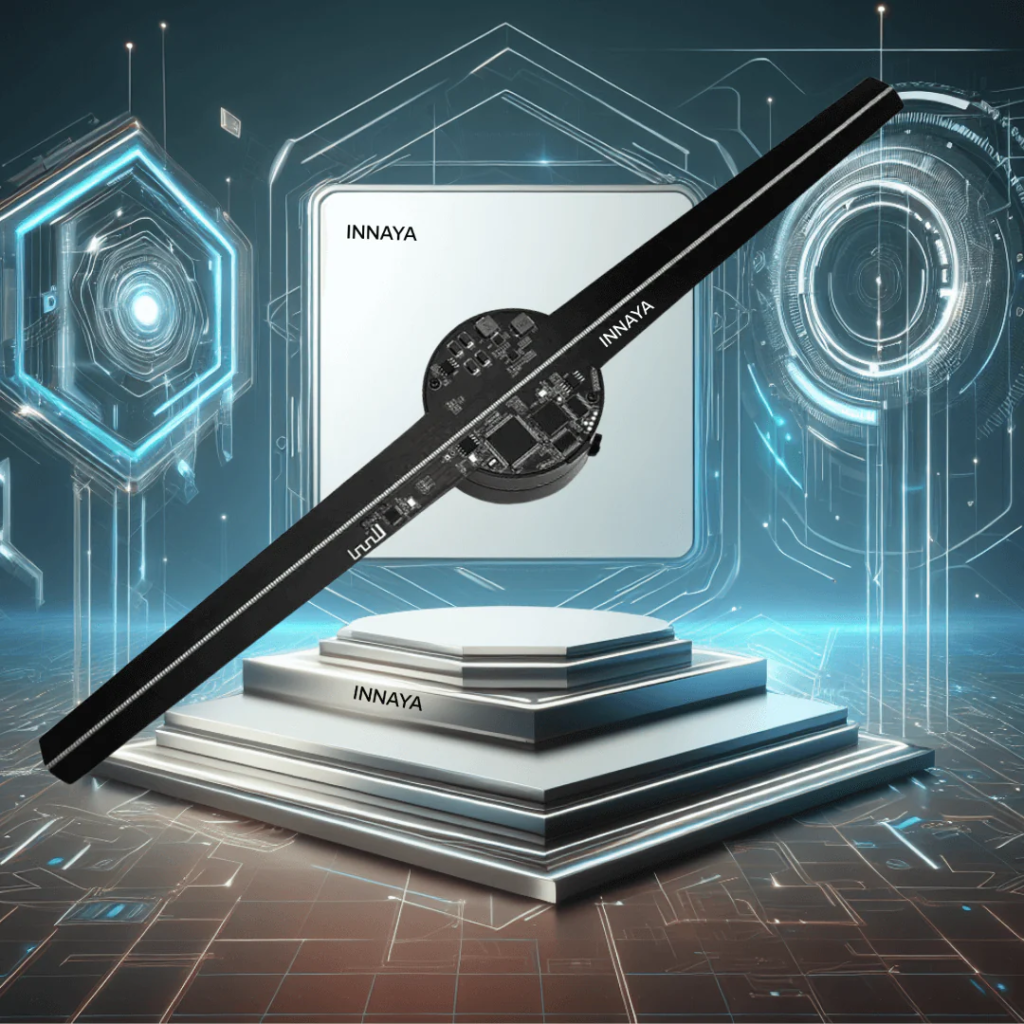
3D hologram fans — also called LED hologram fans or holographic projectors — use rapidly spinning LED blades to project three-dimensional visuals that appear to float in mid-air. The effect is striking, even to people who understand how it works. And beyond the visual wow factor, the technology has found real-world footing across retail, hospitality, events, education, and even home decor.
How the Technology Actually Works
The core mechanism is straightforward but clever. A motorized fan spins LED strips at high speed while precise sequencing causes specific LEDs to illuminate at specific rotational positions. The human eye, unable to track individual blinking lights at that speed, perceives a continuous, three-dimensional image floating in space. It’s a form of persistence-of-vision display taken to its most commercially viable form yet.
Modern 3D hologram fans connect via Wi-Fi or USB, allowing users to upload custom animations, product renders, logos, and promotional content. Many models support app-based control, making it simple for a business owner to update displayed content remotely without touching the device. Some larger installations sync multiple units together to create wider or more complex visual displays.
Why Businesses Are Investing in Hologram Fan Technology
The business case for 3D hologram fans is compelling. Traditional advertising competes for attention in an already saturated landscape of screens, banners, and printed materials. A holographic display does something fundamentally different — it makes people stop, look twice, and reach for their phones to film it. That organic reaction drives social sharing, which extends the advertising reach well beyond the physical location.
Retailers have deployed hologram fans to showcase new products, run seasonal promotions, and create visual anchors in high-traffic areas. Hotels use them in lobbies to communicate branding. Trade show exhibitors use them to draw foot traffic to their booths. Restaurants have even integrated them into themed dining experiences. The content is fully customizable, which means the same device can serve completely different marketing goals at different times of year.
From a cost-efficiency standpoint, a quality 3D hologram fan is a one-time hardware investment with ongoing content flexibility. There are no recurring printing costs, no replacement screens to worry about, and setup is typically simple enough to manage without a technical team. For small and medium businesses in particular, this makes holographic displays far more accessible than they were even a few years ago.
Choosing the Right 3D Hologram Fan
Not all hologram fans are built the same. Buyers should consider display diameter, resolution, brightness, connectivity options, and whether the device supports synchronization for multi-unit setups. Fan diameter is one of the most important factors — a 16-inch unit works well for countertop or shelf displays, while a 39-inch model is better suited for window displays, events, or open floor spaces where visibility from a distance matters.
Brightness and LED density directly affect image clarity. A higher LED count generally means sharper visuals with better depth perception. For outdoor-facing or brightly lit environments, brightness levels become especially important — a unit that looks stunning in a dim room may wash out under strong ambient lighting.
Content compatibility is another practical consideration. Most quality fans support standard video formats and come with editing or conversion software, but it’s worth verifying this before purchasing, particularly if your content workflow involves specialized design tools.
INNAYA has built a reputation for offering well-engineered holographic display products across multiple size ranges and use cases. Their 3D hologram fans include options from compact desk units to large-format models designed for professional installations, with current pricing that makes the technology accessible for businesses of varying scale.
The Growing Market and What’s Next
The global market for holographic display technology has grown steadily, and consumer awareness has followed. What was once considered cutting-edge exhibition technology has become a viable tool for independent retailers and event planners. As LED technology improves and manufacturing costs continue to decline, adoption rates are expected to climb further.
There’s also a growing role for hologram fans in consumer spaces. Home offices, gaming rooms, and entertainment setups have all become use cases — people are discovering that a well-placed holographic display adds a dimension of visual interest that no conventional screen can quite replicate.
Looking ahead, the integration of AI-driven content generation may further lower the barrier to creating compelling holographic animations. Instead of needing a design team to produce 3D content, business owners may soon be able to generate display-ready visuals from simple prompts.
Final Thoughts
3D hologram fans have earned their place as a legitimate and effective display technology. Whether you’re a retailer looking to differentiate your storefront, an event producer aiming for memorable moments, or simply someone drawn to the intersection of art and engineering, holographic fans deliver an experience that flat-screen technology genuinely cannot match.
For those ready to explore the options available, INNAYA offers a curated selection of holographic display products designed for both professional and personal use — a solid starting point for anyone entering the space.
