
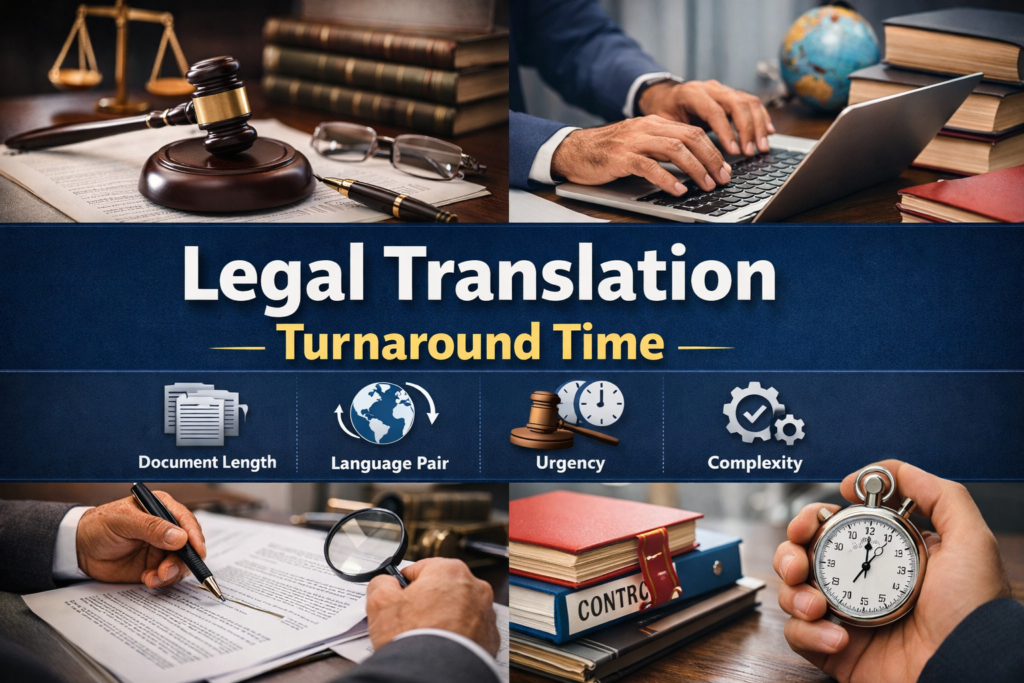
When businesses or individuals request legal translation, one of the first questions they ask is how long the process will take. The answer depends on several factors that affect the turnaround time of a legal translation. Document length, language combination, level of technical detail, and urgency can all influence how quickly a translated legal document can be delivered.
Legal translation is not just about converting words from one language to another. It requires accuracy, understanding of legal systems, and careful review. Because of this, the timeframe can vary from a few hours for short documents to several days or more for longer or complex material.
Typical Timeframe for Legal Translation
For many standard documents, the process follows a predictable schedule. Translators usually work at a consistent pace to maintain quality and accuracy.
Here are common estimates for professional legal translation work.
Short legal documents
Small documents such as affidavits, certificates, or brief contracts can often be translated within one day. These texts are usually under a few pages and contain clear formatting.
Medium length documents
Items such as service agreements, legal statements, or policy documents may take two to three days depending on complexity.
Large legal files
Long contracts, court records, compliance documents, or case files may require several days or even a week. These materials often contain detailed terminology that must be translated carefully.
Professional translators typically translate around 2000 to 3000 words per day when dealing with legal material. The pace may slow if the document contains highly technical language.
Why Legal Translation Takes Careful Time
Legal documents require a level of precision that goes beyond standard translation tasks. Every term must match the meaning used in the legal system of the target language.
Several reasons explain why translators take careful time with legal texts.
Accuracy matters
A single word in a legal document can change the meaning of an entire clause. Translators must confirm terminology and ensure the translation reflects the intent of the original text.
Legal systems differ
Legal terminology does not always have a direct equivalent in another language. Translators may need to adjust wording so the concept makes sense within the legal framework of the target country.
Quality checks
Most professional legal translations include proofreading or review by another specialist. This extra step improves accuracy and reduces the chance of errors.
Factors That Influence Translation Speed
The actual delivery time can change depending on several key elements. These factors play a major role in how long a legal translation project will take.
Document length
The longer the document, the more time is needed for translation and review. A three page document may be finished within hours, while a hundred page file can take several days.
Language pair
Some language combinations are faster to translate than others. Languages that share similar structures may move quicker, while rare or complex language pairs require additional care.
Document complexity
A simple legal letter is much easier to translate than a contract full of legal clauses and technical terms. Complex documents demand deeper analysis and careful wording.
Formatting requirements
Some legal documents include tables, signatures, stamps, or unique layouts. Recreating these elements in the translated version can increase the time needed.
Certification needs
Certain legal translations must be certified or notarized. This step adds additional processing time after the translation is completed.
Urgent Legal Translation Requests
Sometimes legal matters require fast delivery. Court deadlines, visa applications, or business transactions may require translated documents within a very short timeframe.
Many translation providers offer express services for urgent situations. This may involve assigning multiple translators to work on the same project or prioritizing the document in the workflow.
Urgent requests can shorten the timeline, but quality checks are still necessary to maintain accuracy. Even under tight deadlines, legal translation must remain precise.
Examples of Legal Documents That Require Translation
Legal translation services are used across many industries and situations. Some documents appear frequently in translation requests.
Common examples include
- Contracts and agreements
- Court rulings and legal statements
- Immigration documents
- Business compliance papers
- Birth or marriage certificates
- Intellectual property filings
- Corporate formation documents
Each type of document carries its own terminology and formatting, which can affect the translation timeframe.
How Professional Translators Manage Deadlines
Experienced legal translators rely on organized workflows to complete projects efficiently. Time management is essential when handling legal documents.
Typical steps include:
Document review
The translator reads the entire document to understand its context and legal meaning before starting.
Terminology preparation
Key legal terms are researched to ensure consistency throughout the translation.
Translation process
The content is translated carefully while preserving legal meaning and structure.
Editing and proofreading
The translated text is reviewed to confirm accuracy and clarity.
This structured approach allows translators to maintain both speed and precision.
Tips for Faster Legal Translation
Clients can help speed up the process by preparing documents in a clear and organized format. A few simple steps can make a difference.
- Provide editable documents when possible
- Ensure the text is readable and complete
- Include any reference materials related to the document
- Mention if certification or notarization will be required
These details allow translators to begin work quickly and avoid delays caused by missing information.
The Balance Between Speed and Accuracy
Legal translation often sits at the intersection of language and law. Speed matters, especially when deadlines are close, but accuracy always remains the priority.
A carefully translated document protects meaning, prevents misunderstandings, and ensures the text remains legally sound in the new language.
For short documents the process may move quickly, sometimes within a day. Larger projects require patience, careful wording, and detailed review to ensure every clause carries the correct meaning across languages.
