
Legal documents carry serious weight. A small error in wording can change the meaning of a contract, a court filing, or an immigration record. Because of this, accuracy becomes more than just good practice, it becomes essential. Many institutions require certified translations so they can trust that the information presented in another language reflects the original document correctly.
Understanding the importance of a certified legal translation helps individuals and businesses avoid delays, rejections, or legal complications when dealing with official paperwork across different languages.
What Is a Certified Legal Translation
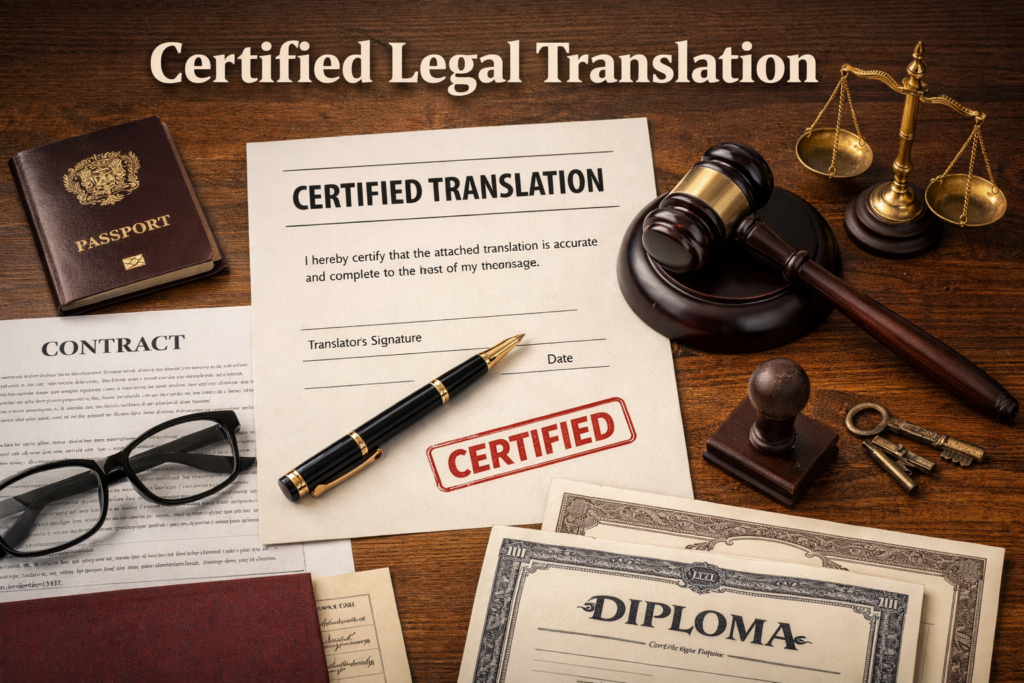
A certified legal translation is a translation of an official document that comes with a signed statement from the translator or translation agency. This statement confirms that the translation is accurate and complete to the best of their knowledge.
The certification usually includes:
- The translator’s name
- Their signature
- The date of certification
- A statement confirming accuracy
This certification acts as a form of assurance. Courts, immigration offices, universities, and government agencies rely on it because it confirms the translated text can be trusted.
Without this certification, many authorities will simply refuse to accept the document.
When Certified Translation Is Required
Many official situations require certified translations. Governments and legal institutions must be sure that every detail in a document is correct.
Here are some common examples.
Immigration Applications
Immigration processes often involve documents written in another language. These may include birth certificates, marriage certificates, educational records, and police clearance documents.
Immigration authorities require certified translations because they must review documents carefully before approving visas, citizenship requests, or residency permits.
Court Documents
Legal systems depend on precise language. Court documents such as contracts, witness statements, legal notices, and judgments must be translated accurately.
A certified translation ensures that lawyers, judges, and officials can rely on the translated version when making decisions.
Academic Applications
Students applying to universities abroad often submit transcripts, diplomas, and academic records in their native language. Universities usually request certified translations so admissions officers can verify the student’s academic history.
Business and Corporate Documentation
Companies operating internationally often need certified translations for documents like:
- Articles of incorporation
- Partnership agreements
- Financial statements
- Intellectual property filings
Accurate translation protects companies from misunderstandings and legal risks.
Certified vs Non Certified Translation
Many people assume that any translation is acceptable as long as the meaning is similar. In legal contexts, that assumption can lead to problems.
A non certified translation is simply a translated document without any official declaration confirming its accuracy. While this type of translation may work for informal use, it rarely satisfies legal or government requirements.
Here are the key differences.
Certified Translation
- Includes a signed statement of accuracy
- Accepted by courts and government agencies
- Performed by qualified translators
- Used for official and legal purposes
Non Certified Translation
- No official verification
- Often used for personal understanding
- May not be accepted by authorities
- Typically used for informal documents
When dealing with official processes, certified translation provides the credibility that institutions expect.
Why Accuracy Is Critical in Legal Translation
Legal language can be complex. Terms often have specific meanings that do not translate directly between languages. Even a minor wording mistake may cause confusion or change the interpretation of a document.
Several factors make legal translation particularly sensitive.
Precise Terminology
Legal systems rely on exact wording. Words used in contracts, laws, and regulations carry specific meanings. Translators must understand legal terminology in both languages to maintain the correct meaning.
Structural Differences Between Languages
Languages differ in sentence structure and grammar. Translators must adapt the wording carefully so that the translated document remains accurate while still following the natural structure of the target language.
Cultural and Legal Context
Legal systems vary from one country to another. Translators must understand how legal concepts function in both systems to ensure that the translation communicates the correct intent.
Risks of Using Uncertified Translation
Choosing an uncertified translation for official documents may seem like a quick solution, but it can lead to serious complications.
Common issues include:
- Document rejection by government authorities
- Delays in immigration or legal procedures
- Misinterpretation of contract terms
- Additional costs for retranslation
In many cases, individuals only discover the problem after submitting their paperwork. At that point, they must arrange a certified translation and repeat the submission process.
Documents Commonly Requiring Certified Translation
Several types of documents frequently require certification. These include:
- Birth certificates
- Marriage certificates
- Divorce records
- Passports and identification documents
- Academic transcripts and diplomas
- Court rulings and legal statements
- Contracts and agreements
Because these documents influence legal decisions or identity verification, institutions insist on certified translations.
Choosing the Right Translation Provider
Selecting a reliable translator plays a key role in the certification process. Experienced legal translators understand how to preserve the meaning and structure of official documents.
A trustworthy translation provider typically offers:
- Translators with legal expertise
- Certification statements accepted by authorities
- Careful review and proofreading
- Secure handling of confidential documents
Attention to detail makes a significant difference when translating legal material. Professional translators treat each document with precision, ensuring that every term and phrase reflects the original text accurately.
How Certified Translation Supports Global Communication
Global movement of people, education, and business continues to grow. Individuals study abroad, companies expand into international markets, and families relocate across borders.
In each of these situations, official documents must move between languages while maintaining their legal validity. Certified translation bridges that gap by allowing institutions to understand documents written in different languages with confidence.
Whether the document relates to immigration, education, or legal proceedings, certification confirms that the translation faithfully represents the original record. That assurance keeps international processes moving forward and allows documents to carry the same authority across languages.
