
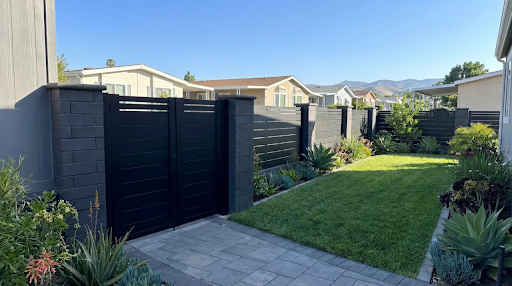
The concept of residential security has undergone a profound transformation over the last decade, evolving rapidly from a passive, static defense model to a highly active, technologically integrated ecosystem. In previous eras, a homeowner seeking enhanced security relied almost entirely on the sheer physical height and impenetrable mass of a perimeter wall.
Today, however, the paradigm has shifted dramatically. While the physical integrity of the boundary remains absolutely essential, true residential security in 2026 is defined by the seamless fusion of robust architectural materials with cutting-edge digital intelligence. This evolution has given rise to the “smart fence,” a modern approach to property management that provides elite protection without forcing the residence to resemble an institutional fortress.
Smart Access Control and Integrated Gate Systems
The foundation of any smart perimeter system lies in its ability to actively monitor and control access points. Gates are no longer secured by simple padlocks or manual latches; they are now sophisticated nodes within a broader home-automation network.
Modern access points now feature integrated keyless entry systems, biometric scanners, and smart locks that can be controlled remotely through smartphone applications. This frictionless access control allows homeowners to grant temporary, time-coded entry to delivery personnel, landscaping crews, or guests without physically handing over a key or compromising the master security code.
To ensure these systems are installed with technical precision, many property owners work with specialized fence and gate contractors who understand how to integrate electrical components into heavy-duty structural frames.
Privacy Through Architectural Design
Privacy operates hand in hand with technological security. In densely populated urban environments, the ability to block sightlines into the home’s interior and outdoor living areas is just as critical as preventing physical intrusion.
Burglary is frequently a crime of opportunity. If potential intruders cannot observe valuable belongings, children playing outdoors, or the layout of the property, the likelihood of a targeted break-in drops significantly. Solid panel configurations, particularly those constructed from durable synthetic polymers or tightly spaced metal slats, create an opaque visual barrier that guarantees seclusion. When this physical privacy is combined with smart monitoring technologies, the property becomes a protected yet visually refined modern sanctuary.
The Role of Automated Driveway Gates
The most critical component of a high-tech perimeter system is the main vehicular entry point. Driveway gates represent the largest physical opening in the property boundary and therefore require particularly robust automation and security measures.
Heavy manual gates have largely disappeared from contemporary residential design. Today’s homeowners expect automated sliding or swinging gates, powered by high-performance motors, to operate quietly and efficiently. Engineered metals have become the preferred material for these structures because they combine structural strength with relatively lightweight performance.
Choosing high-quality Aluminum Gates is a strategic move, as this reduced weight places less strain on motors and hinges than traditional iron or solid wood. As a result, automated systems operate more smoothly, require fewer repairs, and enable faster opening and closing, minimizing the time vehicles remain exposed while entering or exiting the property.
Sensors, Lighting, and Environmental Monitoring
Beyond locks and cameras, smart fencing systems incorporate environmental sensors and automated lighting to enhance perimeter safety. Low-voltage LED lighting integrated into fence rails or post caps can be programmed to illuminate at dusk or activate instantly when motion is detected.
This feature removes the cover of darkness and significantly reduces the possibility of someone approaching the property unnoticed. These lighting systems can also be powered by solar technology, allowing homeowners to enhance security without increasing energy consumption or relying on the main power grid during outages.
The Future of Intelligent Residential Boundaries
Smart fencing systems represent the convergence of architecture, security technology, and environmental design into a single protective boundary. The rise of these intelligent systems represents a significant evolution in residential design and property management.
By combining durable architectural materials with advanced digital monitoring and automation, homeowners can create boundaries that protect their investments while maintaining a refined aesthetic presence. Rather than relying solely on imposing walls, modern security strategies integrate technology into a cohesive protective system—one that safeguards privacy, enhances safety, and redefines the future of residential living.
