
In digital marketing, a call to action (CTA) is the bridge between a visitor’s interest and their commitment. However, many brands treat their CTAs as an afterthought: a standard “Submit” or “Buy Now” button tucked at the bottom of a page.
If your conversion rates are stalling, it’s likely because your bridge is too shaky for users to cross.
To drive action in a crowded digital landscape, you must move beyond generic templates. Whether you’re looking to grow an email list or drive direct sales, these X proven strategies will help you turn passive browsers into active customers.
What Makes a Call to Action Convert?
To beat the average conversion rate of 2.4%, your CTA must be more than a button. It must be an invitation. Improving your click-through rate requires a balance of psychology and design:
- Outcome-driven copy: Replace generic verbs (Submit, Click) with specific benefits (Get My Guide, Start Saving). Users click when the value of the “get” outweighs the effort of the “do.”
- Visual contrast: Your CTA button should be the most obvious element on the page. Use a high-contrast color (e.g., red CTAs) that stands out from your brand palette, and surround it with ample whitespace to draw the eye.
- Reduced friction: Lower the barrier to entry. Placing click triggers like “No credit card required” or “Instant access” near the button addresses objections at the exact moment of decision.
10 Ways to Boost Conversion Rates With Compelling CTAs
Improving performance at the point of action rarely comes down to a single tweak.
The techniques below focus on how strategy, context, timing, and user experiences work together to influence decisions.
1. Align Your CTA With a Clear Execution Strategy
To effectively boost your call to action (CTA) conversion rates, it’s essential to align your marketing efforts with a clear, well-managed strategy. A strategic portfolio management platform can help by providing a comprehensive view of all your projects, campaigns, and resources, ensuring that your CTA strategies and POS experience strategies are executed with precision.
By tracking performance metrics across various campaigns, these platforms allow you to identify what works and what doesn’t, making it easier to optimize your CTAs for higher conversion rates
2. Make the CTA Visually Obvious
If your audience has to hunt for your offer, they’ve already moved on. So, don’t let your CTA buttons blend into the background.
- Use strategic whitespace: Effective CTA buttons need isolation to stand out. By surrounding your action point with ample negative space, you prevent it from competing with text or images. This breathing room naturally draws the eye to the button, making it the page’s clear focal point.
- Implement high-contrast colors: Your CTA must stand out from your site’s primary palette to create a visual interrupt. If your design uses cool blues, an orange or a red button will break the user’s scanning pattern. This immediate contrast ensures the button is the first thing they see.
- Employ directional cues: Guide the user’s gaze using subtle visual pointers. Literal arrows or images of people looking toward your CTA buttons create a natural path for the eye to follow. Because we instinctively look where others are looking, the button feels like the inevitable next step.
- Optimize for size and reach: An obvious CTA is one that’s physically easy to hit. Ensure your CTA buttons are large enough for effortless tapping on mobile and placed within the “thumb zone.”
Airbnb’s primary CTA is rarely buried in copy. The search and action buttons sit in open space, separated from supporting text and imagery.
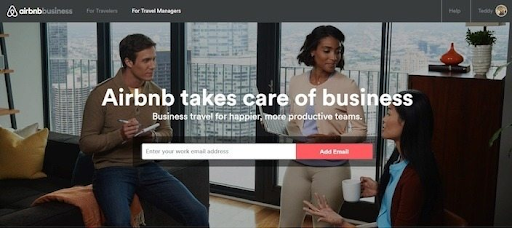
Their signature coral CTA stands out sharply against neutral backgrounds. It breaks the scanning rhythm immediately, which is exactly what you want when users are skimming quickly.
3. Create Urgency Without Pressure
True urgency highlights a fleeting opportunity rather than using hard-sell tactics that alienate savvy readers.
Let’s look at an example. Say you’re running an email marketing campaign. Before sending, perform an email spam test to ensure your urgent offer actually reaches the inbox. Once deliverability is confirmed, you can use soft deadlines, such as offering a bonus resource that expires in 24 hours or mentioning limited seating for a live session.
By focusing on the potential loss of a specific benefit rather than shouting at the user to “Buy Now,” you create a natural incentive to act immediately.
Another effective method is using real-time updates or low-stock alerts that provide genuine context for the rush. When a user sees that a specific discount is available only to the next 50 sign-ups, the urgency feels like a helpful tip rather than a forced sales play.
4. Match the CTA to High-Intent Use Cases
When aiming to boost your call to action (CTA) conversion rates, particularly in industries like mortgage lending, it’s essential to offer clear, compelling incentives that resonate with your audience.
A well-crafted CTA in a mortgage loan campaign, such as “Get Pre-Approved Today” or “Find Your Best Rate,” can significantly drive action if it’s aligned with the needs of prospective homebuyers.
By understanding the customer journey and using a targeted, data- and personalization-driven approach, you can increase the likelihood of conversion. Offering value through clear information, ease of application, and fast response times makes your CTA even more effective.
For example, using a mortgage loan calculator to show potential savings in real-time or offering a limited-time rate special can create urgency, encouraging users to take immediate action on your CTA, ultimately improving conversion rates
To take this a step further, implementing a personalized CTA ensures that the message adapts to the specific stage of the home-buying process.
Instead of showing a first-time buyer the same button as a returning refinance lead, dynamic technology allows you to swap copies in real-time to match their intent. This removes friction, making the user feel understood and far more likely to engage with the offer.
5. Align the CTA With What Happens Next
The primary reason users bounce from landing pages is that button copy doesn’t match the destination. If your CTA promises a “Free Audit” but the next page asks for a 20-minute discovery call, the user feels misled. To maintain momentum, the transition must be seamless.
Ensure your button text acts as a literal preview of the next screen, using specific language that prepares the user for exactly what they’ll see, hear, or download the moment they click.
6. Test One Variable at a Time
To truly understand what drives performance, it’s important to A/B test with scientific precision.
If you change the button color, the copy, and the placement all at once, you’ll never know which change actually caused the shift in results.
Focus on isolating a single element (e.g., testing a red button against a green one while keeping everything else constant). That way, you gain actionable data. This allows you to track small, proven wins that lead to a massive long-term increase in your conversion floor.
7. Lead With Value Before Asking for Action
A high-converting CTA is never the start of a conversation. It’s the conclusion of a value-driven argument.Before you present your button, you must establish the “why” by highlighting the specific pain point you solve or the benefit you provide.
When you lead with insight or a helpful solution, the CTA becomes the natural next step in a helpful journey rather than an intrusive sales pitch.
By the time the user reaches the button, they shouldn’t feel like they’re being sold to. They should feel like they’re finally getting the answer they came for. Businesses that combine strong marketing with reliable backend support , whether through expert virtual assistance or financial organization partners like Wishup are better positioned to convert interest into sustainable growth.
Hello Rache is a specialized service that provides healthcare professionals with virtual assistants trained to handle administrative and clinical support tasks from charting and scheduling to billing and patient communication.
On their homepage, Hello Rache uses a direct and benefit-rich CTA that immediately highlights value before prompting action. For example, their main conversion button reads “Schedule a Consultation”, positioned alongside key trust signals such as the number of “Loved by 6,000+ Practices”, flat-rate pricing, and a promise to match practices with skilled assistants quickly.
This combination of social proof, a clear value proposition (“transform your practice and save time on office tasks”), and a compelling CTA drives high engagement and strong conversion intent among site visitors.
8. Remove Hidden Friction That Creates Hesitation
When people hesitate before clicking, it’s often because something feels off in the background. If your site handles sensitive data, even subtle trust signals matter.
Using a CWPP (cloud workload protection platform) can help you reduce risk behind the scenes, so users feel more comfortable taking action without consciously questioning security.
To remove further friction, eliminate unnecessary form fields. Every extra box a user has to fill out acts as a physical barrier to entry. If you only need an email address to deliver a resource, don’t ask for a phone number or job title.
Stripping the request down to its absolute essentials makes the transition from read to lead more instantaneous. This removes the “work” from the transaction, ensuring the user reaches the value without hitting a wall.
9. Support CTAs With Strong Internal Communication
A high-performing call to action is only as effective as the team behind it. If your marketing creates a promise that your sales or support teams aren’t prepared to fulfill, the conversion is wasted.
Seamless execution requires internal communications software to keep every department aligned on active campaigns and upcoming offers.
When employees have real-time access to the same value propositions and deadlines shown to the customer, they can provide a consistent experience from the first click to the final handshake.
So, when a user takes action, your organization is ready to deliver instantly.
10. Show the Outcome Instead of Describing It
One of the most effective techniques is to offer a direct look into the tools your prospect will actually use. For instance, a B2B company might use a CTA to demonstrate how an AI SDR can manage their entire top-of-funnel sequence autonomously, allowing the prospect to see the outcome of the automation before they even sign up.
A well-placed CTA button that offers a free demo of comprehensive property management software allows landlords to visualize how their specific pain points such as manual rent collection or fragmented maintenance logs, can be solved instantly.
This “show, don’t tell” approach reduces the psychological barrier to entry and builds immediate trust in the product’s capabilities.
Conclusion
Optimizing your call to action is a continuous process of refining how you present value. Focusing on visual prominence, reducing hidden friction, and using clear, benefit-driven messaging creates a seamless path that respects the user’s time and solves their problems.
Testing a single variable today, whether it’s high-contrast buttons or more urgent micro-copy, allows you to see how small, targeted changes transform your conversion rates.
