
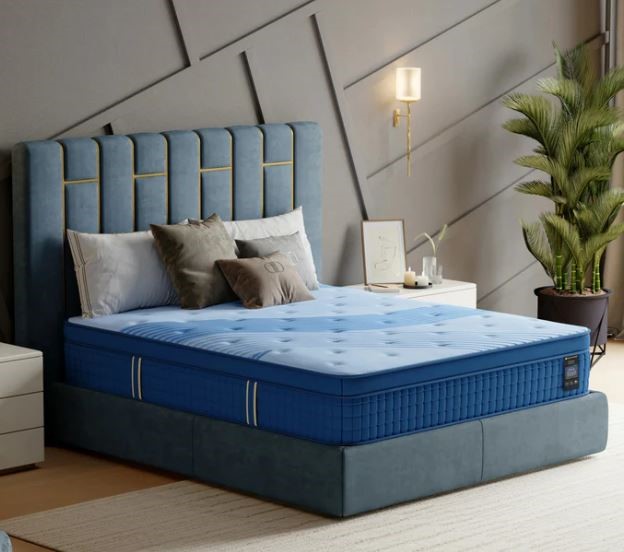
You’ve probably woken up more mornings than you’d like to admit with that dull, nagging ache across your lower back. You shift, you stretch, you wait for it to pass — and deep down you know the mattress is the problem. Too soft. Too much give. Your hips sink, your spine curves, and by 3 a.m. your body is quietly staging a protest.
The right firm memory foam mattress changes all of that. Not just the sleep — the mornings, the energy, the ability to move through a full day without bracing yourself. This guide breaks down exactly what to look for, who needs what, and where EgoHome fits into that picture.
| QUICK ANSWER Is a firm memory foam mattress good for you? Yes — if you sleep on your back or stomach, weigh over 200 lbs, or deal with chronic lower back pain, a firm memory foam mattress prevents hip sinking, keeps your spine in neutral alignment, and reduces morning stiffness significantly more than a medium or soft option. |
Who Actually Needs a Firm Memory Foam Mattress?
Not everyone benefits from a firmer sleep surface. But for three specific groups, it’s less of a preference and more of a necessity.
Back Sleepers
When you sleep on your back, your lumbar spine needs a surface that pushes back — gently but firmly. A soft mattress allows your lower back to sag into a curve it was never designed to hold for six to eight hours. A firm memory foam mattress provides that counter-pressure under the lumbar region, keeping the natural S-curve of your spine intact throughout the night. The result: you wake up neutral, not bent.
Stomach Sleepers
Stomach sleeping is the most mechanically demanding sleep position on your body. Your pelvis naturally wants to sink into the mattress, which tilts your lumbar spine into extension and compresses the vertebrae. On a soft or medium surface, this becomes genuinely painful over time — especially for the lower back and neck. A high-firmness foam mattress keeps the hips elevated enough to prevent that dangerous downward tilt.
Plus-Size and Heavy Sleepers (230 lbs and Over)
Body weight changes everything in mattress selection. At 230 lbs or above, even a mattress labeled “medium-firm” will compress further than it was tested to perform. This is why a firm memory foam mattress — and specifically a King-size firm memory foam mattress — is so important for larger-framed sleepers. The extra width provides lateral room to shift and redistribute weight, while the firmness ensures the spine isn’t curving through the night. EgoHome’s King-size options are built with exactly this load in mind.
| WHY FIRMNESS MATTERS MORE AS YOU GET HEAVIER Every additional 20 lbs of body weight increases mattress compression by a measurable margin. For sleepers over 230 lbs, a mattress that tests at “firm” under standard conditions needs higher-density foam construction to maintain that feel under real-world load. Look for mattresses with a density of at least 4 lb/ft³ in the base layer. |
Firm Memory Foam vs. Other Mattress Types
Before committing, it helps to understand how firm memory foam actually compares — because not all “supportive” mattresses do the same job.
Firm memory foam vs. hybrid: Hybrid mattresses combine foam layers with innerspring coils. They often feel bouncier and cooler, but the coil responsiveness can create pressure points at the shoulders and hips for back sleepers. Firm memory foam contours more precisely, isolates motion better, and provides consistent pressure relief without the spring-back sensation.
Firm memory foam vs. latex: Latex is naturally responsive and durable, but it tends to push back against the body rather than contour to it. For sleepers needing spinal alignment support — particularly for herniated disc or sciatica pain — viscoelastic memory foam’s slow-response cradle is usually the better clinical choice.
Extra firm vs. medium-firm: This depends on body weight and sleep position. If you’re under 180 lbs and sleep on your back, medium-firm is often sufficient. At 200 lbs or more, or if you’re a dedicated stomach sleeper, extra firm provides the resistance needed to prevent sinking.
Best Firm Memory Foam Mattress for Back Pain
Lower back pain is the single most common reason people research firm mattresses. The relationship is direct: a mattress that lets your lumbar spine fall out of alignment during sleep aggravates existing disc issues, tightens the surrounding musculature, and makes inflammation worse overnight rather than better.
For individuals with chronic lower back pain, the focus should be on mattresses with reinforced lumbar support zones — not just firmness across the entire surface. The ideal construction layers a firmer base with a thin comfort layer (no more than 1.5 inches) of gel-infused memory foam on top. This gives you the pain-relief benefits of contouring without the sinking that causes the problem in the first place.
EgoHome’s orthopedic memory foam mattress line is designed with this exact principle. The multi-layer foam construction includes a high-density support core engineered to maintain lumbar positioning through the night, paired with a cooling gel layer that prevents the heat buildup classic memory foam is known for.
Top Picks: Best Firm Memory Foam Mattresses from EgoHome
BEST OVERALL
| EgoHome Black 14” Memory Foam Mattress The flagship option for heavy sleepers and couples. The King size gives plus-size sleepers the surface area they need, while the high-density foam base — topped with a 1-inch gel-infused layer — keeps the spine neutral regardless of body weight. Motion isolation is exceptional, making it ideal for couples with different sleep schedules. Key Specifications: • Firmness: 8/10 • Core Density: 4.5 lb/ft³ • Cooling: Gel-Infused Layer • Best For: Sleepers 230 lbs+ ✓ Pros ✓ Exceptional lumbar support ✓ Sleeps cooler than standard foam ✓ Near-zero motion transfer ✓ Durable high-density base layer ✗ Cons ✗ Heavier to move/rotate ✗ May feel too firm for strict side sleepers |
| BEST FOR BACK PAIN EgoHomeTenzura Luxury Hybrid Mattress – Queen & King Purpose-built for spinal alignment, this mattress uses a zoned support system with reinforced lumbar channels that are measurably firmer in the L1–L5 region. Individuals managing sciatica, herniated discs, or chronic stiffness consistently report a noticeable difference within the first week. Key Specifications: • Firmness: 9/10 • Support Zones: 5-Zone Lumbar System • Comfort Layer: 1.5″ Gel Foam • Best For: Back Pain, Sciatica, Herniated Disc ✓ Pros ✓ Targeted lumbar reinforcement ✓ Reduces morning stiffness noticeably ✓ Great for stomach and back sleepers ✗ Cons ✗ Firmer feels has an adjustment period (2–4 weeks) ✗ Less ideal for lightweight sleepers under 150 lbs |
How to Choose a Firm Mattress: A Practical Buying Guide
The mattress industry loves making this complicated. Here’s what actually matters.
Firmness Scale and What It Means
Most mattresses are rated on a 1–10 scale. Anything above 7 is considered firm. For back and stomach sleepers, a rating of 7–8 is the sweet spot — supportive without feeling like sleeping on a floor. For heavier sleepers, an 8–9 provides the resistance needed to prevent progressive sinking through the night.
Foam Density
This is the most underrated spec in mattress shopping. Density is measured in pounds per cubic foot. A base layer below 3.5 lb/ft³ will break down faster and won’t provide adequate support for bodies over 200 lbs. For long-term durability and genuine support, look for 4 lb/ft³ or higher in the core — which is what EgoHome builds into its supportive memory foam line.
Cooling Technology
Traditional memory foam retains heat, which is why gel-infused foam and open-cell airflow designs exist. If you run warm at night, a firm foam mattress with cooling gel is non-negotiable — not a nice-to-have. EgoHome integrates gel infusion throughout the comfort layer, not just at the surface.
Edge Support
For larger sleepers and couples who use the full mattress width, edge support is critical. A mattress that collapses at the edges effectively shrinks your sleep surface by several inches on each side. Look for reinforced perimeter foam construction.
Trial Period and Warranty
Your body needs time to adjust to a firmer surface — typically two to four weeks. A 100-night trial period gives you enough time to know whether the mattress is working. EgoHome backs its mattresses with a sleep trial and warranty that reflects genuine confidence in the product’s durability.
Common Mistakes to Avoid
Going too firm for your body weight is a real mistake. A petite person on an extra-firm mattress will experience pressure points at the shoulders and hips because there’s not enough body weight to allow any contouring. Firmness has to match your frame. For sleepers under 150 lbs, a 7/10 firmness is usually better than pushing to 9/10.
Ignoring the comfort layer thickness is another common error. A firm mattress with zero comfort layer feels like a wrestling mat. One or two inches of gel memory foam on top lets your pressure points breathe without compromising the underlying support structure.
Don’t confuse firmness with quality. A cheap firm mattress made with low-density foam will soften within a year, losing the very support that made it feel right initially. The density of the materials — not just how it feels on day one — determines long-term performance.
Frequently Asked Questions
Is a firm memory foam mattress good for side sleepers?
Generally, firm mattresses are not ideal for pure side sleepers because they don’t cushion the shoulder and hip enough to prevent pressure buildup. If you’re a combination sleeper who primarily sides but also spends time on your back, a medium-firm (6.5–7/10) is usually the better balance. Strict side sleepers tend to do better with medium options.
How firm should a mattress be for lower back pain?
Research and clinical experience consistently point toward medium-firm to firm (7–8/10) as optimal for lower back pain in back and stomach sleepers. The key is maintaining the lumbar curve — not flattening it. A mattress that’s too soft collapses the curve; one that’s too rigid prevents any natural contouring. The 7–8 range threads that needle effectively for most adults.
Can a mattress be too firm?
Absolutely. Signs your mattress is too firm include waking up with shoulder or hip pain, numbness in extremities, and frequent position changes through the night. If you’re experiencing these despite sleeping in what should be a supported position, dropping one firmness level usually resolves it.
What is the best firm memory foam mattress for heavy sleepers?
Heavy sleepers need high-density foam construction (4+ lb/ft³), a firmness rating of 8–9/10, and strong edge support. King size is recommended for both individual comfort and for couples. EgoHome’s King-size firm mattress is specifically engineered for this use case, with load-bearing construction tested beyond standard weight thresholds.
Is a firm mattress better for back pain than medium?
For back and stomach sleepers: yes, in most cases. For side sleepers: medium-firm is usually better. The underlying principle is spinal alignment — whatever firmness keeps your spine in its natural neutral position while lying down is the right choice for your body and sleeping style.
| Ready to Finally Sleep Without the Morning Ache? EgoHome’s firm memory foam mattresses are built for people who need real support — not just a mattress that feels hard. All sizes available. Free shipping. Sleep trial included. Visit www.egohome.com to explore the full range → |
The best firm memory foam mattress isn’t the most expensive one or the most heavily marketed one. It’s the one engineered for how you actually sleep — your weight, your position, your pain points. EgoHome builds mattresses with those variables as the starting point, not an afterthought. If your mornings have been telling you something needs to change, it might be time to listen.
