
 Changeover time in your selective soldering line is more than just a time-consuming inconvenience—it’s a silent profit killer. If you’re struggling with prolonged setups, you’re not only wasting time but also incurring hidden costs, compromising product quality, and missing out on potential revenue. In industries where production speed and reliability are everything, reducing this downtime is crucial. The good news? By implementing the right strategies and technologies, you can significantly slash changeover time, boost your throughput, and ultimately lower your operational costs.
In this article, we’ll dive deep into the most effective strategies to cut down changeover times on your selective soldering line, from process optimization to automation. We’ll also showcase how I.C.T’s innovative solutions—with modular designs—can streamline your changeover process. Whether you’re aiming to reduce labor costs, improve quality, or simply keep your production line running smoother, these insights will provide you with actionable steps to transform your operations.
1. The Impact of Long Changeover Times on Your Selective Soldering Line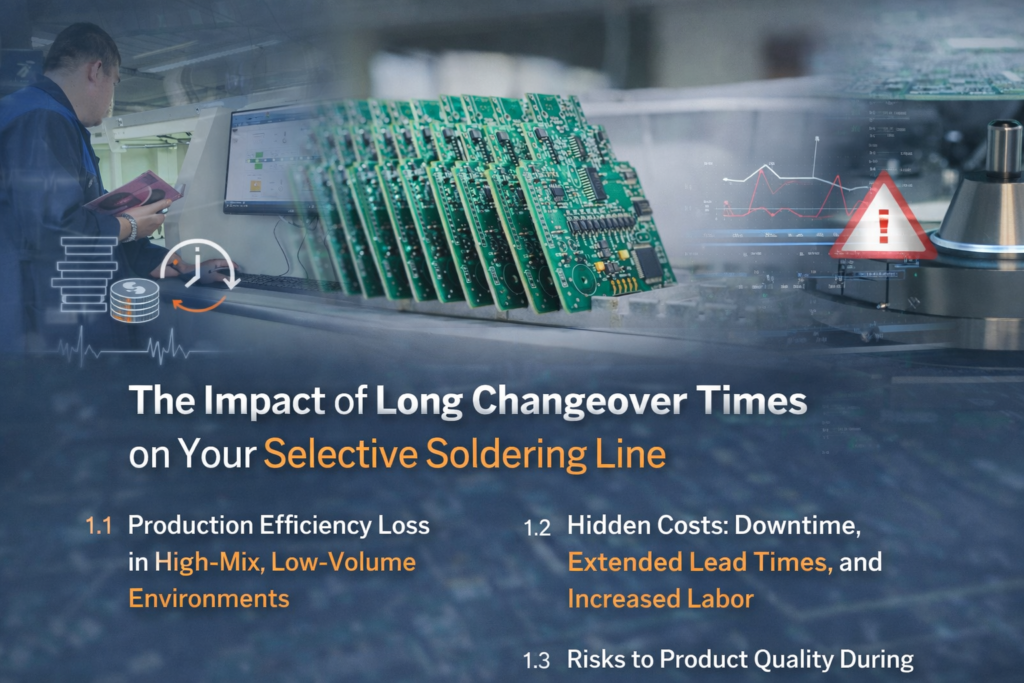

1.1 Production Efficiency Loss in High-Mix, Low-Volume Environments
In high-mix environments, where a variety of different components and boards are produced in smaller quantities, frequent changeovers are unavoidable. However, these frequent transitions often lead to production inefficiencies as they require machines to be adjusted, reprogrammed, or even recalibrated for each new job. The time spent on these activities takes away from actual production, slowing down the line and reducing the overall efficiency of the soldering process.
1.2 Hidden Costs: Downtime, Extended Lead Times, and Increased Labor
Changeovers not only cause direct downtime but also lead to extended lead times, especially when there is a delay in re-setting up machines. Additionally, manual interventions and troubleshooting during the changeover can increase labor costs. If the changeover process is poorly optimized, these inefficiencies can add up quickly, affecting the overall profitability of the operation.
2. Core Strategies to Cut Changeover Time Dramatically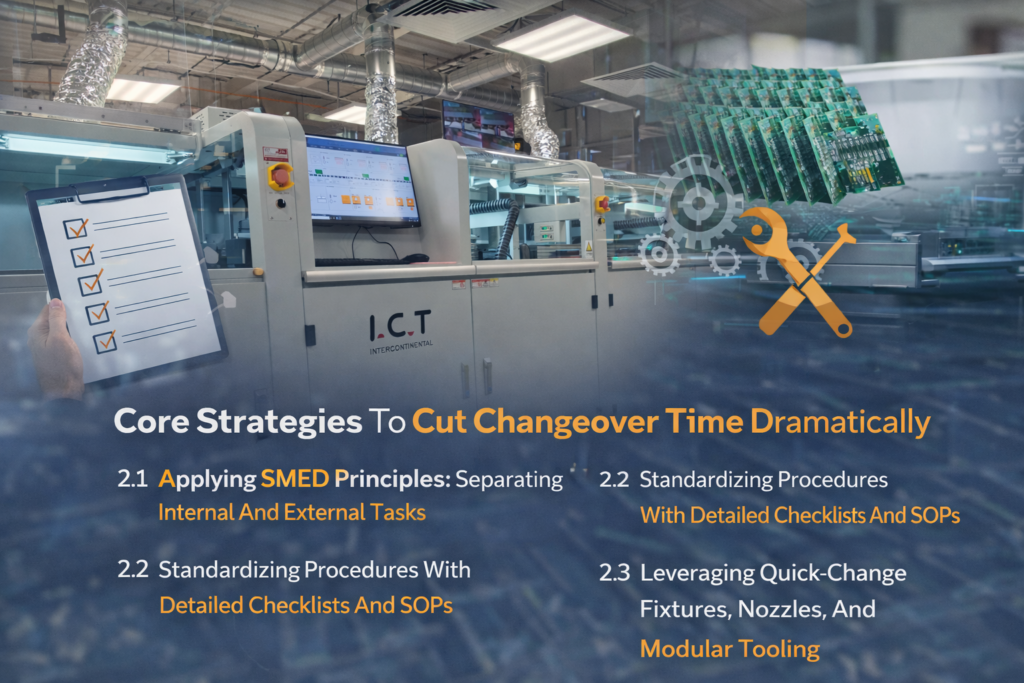

2.1 Applying SMED Principles: Separating Internal and External Tasks
Single-Minute Exchange of Die (SMED) principles can significantly reduce changeover time. This method involves separating internal tasks (tasks that can only be done when the machine is stopped) and external tasks (tasks that can be performed while the machine is running). By minimizing internal tasks and performing external tasks during production, you can reduce the time spent on machine downtime and speed up the entire changeover process.
2.2 Standardizing Procedures with Detailed Checklists and SOPs
Standard Operating Procedures (SOPs) and checklists can streamline the changeover process by ensuring that each step is performed in a consistent manner. A well-documented process helps to reduce errors, increase the speed of changeover, and ensure that each task is completed properly. By training staff on these standardized procedures, you can ensure that the changeover process is smooth and efficient, every time.
3. Automation and Data-Driven Approaches for Faster Setups
3.1 Integrating Machine Vision and Auto-Recognition Systems
Machine vision systems can automatically recognize components and adjust machine settings based on the specific requirements of each product. These systems can help to eliminate manual setup errors, ensure accurate soldering, and reduce the time spent adjusting the machine. Auto-recognition systems further enhance efficiency by enabling the machine to automatically switch settings when a different product is introduced.
3.2 Implementing Nitrogen Inerting and Preheat Optimization for Consistency
Nitrogen inerting and preheating systems help to maintain consistent soldering quality across different product types. By optimizing preheating and using nitrogen to reduce oxidation, manufacturers can reduce the time spent on adjusting temperature settings between jobs. This results in a faster, more consistent changeover, with less risk of temperature-related soldering defects.
4. Optimizing Production Line Layout and Material Preparation
4.1 Designing Efficient Production Flow to Minimize Movement
A well-designed production line layout ensures that materials and components move smoothly and efficiently from one stage to the next. Reducing unnecessary movement during the changeover process not only saves time but also reduces the likelihood of mistakes or delays. By strategically placing equipment and workstations, you can streamline the changeover process and minimize idle time.
4.2 Pre-Staging Materials and Components Before Shutdown
Before a changeover occurs, it’s critical to have all necessary materials and components staged and ready for the next job. This eliminates the need to search for components during the changeover and speeds up the entire process. Pre-staging materials ensures that everything is in place and ready to go once the machine is back online.
5. Building Operator Skills for Reliable Quick Changeovers
5.1 Targeted Training Programs Focused on Changeover Tasks
Effective training programs that focus specifically on changeover tasks can dramatically reduce the time required to complete the process. Operators who are trained to execute each task quickly and efficiently are key to minimizing downtime. Regular training sessions ensure that staff remain familiar with best practices and updated procedures.
5.2 Promoting Team Coordination and Parallel Task Execution
Promoting teamwork and coordination between operators is essential for efficient changeovers. By dividing tasks and executing them in parallel, the team can ensure that all tasks are completed as quickly as possible. A well-coordinated team can tackle different aspects of the changeover simultaneously, reducing downtime and improving overall efficiency.
6. I.C.T’s Contribution to Efficient Selective Solderi
How to Reduce Changeover Time on Your Selective Soldering Line: Key Strategies for Increased Efficiency
Changeover time in your selective soldering line is more than just a time-consuming inconvenience—it’s a silent profit killer. If you’re struggling with prolonged setups, you’re not only wasting time but also incurring hidden costs, compromising product quality, and missing out on potential revenue. In industries where production speed and reliability are everything, reducing this downtime is crucial. The good news? By implementing the right strategies and technologies, you can significantly slash changeover time, boost your throughput, and ultimately lower your operational costs.
In this article, we’ll dive deep into the most effective strategies to cut down changeover times on your selective soldering line, from process optimization to automation. We’ll also showcase how I.C.T’s innovative solutions—with modular designs—can streamline your changeover process. Whether you’re aiming to reduce labor costs, improve quality, or simply keep your production line running smoother, these insights will provide you with actionable steps to transform your operations.
1. The Impact of Long Changeover Times on Your Selective Soldering Line
1.1 Production Efficiency Loss in High-Mix, Low-Volume Environments
In high-mix environments, where a variety of different components and boards are produced in smaller quantities, frequent changeovers are unavoidable. However, these frequent transitions often lead to production inefficiencies as they require machines to be adjusted, reprogrammed, or even recalibrated for each new job. The time spent on these activities takes away from actual production, slowing down the line and reducing the overall efficiency of the soldering process.
1.2 Hidden Costs: Downtime, Extended Lead Times, and Increased Labor
Changeovers not only cause direct downtime but also lead to extended lead times, especially when there is a delay in re-setting up machines. Additionally, manual interventions and troubleshooting during the changeover can increase labor costs. If the changeover process is poorly optimized, these inefficiencies can add up quickly, affecting the overall profitability of the operation.
2. Core Strategies to Cut Changeover Time Dramatically
2.1 Applying SMED Principles: Separating Internal and External Tasks
Single-Minute Exchange of Die (SMED) principles can significantly reduce changeover time. This method involves separating internal tasks (tasks that can only be done when the machine is stopped) and external tasks (tasks that can be performed while the machine is running). By minimizing internal tasks and performing external tasks during production, you can reduce the time spent on machine downtime and speed up the entire changeover process.
2.2 Standardizing Procedures with Detailed Checklists and SOPs
Standard Operating Procedures (SOPs) and checklists can streamline the changeover process by ensuring that each step is performed in a consistent manner. A well-documented process helps to reduce errors, increase the speed of changeover, and ensure that each task is completed properly. By training staff on these standardized procedures, you can ensure that the changeover process is smooth and efficient, every time.
3. Automation and Data-Driven Approaches for Faster Setups
3.1 Integrating Machine Vision and Auto-Recognition Systems
Machine vision systems can automatically recognize components and adjust machine settings based on the specific requirements of each product. These systems can help to eliminate manual setup errors, ensure accurate soldering, and reduce the time spent adjusting the machine. Auto-recognition systems further enhance efficiency by enabling the machine to automatically switch settings when a different product is introduced.
3.2 Implementing Nitrogen Inerting and Preheat Optimization for Consistency
Nitrogen inerting and preheating systems help to maintain consistent soldering quality across different product types. By optimizing preheating and using nitrogen to reduce oxidation, manufacturers can reduce the time spent on adjusting temperature settings between jobs. This results in a faster, more consistent changeover, with less risk of temperature-related soldering defects.
4. Optimizing Production Line Layout and Material Preparation
4.1 Designing Efficient Production Flow to Minimize Movement
A well-designed production line layout ensures that materials and components move smoothly and efficiently from one stage to the next. Reducing unnecessary movement during the changeover process not only saves time but also reduces the likelihood of mistakes or delays. By strategically placing equipment and workstations, you can streamline the changeover process and minimize idle time.
4.2 Pre-Staging Materials and Components Before Shutdown
Before a changeover occurs, it’s critical to have all necessary materials and components staged and ready for the next job. This eliminates the need to search for components during the changeover and speeds up the entire process. Pre-staging materials ensures that everything is in place and ready to go once the machine is back online.
5. Building Operator Skills for Reliable Quick Changeovers
5.1 Targeted Training Programs Focused on Changeover Tasks
Effective training programs that focus specifically on changeover tasks can dramatically reduce the time required to complete the process. Operators who are trained to execute each task quickly and efficiently are key to minimizing downtime. Regular training sessions ensure that staff remain familiar with best practices and updated procedures.
5.2 Promoting Team Coordination and Parallel Task Execution
Promoting teamwork and coordination between operators is essential for efficient changeovers. By dividing tasks and executing them in parallel, the team can ensure that all tasks are completed as quickly as possible. A well-coordinated team can tackle different aspects of the changeover simultaneously, reducing downtime and improving overall efficiency.
6. I.C.T’s Contribution to Efficient Selective Soldering
6.1 High-Quality Selective Soldering Machines with Modular Design
I.C.T offers state-of-the-art selective soldering machines that feature a modular design, making them easy to configure for different production requirements. These machines are built for reliability and flexibility, enabling manufacturers to reduce changeover times and improve overall production efficiency.
6.2 How I.C.T’s Solutions Enhance Changeover Efficiency
I.C.T’s solutions include advanced features like quick-change fixtures, customizable soldering parameters, and recipe pre-sets. These tools make it easier for operators to switch between different products quickly and efficiently, significantly reducing changeover time.
7. Summary of Key Actions to Reduce Changeover Time
7.1 Immediate Steps You Can Take Today
To start reducing changeover time immediately, focus on implementing SMED (Single-Minute Exchange of Die) principles, standardizing your procedures, and utilizing quick-change tooling. These actions are quick wins that will significantly boost efficiency, reduce downtime, and minimize the disruption to your production schedule. Taking these initial steps will immediately free up valuable time, allowing you to increase throughput and meet customer demands faster.
6.1 High-Quality Selective Soldering Machines with Modular Design
I.C.T offers state-of-the-art selective soldering machines that feature a modular design, making them easy to configure for different production requirements. These machines are built for reliability and flexibility, enabling manufacturers to reduce changeover times and improve overall production efficiency.
6.2 How I.C.T’s Solutions Enhance Changeover Efficiency
I.C.T’s solutions include advanced features like quick-change fixtures, customizable soldering parameters, and recipe pre-sets. These tools make it easier for operators to switch between different products quickly and efficiently, significantly reducing changeover time.
7. Summary of Key Actions to Reduce Changeover Time
7.1 Immediate Steps You Can Take Today
To start reducing changeover time immediately, focus on implementing SMED (Single-Minute Exchange of Die) principles, standardizing your procedures, and utilizing quick-change tooling. These actions are quick wins that will significantly boost efficiency, reduce downtime, and minimize the disruption to your production schedule. Taking these initial steps will immediately free up valuable time, allowing you to increase throughput and meet customer demands faster.
