
Getting people to stop and look at your marketing material is no longer easy. Most printed pieces get ignored within seconds. Flat images struggle to hold attention, especially in busy spaces like retail floors or public displays. If your message does not grab the eye right away, it gets lost.
That’s when visual depth and motion come into play. When a print piece actually moves as you walk by it, you can’t help but be intrigued. And that intrigue is often enough to stop someone in their tracks and make them look closer.
Lenticular printing does all of that for your marketing pieces, but without any screens or power. In this article, we share five benefits of choosing lenticular print for your marketing materials.
1. Strong Visual Impact That Can Stop People Mid-step
The biggest strength of a lenticular print is how it contains movement and depth within a flat print. This is done by placing a lenticular lens sheet over interlaced images. When the viewing angle changes, the image may appear to shift, animate, or reveal entirely new content.
This effect is noticeable when the static prints merge. A passerby may not plan to engage, but motion catches peripheral vision almost instantly. Such a natural reaction increases the likelihood of interaction without generating noise or clutter.
From a technical point of view, effects such as flip, animation, zoom, or 3D depth are achieved by how well the image frames align with the lens pitch. For marketing materials, this means one printed piece can do the work of several. It can display multiple messages, create a story, or highlight a product feature in a dynamic way that you can’t do without digital screens.
2. Higher Engagement Through Motion and Depth
People are more often inclined to engage with things that move. Lenticular prints can help you achieve this easily with your marketing material. For example, you can put up an advertising board that moves or changes position depending on your viewpoint.
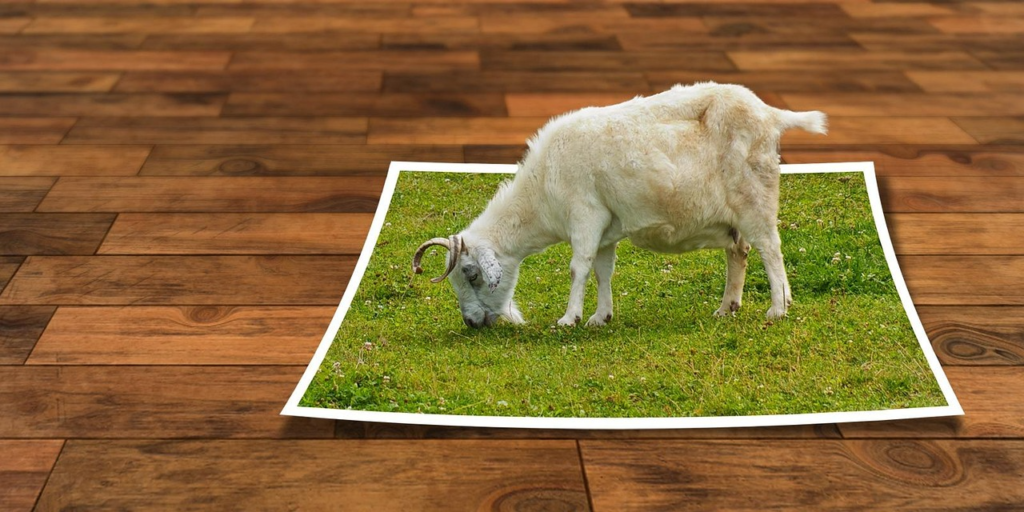
This form of interaction is not like traditional print. It does not rely solely on text but also uses motion cues to direct attention. A product can appear to rotate, a before-and-after scene can switch, or a layered image can create a sense of depth that draws the viewer closer.
Depth is achieved by isolating elements into layers and mapping them to different frames. These layers, together with the lens, create a 3D effect which adds visual weight to the message.
In marketing, this can help you grab and keep attention longer. For instance, someone is more likely to spend a couple of extra seconds looking at the effect, and those extra seconds will help with message retention and making the piece memorable.
3. Ability to Show Multiple Messages in One Space
One of the most practical advantages of lenticular prints is that, within the same physical space, it’s possible to display several images. Lenticular designs achieve this through image interlacing, where different images are interleaved on a single print and revealed at different viewing angles.
This enables marketers to use various messages without the need to expand space and material expenses. For example, the same display can alternate product features or emphasize different elements, or switch between a headline and a call to action.
Options could be compared with a simple two-image flip, or the change could be demonstrated over time. More sophisticated sequences can create small animations that guide the viewer through a message bit by bit.
This is helpful in situations where you have limited space. Instead of having to decide on one message, you can go with three and still maintain a clean design. It also means that you don’t have to create multiple printed items, streamlining both production and placement.
4. Durable and Suitable for High Traffic Environments
Marketing materials often need to withstand handling, movement, or constant activity. Lenticular prints are built with a rigid plastic lens surface, which makes them more durable than standard paper-based prints.
The lens layer acts as a shield over the printed image, making it more scratch, moisture, and wear-resistant. In environments such as retail stores, trade shows, or transport hubs, the increased durability is sure to deliver even more value from your print.
You can also mount lenticular prints on substrates that make them strong and sturdy. For marketing teams, this means fewer replacements and a more consistent presentation over time. A display that can keep its quality under heavy use, keep its impact, and avoid the worn look that will bang up a first impression.
5. Works Across Different Marketing Formats
One of the best things about lenticular printing is that it can be done on any material. From posters, signs, and banners to postcards and business cards – you name it! This makes lenticular advertising easier to incorporate into your current marketing campaigns.
Common uses include point-of-sale displays, posters, packaging, direct mail pieces, and promotional cards. Each format can use different effects based on the goal. A small card might use a simple flip effect, while a large display may use layered depth or animation.
The printing process can be scaled to different sizes without losing the core effect as long as the lens selection and image preparation are done correctly. This adaptability means brands can keep a single visual style across many touchpoints. Lenticular can be a one-off idea or a tactical thread within a wider strategy, linking contrasting elements of a marketing campaign.
Conclusion
Cutting through the noise with print isn’t as easy as it once was. Two-dimensional visuals can sometimes get drowned out, especially in competitive environments. Lenticular printing is a great way to be different by adding motion and depth to physical media.
The real value of a lenticular print lies in its ability to combine visual impact with practical use. It grabs attention, holds it longer, and tells more in one place. A lenticular print can turn throwaway marketing into something people really see and retain when used purposefully.
