
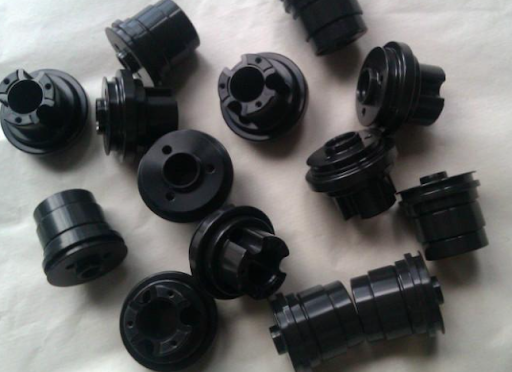
Black oxide is one of the surface treatments used in machining. Surface treatments are very important in precision machining as they extend the life of the machined part and improve its appearance. A problem with many surface treatments is that they tend to increase the finished dimensions of precision machined parts. This is detrimental to the functionality of these parts as they require precise dimensions for proper installation.
Black Oxide Finish, also known as blackening or gun bluing, is a conversion coating for ferrous materials (usually steel) that provides a corrosion resistant coating and enhances the aesthetics of the metal. However, the black oxide finish stands out from other metal finishes. This is due to its ability to impart good surface finish characteristics to machined parts while minimising dimensional expansion. This article outlines the black oxide coating process, the different types of black oxide coatings and their applications, and everything you need to know about this unique finish.
What Is Black Oxide Coating?
Black Oxide is a chemical conversion process that darkens the surface of a part without adding a thick layer. Unlike electroplating or plating, which adds a thicker layer to the base material, chemical conversion processes use chemical solutions to force a reaction on the surface of the part. While black oxide is most commonly used on ferrous metals, there are processes specifically for black oxide on other metals such as copper and stainless steel to resist surface reactions.
The surface finish is usually black or dark blue-black. It can be bright or matt, depending on the surface preparation prior to processing and the conversion treatment after blackening. Black oxide has several different names. Names similar to black oxide processes include black oxide, blackening, bluing, cold bluing and gun bluing.
There are some subtle differences which will be discussed later. Some sources confuse black phosphating and black oxide processes. Both processes produce a black finish but they are not the same.
What Is the Process of Applying Black Oxide Finish?
There are five main steps in the black finish process, which are:
Cleaning
The metal surface is properly cleaned to remove any contaminants such as grease, oil, rust or dirt. This step is critical to ensure proper adhesion of the black oxide coating.
Rinsing
After cleaning, the metal is rinsed to remove any residual cleaner or dirt. Rinsing helps prepare the surface for the next step in the process.
Rust Removal/Pickling
In this step, the metal is treated with a pickling solution to remove scale, oxides or other contaminants from the surface. The aim is to create a clean and active surface for the subsequent blackening process.
Neutralisation
Neutralisation is only required if the finished part has blind holes or is part of an assembly. This requires the part to be rinsed with an alkaline solution. This helps to prevent bleed through which can damage the surface of the part.
Deplating
This conditioning stage only occurs if the finished part is plated with other materials (chrome, zinc, cadmium, etc.). The machinist must deplate the part as electroplated parts will not retain the finish of the black oxide gun.
Black Oxide Surface Treatment
This is where the machinist applies the final surface treatment. The finished metal part is immersed in a tank filled with various alkaline solutions such as sodium hydroxide and nitrates. At high temperatures (141°C) and low temperatures (90-120°C), a coating of magnetite (Fe2O3) is left on the part. However, at low temperatures, the process deposits a layer of copper selenium (Cu2Se) on the surface of the part.
Post-treatment
Without post-treatment, the finished part is still susceptible to corrosion. However, this rule does not apply to black oxide stainless steel or brass surfaces. This is because these metals are naturally resistant to corrosion. For other metal parts, however, surface treatment is critical. Oil, wax and lacquer are common post-treatment methods. Oil is the most common finish used by machinists. It produces a shiny surface while improving lubricity and corrosion resistance. Wax has a darker surface, but has better lubrication and corrosion protection properties. Paint is also a good choice, especially if the part needs to be finished quickly.
Types of Black Oxide Finish
As mentioned earlier, the temperatures at which machinists perform black oxide finishing vary. These temperatures also vary among the different types of black oxide finishing. They include:
Thermal Black Oxide Finish
Thermal Black Oxide Finish is the most commonly used type of Black Oxide Finish. It involves immersing the component in a hot salt bath. Sodium hydroxide (NaOH) salt baths, nitrate salt baths and nitrite salt baths are all types of salt baths used. An automated conveyor moves the part from one salt bath tank to another, fully integrating the entire process flow.
The process typically operates within a temperature range of 275°F to 295°F, and maintaining this temperature range is critical to the black oxide coating process. This is because at lower temperatures the process takes longer, while at higher temperatures rust forms on the surface of the finished part. As the temperature of the salt and bar increases, another iron compound, magnetite (Fe2O3), is formed instead of rust. Another method of applying thermal oxide black is rarely used. It involves the use of ferric chloride. However, it is only effective on steel surfaces. Machinists repeatedly immerse the steel part in a ferric chloride bath and then in hot water.
Medium Temperature Black Oxide Process
The only difference between this process and the hot black oxide process is the operating temperature. The operating temperature is between 194 degrees Fahrenheit and 248 degrees Fahrenheit. At this temperature the metal can also turn to magnetite. However, it has an advantage over hot black oxide in that it does not release corrosive fumes during operation.
Cold black oxide
This method differs from the other types and is called room temperature black oxide. In this method, copper selenide is applied to the metal surface at 68 to 86 degrees Fahrenheit. The black oxide surface produced by this method is not as wear resistant as other surface treatment methods. However, it is just as wear resistant when a post-treatment is added.
Materials for Black Oxide Finish
Carbon Steel
Black oxide coating is often applied to carbon steel parts for its durability and corrosion resistance. It is commonly used on machine parts, tools and fasteners.
Stainless Steel
Stainless steel is often used in harsh environments due to its high corrosion resistance. Stainless steel parts can benefit from the added protection of a black oxide coating.
Copper
Black oxide is often applied to copper parts to give a matt finish. This is a common finish for plumbing fixtures, electrical components and decorative items.
Zinc
Black oxide plating can also produce an ebonised finish on zinc parts. This finish is often used on hardware, automotive parts and decorative items.
Brass
Brass is a material often used for decorative purposes. Black oxide can be applied to brass parts to create a unique and durable finish.
Aluminium
Aluminium parts can be given a black finish by applying a black oxide coating. This finish is often used for decorative purposes and to provide additional corrosion protection.
Pros and Cons of Black Oxide Finish
Pros
Improved Corrosion Protection: One of the main benefits of a black oxide finish is its superior resistance to metal corrosion. It forms a protective layer that makes metal parts strong and durable and will stand the test of time.
Reduces Light Reflection: If you are looking for a surface that does not reflect light, black oxide is your best choice. It is perfect for optical devices or other applications that will produce glare.
Visual Effect: The smooth, dark finish of black oxide gives metal parts a polished, industrial-standard appearance. Primer for Other Finishes: Black oxide can be used as a primer if you wish to apply other metal finishes to your parts.
Cons
Poor Corrosion Protection: While the black oxide surface is porous and easily absorbs oil, corrosion protection is limited to the oil or other sealant used on the surface. Black oxide is one of the worst metal finishes in terms of corrosion resistance.
Durability: A good black oxide finish will not rub or flake, but it is not as durable as many other finish options.
Sourcing Simplified – Start Your Next Project With PROTO MFG
Are you looking for a reputable partner for your parts fabrication and machining projects? Look no further. At PROTO MFG, we specialize in CNC machining and related technologies, including sheet metal fabrication, rapid prototyping, etc. Whether it is a project with a simple design or parts with complex geometries, do not hesitate to contact us today!
