
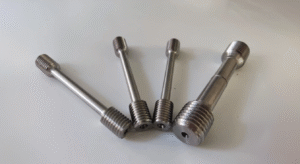
Getting a round tensile sample just right isn’t always as straightforward as it seems. A few millimeters off—and the test data is no longer valid. That’s exactly why the prep stage gets so much focus.
There are several ways to do it, and each method has its pros and downsides. Some rely on manual work and experience; others use more automated tools to help maintain precision across batches. With rising demands for precision and efficiency, laboratories are increasingly relying on advanced tools for round tensile sample preparation to achieve consistent and accurate results.
This article breaks down the key preparation methods in use today, compares their efficiency and output quality, and shows how each one fits into different lab setups.
Common Methods for Round Tensile Sample Preparation
There are four widely used methods for preparing round tensile specimens. Each offers a different balance between speed, accuracy, flexibility, and cost.
1) Manual Lathe Machining
This traditional method depends entirely on operator skill. With the right setup, it can deliver accurate results, but consistency is a challenge. Every sample is machined by hand, making it slow and prone to variation across batches.
2) Conventional Turning Centers (Engine Lathes)
More advanced than manual lathes, these machines offer better repeatability and smoother finishes. Still, the process requires manual setup and monitoring. It works well for standard geometries, but switching between sample types takes time.
3) CNC Milling and Turning
CNC-based machines are widely used in labs that need high accuracy and consistent output. Once programmed, they produce precise samples with minimal user input. These systems are ideal for both small and large batches and significantly reduce preparation time.
4) Centerless Grinding
Best suited for high-volume production of straight, uniform specimens. It delivers an excellent surface finish and tight dimensional control. However, it’s less adaptable—curved or notched samples can’t be prepared using this method.
The choice of preparation method often depends on a lab’s technical resources, budget, and production needs. While some facilities continue using conventional tools due to familiarity or cost, the demand for CNC-based round tensile sample preparation machines has grown steadily in recent years.
Why CNC Milling Offers an Advantage Over Traditional Methods
Labs working with round tensile specimens often face a difficult trade-off: precision versus productivity. Traditional tools can deliver accurate results, but only in the hands of highly trained operators and with significant time investment per sample. This makes it difficult to scale operations or maintain consistent quality across batches.
Today, the demand for advanced machines for tensile tests continues to rise as industries move toward greater automation and efficiency. These systems allow labs to pre-define cutting steps, reduce operator involvement, and keep results stable over time. Once configured, these machines produce uniform samples across various materials and shapes with minimal variation.
Unlike manual lathes or standard turning centers, CNC machines simplify preparation by offering digital controls, preset profiles, and automated cutting sequences. This reduces downtime between sample types and shortens training time for new operators.
They’re also easier to manage in the long term. Tool wear is predictable, maintenance can be scheduled, and software updates can extend functionality without hardware changes. All of this makes CNC milling a practical solution for labs that want reliable results without increasing operational load.
What to Consider When Choosing a CNC Machine for Round Specimens
Switching to CNC milling is a major step forward, but choosing the right machine and supplier makes all the difference. Not every CNC system is designed for round tensile sample preparation, and not every provider offers the same level of support.
Start by thinking about your sample volume, material types, and precision needs. A machine that works well for occasional aluminum specimens may not be strong enough for harder metals or high-throughput labs. Look at the spindle power, fixture options, control interface, and how easily the system can adapt to different geometries.
But the machine itself is just part of the equation.
Who you buy from matters just as much as what you buy. A good supplier doesn’t just sell the equipment—they stay involved. That means providing spare parts, fast support, and clear warranty terms. It also means training your team, helping with installation and calibration, and making sure everything meets the right standards for accreditation and traceability.
Long-term, a reliable partner can save you from costly downtime and make it easier to upgrade or scale your operations later. So don’t just compare specs—look at the full picture: machine quality, real-world application fit, and the people behind it.
What’s Next for Round Specimen Prep?
As tensile testing becomes more demanding, outdated preparation methods are showing their limits. Manual tools still have their place, but they struggle to keep up with the precision, speed, and repeatability that modern labs require.
CNC milling machines provide a balanced solution—combining automation with flexibility. For round tensile sample preparation, they offer a way to standardize results, reduce training time, and support growing test volumes without compromising quality.
Lab setups vary widely, but the direction is clear: the shift toward smarter tools is already underway. And for many, CNC-based preparation has become the logical next step.
