
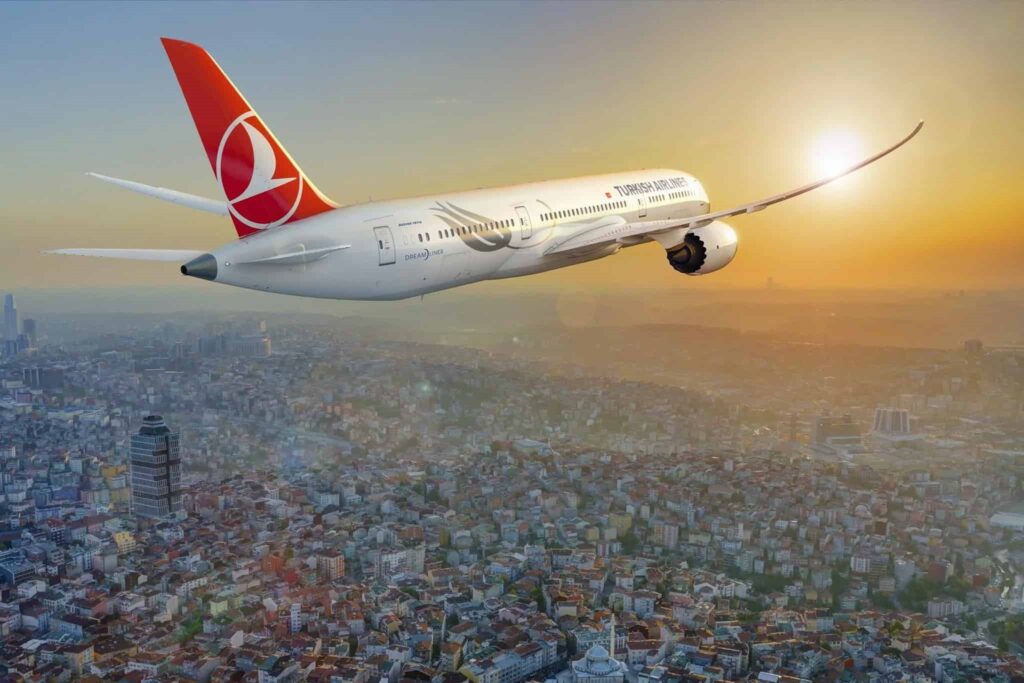
So here’s the headline everyone’s tossing around: Turkish Airlines Launches Direct Flights Between Istanbul and Seville. Looks straightforward, right? Another line on a map. But sit with it for a second. This is Istanbul, crossroads of continents, layers of history, suddenly linking nonstop to Seville, which has its own thing going on with orange blossoms, flamenco, and that almost theatrical light at sunset. Two places that feel like stories in themselves now stitched together by one neat flight path.
And yes, Turkish Airlines is the one pulling this off. Not surprising if you’ve followed them; they already fly to more countries than any other airline (seriously, over 120). Still, there’s something about this route that makes people lean in a little.
Maybe because Andalusia was always just slightly awkward to get to unless you wanted to bounce through Madrid or Barcelona. Maybe because the romance factor is off the charts. Or maybe I’m overthinking it.
The Why Behind the Route
Airline press releases always talk about “growing demand” and “expanding cultural ties.” Turkish Airlines said pretty much that: Andalusia is becoming a hotspot, Istanbul is already a hub, and the two belong together.
But it’s also a numbers game.
According to the International Air Transport Association (IATA), new non-stop routes can boost tourism arrivals by 10–15% within the first year. And Andalusia’s tourism board, Turismo de Andalucía, has been vocal about diversifying beyond the usual European visitors.
A spokesperson even said recently, “Opening markets to Asia and the Middle East is essential for Andalusia’s sustainable growth.” And what’s the easiest way to do that? Direct flights via Istanbul.
Well, actually… that’s the marketing spin. The real truth? Seville has been missing out. Malaga gets the beach crowd. Madrid and Barcelona hog the connections. Seville deserved better.
Flight Basics (because someone will ask)
- Start Date: Autumn 2025 (just in time for off-season travelers).
- Frequency: Three weekly flights.
- Aircraft: Airbus A321neo. Modern, efficient, comfortable enough but don’t expect an A350 lounge vibe.
- Flight Time: Around 4 hours 30 minutes. Long enough for two movies, short enough to not feel brutal.
Istanbul Meets Seville
Let’s pause on the cultural angle. Istanbul is minarets and markets, endlessly layered. Seville is Gothic spires, Moorish palaces, streets so narrow you wonder how any car fits. Different, but also… cousins? Both cities are shaped by centuries of cultural mash-ups. Both know how to host a proper feast. Both stay up too late.
The first time I walked through Seville’s Plaza de España, I honestly thought it looked fake — like a movie set that someone forgot to pack away. The tiles, the sweep of the colonnades. And now I’m imagining the same day where someone spends the morning drinking Turkish tea by the Bosphorus, hops on a plane, and by evening they’re sitting under those tiled arches. Wild.
The Local Angle
People in Seville are… cautiously optimistic. Extra flights mean extra visitors, and that’s money. But it’s also strain. Seville’s Holy Week and Feria already attract more people than the city seems able to hold. Streets flood with processions, hotels double prices, tapas bars run out of chairs.
A local tourism researcher, quoted in El País, warned: “Non-stop routes increase arrivals quickly, and if unmanaged, they can tip a city into over-tourism.” True. But Andalusia is hungry for growth, and direct links to Istanbul could mean visitors not just from Turkey but from across Asia, Africa, and the Middle East.
The Experience Factor
So what does this mean for the traveler? Well, no more Madrid layover purgatory. No more sprinting through Barcelona at 6 a.m. to catch a regional hop. Direct flights are freedom.
And Istanbul isn’t just a stopover. For many, it’s part of the trip. Spend a day wandering Hagia Sophia, nibbling on baklava in Karaköy, then slide onto your flight and land in Seville by dinner. That’s not inconvenience — that’s two-for-one travel.
I tried the old way once: Istanbul to Madrid, then a delayed flight to Seville. Missed the connection. Ate a stale ham sandwich in Barajas. By the time I arrived, I was too tired to care. This new route feels like an apology for all of that.
Andalusia Beyond Seville
Seville isn’t an endpoint. It’s a gateway. From here you can catch a high-speed AVE train to Córdoba in under an hour. Granada is a few hours by road. Cádiz is right there with its Atlantic vibe. Even the beaches near Tarifa aren’t far off. Turkish Airlines probably knows this — they’re not just selling Seville, they’re selling Andalusia.
And the stats back it up. Spain’s National Statistics Institute reported that Andalusia welcomed almost 12 million international visitors in 2023. Imagine the bump when Istanbul connections funnel new travelers directly into that number.
Quick Table: Old vs New
| Aspect | Old Route (via Madrid/Barcelona) | New Direct Route (Istanbul–Seville) |
| Total Travel Time | 6–9 hrs (with layover chaos) | 4.5 hrs non-stop |
| Reliability | Missed connections common | More predictable |
| Romance Factor | Low (Madrid airport sandwiches) | High (two iconic cities linked) |
| Cost | Sometimes cheaper | Competitive mid-range |
Industry Voices
Aviation analyst Alex Macheras summed it up on X (formerly Twitter): “Turkish Airlines continues to expand in ways that reinforce Istanbul’s role as the true crossroads of aviation. Seville is another jewel in this crown.”
Meanwhile, Skift wrote, “Secondary European cities are central to Turkish Airlines’ expansion strategy routes like Seville are about long-haul connectivity, not just leisure.”
Even Reuters got in, pointing out that the airline’s growth is “part of Turkey’s broader push to position itself as a global connector between East and West.”
Possible Downsides
- Over-tourism: Seville might creak under the pressure.
- Seasonality: Airlines test routes. If winter demand is low, frequency could drop.
- Competition: Expect Ryanair or Vueling to slash prices on their existing Seville links.
Pro Tip: If you’re eyeing peak events like Semana Santa, book months ahead. This route will fill quickly.
Personal Aside
I still remember standing in Seville’s Alcázar courtyard at dusk. The air smelled of jasmine, the light was soft, and I thought: this is the kind of place people cross oceans for. Istanbul has that too. A quality of being timeless, of making you feel small in the best way. Putting those two cities on one itinerary feels like a travel editor’s dream come true.
Final Thoughts
So yeah, Turkish Airlines Launches Direct Flights Between Istanbul and Seville. On paper, it’s just another announcement. But for travelers — and for Seville — it’s more than logistics. It’s a bridge. A chance to connect two regions that have more in common than they might admit.
There will be challenges. There always are. Flights may get cut back, tourism might swell uncomfortably, critics will debate. But for now, it’s worth celebrating.
Because travel gets real when the direct flight appears. It turns a hazy dream into something you can actually book. Istanbul to Seville. Seville to Istanbul. A line on a map, but also a line between stories, meals, and moments.
And maybe that’s enough reason to get a little excited…
