
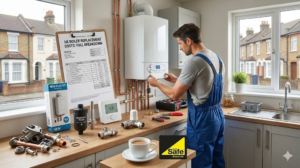
For many, estimating the entire cost of a new boiler can at times be a complicated task. Households that have an old boiler which suddenly fails might feel stressed out. Families might think about full replacement because of the high cost of repairs. This cost can really weigh down low-income homeowners. Bearing the cost of boiler replacement becomes nearly impossible under very tight situations.
The UK government understands these struggles faced by vulnerable households. To help such families, the UK government provides an old boiler replacement grant. Eligible households can receive support if they meet specific criteria. This support helps reduce the financial pressure created by heating upgrades.
Factors Affecting Boiler Replacement Cost
A number of factors play together to set the final price for boiler replacement, and recognizing them will have you going into the process without any great surprises.
1. Boiler Type
The type of boiler plays a major role in cost. Combi boilers usually cost less because they need fewer parts. System boilers cost slightly more due to cylinders and extra components. Regular boilers cost the most because they require tanks and complex pipework.
2. Boiler Size (kW Rating)
Boiler size also affects the final cost significantly. Higher kW rated boilers cost more due to greater power. Large homes usually need bigger boilers for proper heating. Small homes can work well with lower kW boilers. So, the right kW choice directly affects your spending.
3. Installation Complexity
Complexity of installation will send labour costs soaring. The more complicated the piping, the longer the time required and the higher the rates; likewise, changing a standard boiler with a combi system requires more work. More work means more hours and more installation cost.
4. Location of Boiler
Boiler location also affects replacement cost. Moving a boiler to another room increases labour cost. Longer pipe routes require extra materials and extra time. So, relocation always increases the final installation price.
5. Additional Components
Some houses will need the extra equipment to be safe, e.g., filters, flues, thermostats, and smart controls. The initial cost will be higher because of these components but at the same time, the overall efficiency will be enhanced and energy bills might even be reduced in the long run.
6. Home Condition
Home condition also plays a role in the final cost. Old pipework may need upgrades for safe installation. Weak walls may need strengthening for boiler support. Such changes increase labour time and total installation cost.
7. Installer Rates
Labour rates differ amongst various installers in the UK, with big companies charging more for the same job. Local installers sometimes offer cheaper installation rates. So, comparing quotes helps reduce final costs.
Total Cost of Replacing an Old Boiler with an Energy-Efficient One
Buying a new boiler with the latest technology gives many advantages: decreasing your electricity bills, increasing comfort in the house, and having a more secure environment. But still, the overall price would be based on the above-mentioned factors. Let’s look at the costs in detail by boiler type.
1. Cost of Combi Boiler Replacement
Combi boilers are the most widely used type in UK homes nowadays. They provide hot water and heating simultaneously, eliminating the need for cylinders or tanks; thus the time needed for installation is much shorter, resulting in lower costs.
Average Costs:
- Combi boiler unit cost: £1,000 to £2,000
- Installation cost: £600 to £1,200
- Extra components: £150 to £350
- Total combi boiler replacement cost: £1,750 to £3,500
2. Cost of System Boiler Replacement
System boilers suit medium and large homes. They need a hot water cylinder for storage. This increases material and labour costs slightly.
Average Costs:
- System boiler unit cost: £1,200 to £2,500
- Installation cost: £800 to £1,400
- Extra components: £200 to £450
- Total system boiler replacement cost: £2,200 to £4,300
3. Cost of Regular Boiler Replacement
Regular boilers or conventional boilers entail hot water cylinder and cold-water tanks. They take longer and more technically challenging work.
Average Costs:
- Regular boiler unit cost: £1,500 to £2,750
- Installation cost: £1,000 to £1,800
- Extra components: £250 to £600
- Total regular boiler replacement cost: £2,750 to £5,000
Cost Breakdown by Boiler Size (kW Rating)
Boiler size also changes the cost significantly. Here are common size-based price ranges in the UK.
- 24kW to 27kW:£1,700 to £2,500
- 28kW to 34kW:£1,900 to £3,200
- 35kW to 40kW:£2,500 to £4,300
Bigger kW boilers are for larger houses with lots of radiators. Smaller ones can choose smaller kW sizes and thus cut down the cost.
Additional Costs to Consider
Unforeseen costs may come in during the installation. These extra costs will be determined by the condition of your home and your requirements.
- Boiler relocation:£300 to £800
- New thermostat:£50 to £250
- Smart thermostat:£150 to £300
- Magnetic filter:£80 to £150
- Condensate pipe upgrades:£50 to £150
- New flue kit:£100 to £250
- Radiator upgrades:£200 to £600 per radiator
These costs improve performance and keep your boiler efficient.
Summary of Full Cost Breakdown
Below is a simple table showing total estimated costs.
| Boiler Type | Unit Cost | Installation | Extras | Total Cost |
| Combi | £1,000–£2,000 | £600–£1,200 | £150–£350 | £1,750–£3,500 |
| System | £1,200–£2,500 | £800–£1,400 | £200–£450 | £2,200–£4,300 |
| Regular | £1,500–£2,750 | £1,000–£1,800 | £250–£600 | £2,750–£5,000 |
Tips to Minimise Boiler Replacement Cost
There are some easy steps you can take to cut down on boiler replacement costs while still maintaining high quality.
- To get better pricing you can first compare and then shop around among several quotes as the various installers have different rates for the workers .
- Boilers have to be chosen according to their size, because the larger the boiler the greater the energy wastage and the higher the cost. If the boiler is small, it won’t heat your home properly. Thus, proper sizing will mean a reduction in your costs over time.
- It is advisable to go for energy-efficient models for continuous savings. Efficient boilers decrease your monthly power bill and keep you warm during winter.
- Avoid unnecessary boiler relocation if possible because it increases labour and material cost.
- Make sure to check if you are eligible for any government grants before you pay. UK government has specific schemes under which it gives support. If you meet the requirements, you can receive substantial amounts of funding. Grants lower the initial cost and therefore make heating upgrades more accessible
Conclusion
For a lot of families, the boiler replacement is a really big decision and the cost is usually one of the factors that come into play. To get better acquainted with these factors will, in turn, help you plan your budget properly. The energy-efficient boilers in the long run do save you money, and the government grants can indeed make the financial burden less at the outset for the eligible households.
Besides, don’t forget that comparing quotes and choosing the right type of boiler is a prerequisite. This exhaustive guide provides you with every single detail that you may need. The time is now for you to make an accurate estimate of your boiler replacement grant. A proper planning always lessens the hassle and brings about savings in the process.
