
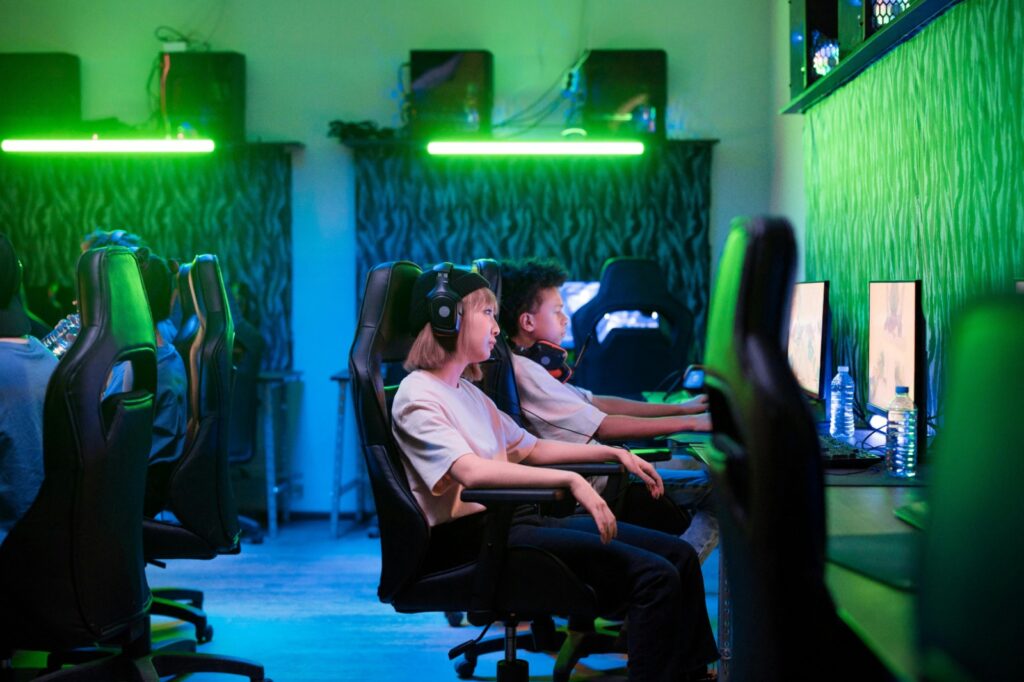
Photo by Ron Lach : https://www.pexels.com/photo/people-playing-on-computers-7849516/
In tech companies, productivity discussions usually revolve around code quality, system architecture, agile processes, and tooling. Office furniture is often treated as an afterthought — a one-time operational task rather than a strategic decision.
Yet research from neuroscience, ergonomics, and occupational health shows that knowledge workers — especially engineers, developers, and product teams — are among the most physically and cognitively sensitive employees when it comes to workspace design.
For tech leaders, HR teams, and operations managers, office furniture is not just about comfort. It directly affects concentration, error rates, collaboration quality, and even burnout risk.
Why Tech Workplaces Are Uniquely Demanding
Unlike many roles, tech work involves:
- Prolonged screen time (often 8–10 hours per day)
- High cognitive load and deep focus
- Extended static postures
- Frequent context switching between tools, meetings, and problem-solving
Studies show that knowledge workers performing complex cognitive tasks experience faster mental fatigue when physical discomfort is present, even at low levels [1]. This makes tech teams particularly vulnerable to poor furniture decisions.
Over a year, a software engineer may spend 1,800+ hours at the same workstation. Small ergonomic flaws compound into measurable productivity loss.
Multi-Screen Setups and Desk Design
Tech professionals frequently work with:
- Two to four monitors
- Laptops plus external displays
- Peripheral devices such as tablets or test hardware
Visual ergonomics research shows that improper monitor height, depth, or alignment:
- Increases neck and shoulder strain
- Raises visual fatigue
- Slows information processing speed [2]
Desks designed for tech teams must provide:
- Sufficient depth to maintain optimal viewing distance
- Stable surfaces for multiple displays
- Integrated cable management to reduce visual clutter
Cluttered visual fields increase cognitive load and reduce working memory efficiency — a critical factor for developers and engineers [3].
Seating, Posture, and Code Quality
Prolonged sitting is unavoidable in most tech roles, but how employees sit matters greatly.
Medical studies show that poor seating posture:
- Reduces oxygen intake due to restricted breathing
- Increases muscle tension in the neck and shoulders
- Correlates with reduced concentration and higher error rates during cognitive tasks [4]
Ergonomic chairs that support neutral spinal alignment and allow micro-movement have been shown to:
- Reduce musculoskeletal discomfort by 30–60%
- Improve sustained attention
- Delay mental fatigue during long work sessions [5]
For tech teams working on complex systems, reduced fatigue translates directly into fewer mistakes and better decision-making.
Focus, Flow States, and Furniture
High-performing tech teams rely on flow states — periods of deep, uninterrupted focus where productivity peaks.
Neuroscience research shows that physical discomfort disrupts flow by continuously pulling attention back to the body [6]. Even minor distractions, such as adjusting posture or relieving pressure points, fragment concentration.
Furniture that supports flow includes:
- Chairs that reduce pressure points
- Desks at correct elbow height
- Layouts that minimise unnecessary movement and interruptions
Well-designed workstations help developers stay in deep focus longer — a major productivity advantage in software development and engineering.
Collaboration Spaces for Tech Teams
Tech work is not only individual. Design reviews, sprint planning, debugging sessions, and architecture discussions require effective collaboration.
Research in organisational psychology shows that poorly designed meeting furniture:
- Shortens attention spans
- Reduces participation
- Increases cognitive fatigue during technical discussions [7]
Tech offices benefit from:
- Meeting tables that support laptops and shared screens
- Comfortable seating for long technical sessions
- Clear sightlines to displays for collaborative problem-solving
Furniture directly influences how easily ideas are exchanged and how long teams can collaborate effectively.
Hybrid Work and the Tech Office
Hybrid work is especially prevalent in tech. Many developers compare office setups directly with their home workstations — often highly customised for comfort.
If the office environment feels ergonomically inferior, attendance and engagement decline.
Studies show that hybrid workers are more likely to attend offices that:
- Offer superior ergonomic support
- Provide better collaboration infrastructure
- Feel purpose-built rather than generic [8]
This is why many tech companies rely on experienced suppliers, such as https://www.officefurniture2go.com, to ensure office environments meet the elevated expectations of technical teams.
Presenteeism in Tech Roles
Presenteeism — being physically present but cognitively underperforming — is a significant issue in tech.
Chronic low-level discomfort has been shown to:
- Reduce problem-solving efficiency
- Increase debugging time
- Lower task persistence during complex work [9]
Because tech employees often work through discomfort rather than taking sick leave, productivity losses remain hidden but substantial.
High-quality ergonomic furniture helps mitigate this risk by reducing pain-related cognitive interference.
Aesthetics, Identity, and Employer Brand in Tech
Tech professionals are highly sensitive to their work environment. Environmental psychology research shows that visually coherent, well-designed offices:
- Increase intrinsic motivation
- Strengthen organisational identification
- Improve retention among knowledge workers [10]
Furniture aesthetics signal:
- Engineering maturity
- Attention to detail
- Respect for employee wellbeing
For tech companies competing for talent, workspace design quietly reinforces employer brand.
Cost, Retention, and Long-Term Performance
Replacing a skilled engineer is expensive. Estimates suggest that replacing a technical employee can cost 100–200% of their annual salary due to recruitment time, onboarding, and lost knowledge [11].
While office furniture is not the sole factor in retention, discomfort and poor working conditions consistently rank among reasons employees disengage or leave.
From a long-term perspective, investing in high-quality furniture is a risk-reduction strategy — protecting both human capital and productivity.
What High-Performing Tech Offices Have in Common
Across startups and established tech firms, productive offices typically share:
- Fully adjustable desks and chairs
- Support for multi-monitor setups
- Thoughtful acoustic and visual zoning
- Comfortable collaboration areas
- Durable furniture designed for intensive daily use
These are not luxury features. They are infrastructure for cognitive work.
Office Furniture as a Strategic Asset in Tech
The most productive tech organisations treat office furniture as part of their performance stack — alongside software, hardware, and processes.
This includes:
- Ergonomic assessments for technical roles
- Furniture systems that scale with team growth
- Regular reviews as work patterns evolve
- Alignment with hybrid and remote strategies
Furniture decisions, when grounded in science, support sustained innovation rather than silently undermining it.
Final Thoughts
In tech workplaces, productivity is ultimately a cognitive outcome. The physical environment — desks, chairs, layouts, and aesthetics — directly shapes how effectively brains can do complex work.
For technology companies serious about performance, office furniture is no longer a background decision. It is a foundational component of engineering productivity, collaboration, and long-term success.
