
There’s nothing worse than settling in for a cozy winter evening only to smell smoke backing up into your home because creosote has choked your chimney. This guide breaks down the most effective creosote removers for wood stoves in 2026, focusing on products that actually prevent the dangerous buildup that causes chimney fires.
Why This Matters More Than You Think
Chimney fires cause over $100 million in property damage across the United States every year, and most of those fires stem from one thing: creosote buildup. That tarry, combustible substance is what happens when smoke cools down in your chimney and condenses into creosote; it builds up in layers so thick that it can catch fire at temperatures as low as 450°F. The right creosote remover used consistently can eliminate roughly 80% of this risk for about twenty bucks.
But what we’re talking about here is not rocket science. Creosote develops in three stages: During stage 1, it is flaky and can be easily removed with a brush; stage 2 creosote becomes gummy and more stubborn to remove; by the time it reaches stage 3 when it’s hard, shiny glazed coating that is difficult to impossible to efficiently clean your chimney without professional services. The idea is to catch it early and stop it from getting to those dangerous later stages.
How Creosote Actually Forms in Your System
Your chimney’s worst enemy is cool smoke meeting cold surfaces. When you’re burning wood, especially if it isn’t completely seasoned or your fire is not operating hot enough, smoke contains tar compounds that cool and condense on chimney walls. Outdoor wood boilers have even more trouble than indoor stoves, because the chimney runs outside for part of its length and quickly cools.
You can make creosote a whole lot worse: burn green, high moisture wood; let your stove smolder at low temperatures; or have a chimney that’s too short to allow for proper draft. If your water jacket temperatures are below 140°F or your chimney doesn’t meet the 3-2-10 criteria, you’re losing the fight against buildup no matter what additives you try.
OutdoorBoiler.com Creosote Remover: Our Top Pick
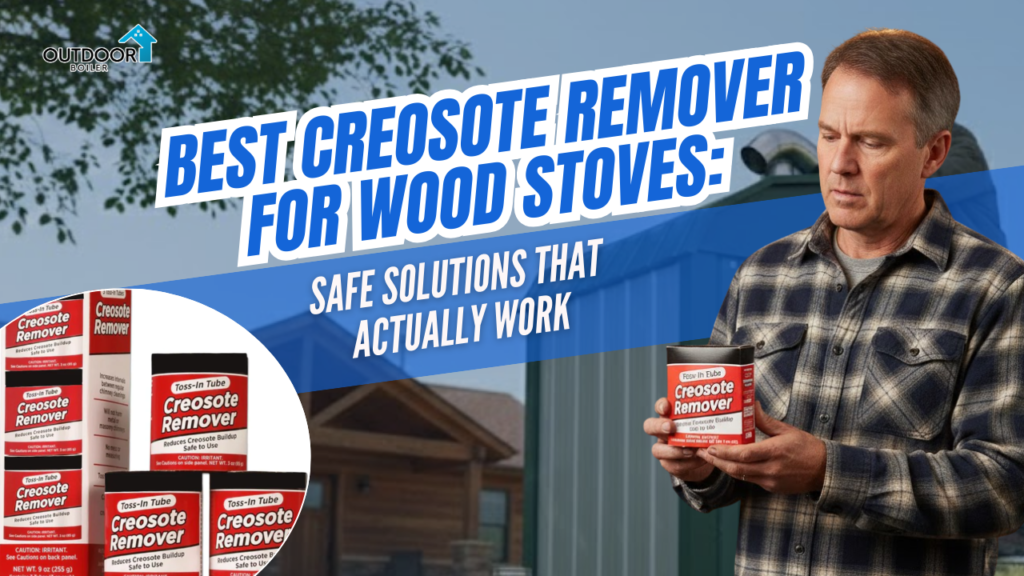
OutdoorBoiler.com’s 5 pack canister system takes a different approach than most products on the market. These are not powders you measure or liquids you spray; these are sealed canisters that get tossed on top of a bed of hot coals once a week. Burning all the way down, the canister releases catalytic compounds that change sticky creosote into dry ash that brushes away easily.
What makes this our top choice is how well it works specifically with outdoor wood boilers and high efficiency stoves. The formula is optimized for the temperature ranges these systems operate at, and there’s no measuring or mess involved. Right now they’re running a 12% discount with code 12OFF through May 12, which brings the 5 pack down to a price that makes weekly use genuinely affordable. If you’ve got a catalyst equipped stove like the GX Series, just remember to remove the catalyst three days before and after treatment.
Shop Creosote Remover 5-Pack at OutdoorBoiler.com
Other Effective Creosote Treatment Options
Rutland Products makes both stick and concentrate formulas that work through a similar chemical conversion process. You burn the sticks in your firebox or spray the concentrate on hot surfaces above 300°F, and the manganese based catalyst breaks down creosote deposits. These are effective but take more effort to apply than the canister method, and you have to remember to brush afterward.
Some people swear by homemade solutions, such as 1 to 9 parts bleach and water or straight vinegar on cool surfaces. These natural acids do cause some creosote to dissolve over time, but the action is slow, and these aren’t ideal for ongoing maintenance on a system you’re actually operating. They’re better suited for light buildup or spot treatment than serious prevention.
The Tools You Still Need
Chemical treatments make creosote easier to remove, but they don’t eliminate the need for physical cleaning. You’ll want the right size chimney brush that corresponds with your flue’s dimensions and enough extension rods to reach all the way to your chimney’s full height. A nice brush kit costs $50 to $100, and it will last for years if you don’t abuse it.
To remove gummy Stage 2 buildup, a metal putty knife or scraper is your leverage to tear it off chimney walls. If you’ve neglected your chimney for too long and are staring down Stage 3 glazed creosote, you may require a pro with particular rotary tools. That is costly, and you can avoid it by keeping up with regular treatment and cleaning.
How to Use Creosote Treatment Correctly
Timing matters when you’re treating your chimney. You want a good bed of hot coals without a roaring fire going. For canister products like OutdoorBoiler.com’s system, you literally just toss the sealed canister onto the coals and close your loading door. The canister burns completely, leaving only ash behind that you clean out with your regular ash removal.
After treatment, wait about 24 hours before doing a follow up brush cleaning to remove the loosened deposits. This is when you’ll see the real results, as creosote that was sticky and difficult now brushes away easily. During heavy use season when you’re burning daily, plan on weekly treatments. In shoulder seasons when you’re only burning occasionally, you can stretch it to every other week.
Building a Complete Maintenance System
Weekly treatment with a quality product forms the foundation of your prevention plan, but it’s part of a bigger picture. Every month during heating season, take a flashlight and visually inspect your chimney from both the top and bottom access points. You’re checking for something like a lot of buildup at the bottom, loose bricks or damaged screens on the chimney cap that need to be taken care of.
Either have a certified chimney sweep look it over every year, or do an aggressive cleaning yourself. This catches problems before they turn into a safety hazard and gives you peace of mind going into the next heating season. OutdoorBoiler.com offers free water chemistry testing too, which helps if you’re running a hydronic system where water quality affects overall efficiency.
Prevention Beats Treatment Every Time
The absolute best creosote strategy is burning fuel that doesn’t create much in the first place. Dry, seasoned hardwood with moisture content below 20% burns hotter and cleaner than green wood. Get yourself a moisture meter for about fifteen bucks and test your wood before burning. If it reads over 20%, stack it somewhere dry for another few months.
Operating temperature makes a huge difference too. Keep your fires burning hot rather than letting them smolder at low temperatures. For outdoor boilers, maintaining water jacket temperatures above 140°F prevents the cool surfaces that promote condensation. A properly sized chimney for wood stove installations ensures good draft, which keeps combustion temperatures where they need to be.
Review Current EPA Wood Heater Standards
Safety and Compliance Considerations
All reputable creosote treatments are safe for use in any wood burning appliance when used according to directions. They comply with NFPA 211 standards for chimney maintenance and work alongside EPA Step 2 certified stoves without voiding warranties or causing problems. That said, read the label and follow manufacturer recommendations, especially regarding catalyst equipped stoves.
These treatments work hand in hand with a proper chimney installation, but they do not address basic design issues. No chemical is going to fix that core problem if you have an undersize chimney, too short of a chimney or under insulated. It’s a good idea to fix the install first, and then keep it looking new with regular treatment and cleaning.
Your Creosote Questions Answered
How often should you use creosote remover on a wood stove? Weekly monitoring during the active burning season provides the best protection against dangerous buildup.
Does creosote treatment replace professional chimney sweeping? No, you still need annual physical cleaning even with regular chemical treatment.
Is creosote remover safe for outdoor boilers with catalysts? Yes, but remove the catalyst three days before and after treatment to protect it.
Can you use too much creosote treatment? Following weekly recommendations is safe, but more frequent use wastes product without additional benefit.
What’s the difference between powder and canister treatments? Canisters are cleaner and easier to use with no measuring, while powders offer more control over dosage.
Will creosote remover fix already glazed Stage 3 buildup? It helps soften it but severe glazing usually requires professional rotary cleaning.
Protect Your Investment the Smart Way
Creosote buildup isn’t something you can ignore and hope it goes away. It gets worse over time until eventually it causes a chimney fire or blocks your flue enough to back smoke into your home. OutdoorBoiler.com’s canister system offers the simplest, most reliable prevention we’ve found, especially for outdoor wood boilers where maintaining clean chimneys gets tricky.
Ready to stop worrying about creosote fires? Head to OutdoorBoiler.com and grab their 5 pack with code 12OFF before May 12 to save 12%. Their technical support team is available if you have questions about using it with your specific setup, and they can help you build a complete maintenance plan that keeps your system running clean and safe for years.
