
A couple of years ago, “AI in video” sounded like a demo you watched once and forgot. Now it shows up in client briefs, job descriptions, and even your clip feed on YouTube that look like they were shot on a real set with real lighting and real actors. AI video has moved past the novelty stage and into the part of the industry where money changes hands and deadlines matter.
That shift comes with two realities that feel like they’re pulling in opposite directions. Production has become faster and more accessible for creators and small teams, especially when budgets are tight.
At the same time, AI-generated video content has started to replace work that used to keep a lot of people busy, particularly at the entry and mid levels. The result is a creative landscape that looks exciting from one angle and unsettling from another.
From cameras and crews to models and pipelines
Video production used to be constrained by physics and logistics: locations, gear, scheduling, travel, weather, permits, and the sheer cost of pulling a crew together. AI video changes the constraint list. A concept can be turned into a rough cut in an afternoon, even when nobody is available to shoot. A product can appear in a glossy environment that never existed. A script can be localized into multiple languages while keeping the same pacing and timing.
AI-generated video content also changes how planning works. Instead of locking a storyboard and then capturing shots to match it, teams often generate variants early, test them, and refine the strongest idea. Some studios now treat ideation like A/B testing, where creative direction and iteration speed matter as much as camera technique.
Video editing stays central, but the timeline often starts earlier in the process, because the first footage can be generated before anything is filmed.
Where AI production has become common
Marketing has become one of the biggest proving grounds. Short-form ads, product teasers, and performance creatives are built around volume. When a campaign needs dozens of variations for different audiences, AI-powered video tools fit naturally, since they can remix messaging, pacing, and visuals quickly.
Educational and corporate content also shifted fast. Training modules, internal updates, and how-to explainers rarely need cinematic originality, but they do need clarity, consistency, and speed. AI-generated video content fills that lane well, especially when paired with templates, brand kits, and simple motion graphics.
Localization has been another accelerator. Subtitles, dubbing, voice cleanup, and timing fixes used to take a lot of manual effort, particularly when a team had to publish in multiple languages on a tight schedule. AI now handles transcription, translation suggestions, and speech enhancement in ways that reduce turnaround time dramatically.
Video editing still matters, though: a translation that reads well on paper can still feel awkward on screen if the rhythm doesn’t match the visuals.
The job impact people feel in real time
The uncomfortable part isn’t hard to describe. When a company can produce a passable promo, explainer, or social clip using AI tools and a small in-house team, fewer freelancers get the call. Roles that involved repetitive assembly work feel the pressure first: basic cutting, simple motion graphics, caption formatting, and quick turnaround social exports. Automated video editing can handle a chunk of that workload, which changes hiring patterns and pushes many editors toward higher-level responsibilities earlier in their careers.
Some work hasn’t vanished so much as moved. Teams still need people who can shape story, manage brand tone, and make creative decisions that hold up under scrutiny. A model can generate footage, but it can’t fully own the accountability that comes with a real campaign.
When a result lands flat, someone still has to diagnose why, and that diagnosis often lives in the human layer: pacing, clarity, emotional timing, and intent.
The realism problem and the trust problem
The latest wave of AI video is unnerving for a simple reason: it can look convincing even when it’s completely fabricated. Lighting, camera movement, shallow depth of field, and facial detail keep improving, which makes manipulation harder to spot at a glance. That realism has obvious creative upside for filmmaking, concept work, and advertising, but it also creates a trust crisis for news, public figures, and everyday creators.
AI-generated video content can blur lines around authenticity, and the industry is still figuring out the rules. Some platforms push labeling and metadata. Some brands set internal policies about when synthetic actors are allowed. Some creators lean into transparency as a creative choice.
None of those responses fully solves the core issue: audiences are learning to doubt what they see, and that doubt can spread to legitimate work.
AI inside editors changed daily workflows
Generative clips get the headlines, but the quieter revolution has been happening inside the programs people already use. AI-powered video tools now handle tasks that used to be pure grind: speech-to-text, auto captions, music ducking, scene detection, smart reframing for vertical formats, and many others.
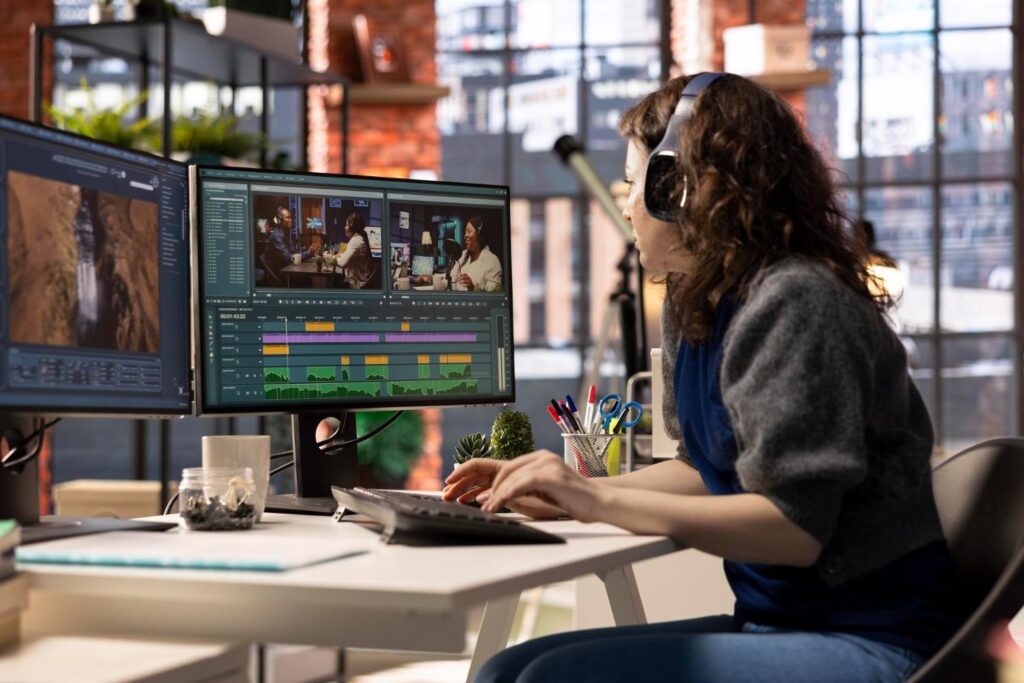
Automated video editing is especially noticeable in projects with a lot of raw material. That includes the boring but constant jobs, like sorting dozens of takes and learning how to combine MP4 snippets into a single timeline before the real shaping begins.
Cutting interviews, podcasts, event recordings, and screen captures used to require hours of searching and trimming. Now a typical workflow can start with a transcript, jump to the strongest soundbites, and build structure before polishing transitions and timing. Video editing turns into a mix of editorial judgment and tool-assisted assembly, which can be a relief when deadlines are aggressive.
Even experienced editors benefit here, not because AI makes decisions better than they do, but because it reduces the friction between an idea and a usable draft. The creative brain gets more time for story and less time for repetitive clicking.
Final Thoughts
AI will keep spreading, partly because they lower costs and partly because audiences already expect faster content cycles. AI-generated video content will become more common in areas where speed and scale dominate, and less common where trust and human presence drive the value.
A strange future is arriving where the most realistic footage might be synthetic, and the most valuable skill might be knowing when realism helps and when it hurts.The right method depends on the job: credibility-based storytelling needs a different approach than high-volume marketing, and both can benefit from AI video when used with intention.
