
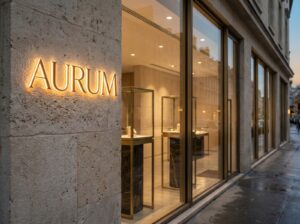
Luxury retail has been transformed by digital experiences, augmented reality mirrors, app-based queues, and QR codes on displays. Still, nothing replaces the physical presence of an object that exists in real space, and a hand-finished neon sign is just that.
A neon installation becomes part of the environment rather than an overlay. That’s why many businesses invest in custom neon signs designed specifically for their space. The sign interacts with storefront windows, gallery walls, or event stages. It lives in three dimensions, not pixels.
That physicality is one reason luxury perfume launches, couture presentations, and artisan showcases in Los Angeles, Miami, or Manchester will often choose neon elements that are custom-fabricated, not off-the-shelf. They want something that feels like an object, not a backdrop.
Attention to Detail Is a Brand Statement
In luxury branding, details matter. A small imperfection in a couture hem is noticed just as quickly as a dull corner on a designer shoe. When neon is handcrafted, each tube, bend, and curve is inspected by an artisan.
Some manufacturers are very open about documenting these steps. For instance, when customers discuss quality control processes from makers like CRAZY NEON®, they often mention the human inspection stages, where technicians check brightness consistency, edge finishing, and structural integrity before a sign ships. These quality markers matter when the end product is meant to live in an environment where expectations are high.
Hand finishing also makes it easier to integrate the piece with bespoke elements: built-in temperature controls, color calibration for specific lighting environments, and mounting that aligns with architectural details. These are the sort of refinements that luxury design directors value.
Longevity Matters More Than Trends
Luxury brands are increasingly cautious about aesthetics that date too quickly. Fast trends come and go, but investing in a neon sign that still reads well visually and contextually five years down the road is a different mindset.
Instead of jumping on every viral phrase or pop-culture moment, these brands focus on timeless expressions: a signature word, visual rhythm aligned with the architecture, or a color palette that complements bespoke interiors.
This approach is why you see certain fashion houses and high-end cafes choose warm whites, subtle ambers, and minimalist letterforms. The sign is meant to outlast a viral moment and persist as part of the brand’s visual language.
Experiences Drive Memory, and Neon Amplifies Experience
Customers don’t just buy a product; they buy a memory. Brands understand this. Hand-finished neon adds layers to experiential spaces; it becomes part of the sensory backdrop. Whether it is a Rolex boutique in Miami, a capsule store in Soho, or an art-inspired cafe in Chicago, customers associate the glow with presence, not just promotion.
In photography, product shots, and social content, hand-finished neon becomes a mood anchor rather than a marketing badge. That is exactly the sort of authenticity that luxury brands pursue, something real and tactile rather than ephemeral.
Conclusion: A Quiet Return That Says a Lot
Luxury brands are not adopting neon because it is cheap or trendy. They are adopting it because hand-finished signage offers permanence, physical presence, thoughtful craft, and an experiential layer that complements premium offerings.
It is no longer about bright neon yelling for attention. It is about glowing with intention, presence, and design integrity.
Have you noticed hand-finished neon showing up in luxury spaces near you, and how does it change the way you perceive the brand?
