
You didn’t buy your electric vehicle because it was trendy.
You bought it because it made sense.
Lower maintenance. Fewer moving parts. No oil changes. Clean torque. Quiet mornings.
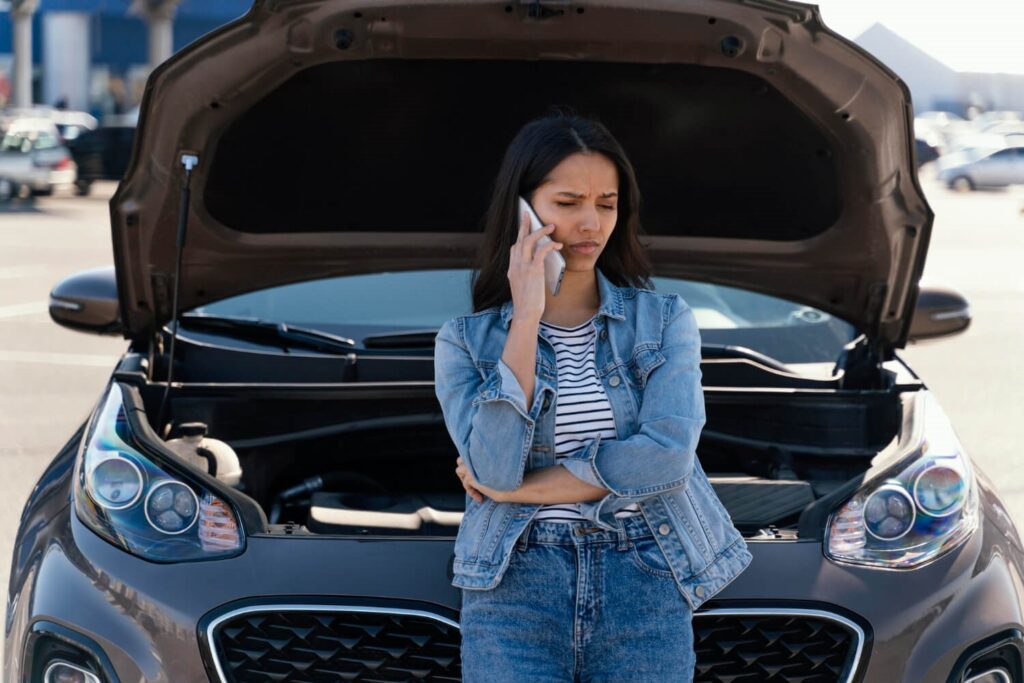
So when the battery warning light reappears for the third time — or your charging system refuses to cooperate on a busy weekday — confusion hits before frustration does.
Wait. Isn’t this supposed to be simpler?
Here’s what many California drivers are quietly discovering: electric vehicle buybacks are rising. Not because EVs are failing across the board. Not because manufacturers are reckless. But because rapid adoption has outpaced repair systems, California’s consumer protection laws are now being tested in real time.
If you’re dealing with recurring battery issues, software instability, or charging failures, you’re not imagining the pattern. And you’re not alone.
The Quiet Shift No One Announced
California leads the nation in EV adoption. According to the U.S. Department of Energy’s Alternative Fuels Data Center, the state consistently ranks at the top for electric vehicle registrations and for growth in charging infrastructure.
At the same time, the California Air Resources Board has advanced its Advanced Clean Cars II program — requiring all new car sales to transition to zero-emission vehicles over the coming decade.
More EVs.
More complexity.
More pressure on service departments not originally built for high-voltage battery architecture and software ecosystems.
When scale accelerates faster than repair capacity, friction surfaces quietly — in warranty files, not press conferences.
That’s where the California EV Lemon Law comes into play.
When “Minor Glitches” Stop Feeling Minor
Battery degradation. Charging interruptions. Software that resets mid-drive. Range estimates that swing unpredictably.
Each issue may sound manageable. Together, they begin to erode something bigger: trust.
California’s Song-Beverly Consumer Warranty Act — the legal backbone of electric vehicle lemon law — defines a defect as something that substantially impairs use, value, or safety.
Notice what that doesn’t say.
It doesn’t require a total breakdown.
If your vehicle repeatedly returns to the service center for the same EV warranty defect — whether due to battery management errors or persistent software instability — the law focuses on repair attempts, not drama.
Many drivers hesitate here.
“Maybe one more update will fix it.”
Maybe. But how many repair visits qualify as reasonable? That is usually where people pause — and where documentation begins to matter more than optimism.
Tesla, Software, and the New Kind of Lemon Case
Electric vehicles introduce a category of defect that combustion engines never had: over-the-air software fixes.
Tesla lemon law cases in California often involve firmware patches intended to resolve battery calibration or charging anomalies. Reuters has covered the growing volume of EV recalls and software-related fixes across manufacturers.
A recall is not automatically a lemon.
A recall that fails to resolve the issue? That’s different.
The National Highway Traffic Safety Administration states plainly:
“Manufacturers are required to remedy the problem by repairing it, replacing it, or refunding the purchase price.” — NHTSA
That remedy becomes legally significant when repeated attempts do not restore reliability.
A lemon law battery failure claim in California often arises not from a catastrophic breakdown but from persistent instability that never fully resolves.
Used Electric Vehicles Are Not Automatically Excluded
One common misconception deserves clarity.
Used electric vehicle lemon law protections in California may apply — if the vehicle remains under the original manufacturer’s warranty. The California Department of Consumer Affairs confirms that consumer rights attach to warranty coverage, not newness.
That detail matters in today’s market, where resale EV inventory is expanding.
If your pre-owned electric car continues to cycle through the same charging or battery issues under warranty, electric car lemon law claim protections in California do not disappear simply because you are the second owner.ll
- Has the impairment affected use, value, or safety?
Manufacturers maintain warranty reserves precisely because these disputes exist. Public SEC filings — including Tesla’s Form 10-K— disclose warranty liabilities and litigation exposure.
Buybacks are not rare accidents. They are structured compliance outcomes under the California lemon law for electric cars.
If you are weighing whether continued repairs make sense, speaking with an electric vehicle lemon lawyer for California can clarify whether your case meets statutory thresholds under electric vehicle defect lawsuit standards.
That step isn’t escalation. It’s clarification.
The Timeline You Shouldn’t Ignore
California lemon law timeline for electric vehicles requires that defects arise during the warranty period and that manufacturers receive reasonable repair opportunities.
Waiting too long does not erase your rights. But delay complicates leverage.
How to file a lemon law claim for an electric vehicle in California often begins with simple discipline:
- Keep every repair invoice.
- Record each recurrence.
- Confirm warranty status.
- Provide written notice if defects persist.
Nothing dramatic. Just methodical.
And yes, discussions of EV manufacturer buyback programs in California typically intensify once patterns are undeniable.
What Qualifies as an EV Lemon in California?
The standard is not perfection. The standard is substantial impairment.
If your electric vehicle repeatedly fails to charge reliably, loses meaningful range without explanation, or suffers recurring software failures that compromise safety systems, you may be within the scope of a California lemon law attorney for EVs evaluation.
The law does not punish innovation. It balances it.
Electric vehicles are engineering leaps. Engineering leaps occasionally stumble.
The legal system exists to manage that tension — not to sensationalize it.
The Bigger Perspective
Electric vehicle adoption is not slowing. Policy mandates and consumer demand make that clear.
As scale increases, so will disputes. EV buyback California lemon law claims are not signs of collapse. They are signs of maturation — an industry absorbing the cost of rapid innovation.
If repeated repairs have shifted your excitement into uncertainty, the question is no longer “Is this normal?”
The better question is quieter.
How many attempts are reasonable before reliability becomes a right, not a hope?
California’s lemon law answers that question with the law, not sentiment.
And sometimes, clarity is the most valuable upgrade your vehicle can get.
