
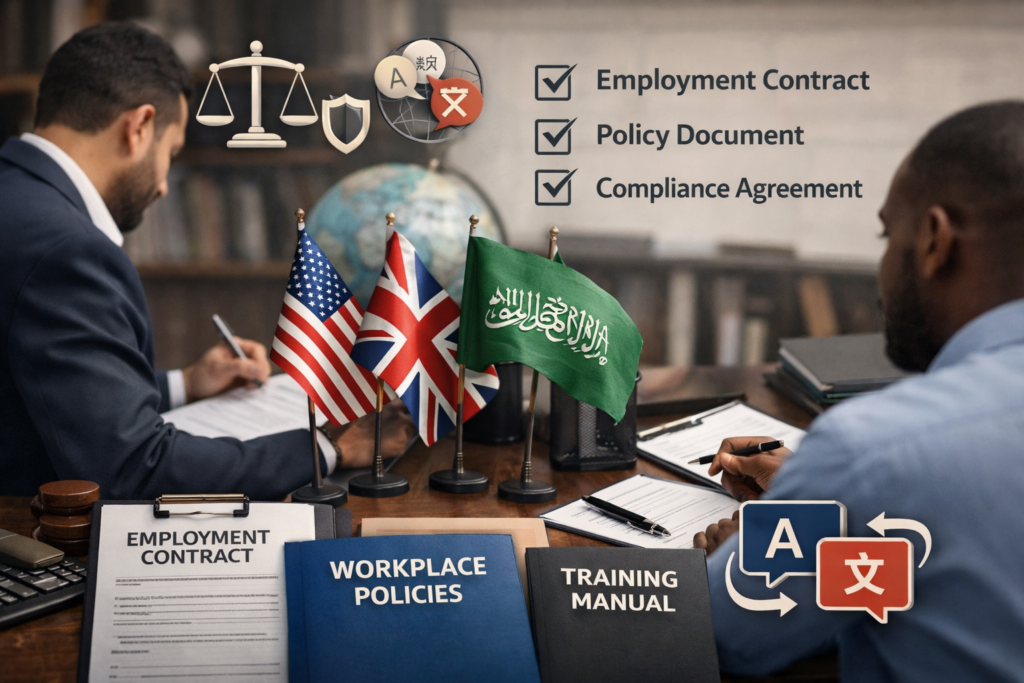
Human resources departments deal with sensitive information every day. Employment contracts, company policies, compliance documents, and workplace agreements must be clear and legally correct. When companies operate across different countries or hire international employees, language differences can easily create confusion. This is where accurate language support becomes essential. Businesses that rely on HR professional translations can make sure every document is understood correctly while meeting legal requirements in different regions.
A single mistranslated clause in an employment contract can lead to disputes or compliance issues. HR teams therefore depend on specialized translators who understand both legal terminology and workplace policies. These professionals ensure that documents maintain the same meaning across languages while respecting local employment laws.
Why HR Documents Require Specialized Translation
HR material is not like general content. It often contains legal terms, company obligations, employee rights, and regulatory language. Translating such documents requires careful attention and a strong understanding of employment frameworks.
Here are some reasons specialized HR translation is necessary:
Legal accuracy
Employment contracts, termination letters, and workplace agreements must preserve exact legal meaning. A minor wording change can alter employee rights or company obligations.
Consistency across policies
Global organizations usually maintain standardized policies across branches. Translation must keep the structure and meaning consistent in every language version.
Cultural awareness
Certain phrases or expectations in workplace policies may need adjustment depending on the cultural context of the region where the document will be used.
Protection for both employer and employee
Clear translations help employees understand their responsibilities while protecting companies from legal misunderstandings.
Common HR Documents That Need Translation
Human resources departments handle a wide range of documents throughout the employee lifecycle. Each stage requires communication that employees can clearly understand.
Employment Contracts
Contracts outline job roles, compensation terms, working hours, and company expectations. Accurate translation ensures both parties understand the agreement before signing.
Employee Handbooks
Handbooks explain company policies, workplace conduct, safety rules, and employee benefits. Multilingual versions allow international teams to follow the same guidelines.
Workplace Policies
Policies covering areas such as attendance, leave management, confidentiality, and professional conduct must be clearly understood across the entire workforce.
Training Materials
Companies often provide onboarding programs and training sessions for new employees. Translating these materials ensures that international staff receive the same instructions and standards.
Compliance Documents
Regulatory compliance documents explain labor laws, workplace safety standards, and internal procedures. Translation must reflect the exact legal meaning required by authorities.
Challenges in Translating HR Content
Translating HR documentation involves more than converting words from one language to another. It requires careful attention to legal context and workplace communication.
Legal Terminology Differences
Employment laws vary from country to country. Certain legal terms may not have direct equivalents in another language. Translators must choose wording that preserves the correct meaning within the local legal framework.
Confidential Information
HR files contain sensitive personal data and company information. Professional translation providers follow strict confidentiality practices to protect these details.
Tone and Clarity
HR communication must remain professional and respectful. The translated text should maintain the same tone while remaining easy for employees to understand.
Policy Interpretation
Policies sometimes contain technical explanations or legal references. Translators must fully understand the intent behind each statement before rewriting it in another language.
Benefits of Professional HR Translation Services
Organizations with diverse teams gain several advantages when they invest in accurate HR translation.
Clear employee communication
Employees can understand their rights, responsibilities, and workplace expectations without confusion.
Reduced legal risks
Accurate translations help companies avoid misunderstandings that could lead to disputes or regulatory issues.
Improved onboarding experience
New hires feel more comfortable when they receive documents in their own language. It helps them understand company culture and procedures faster.
Consistency across global offices
Businesses operating in multiple countries can maintain uniform policies while communicating effectively with every team.
Stronger trust within the workplace
Employees who clearly understand contracts and policies are more likely to feel confident about their role in the organization.
How Professional Translators Handle HR Documents
Specialized HR translators follow a careful process to maintain accuracy and clarity.
Document Analysis
Translators first review the structure, terminology, and purpose of the document. They identify sections that contain legal language or regulatory requirements.
Terminology Research
They examine employment law terminology used in the target language. This step ensures that every clause aligns with the local legal system.
Translation and Editing
The document is translated while maintaining the original meaning. Editors then review the content to confirm clarity and accuracy.
Quality Review
Professional services often include additional checks to confirm that the final document matches the original structure and intent.
Confidential Handling
Secure systems and strict privacy practices are used to protect sensitive employee data throughout the translation process.
HR Translation in a Global Hiring Environment
Remote work and international recruitment have changed the way companies build their teams. Organizations now hire employees from different countries and cultural backgrounds. This diversity creates new communication needs within human resources.
Employment agreements, workplace expectations, and company policies must be accessible to everyone in the organization. Clear translation helps employees feel confident about their responsibilities and ensures that company standards remain consistent across borders.
For HR departments managing multilingual teams, accurate document translation becomes part of daily operations. Every policy update, contract revision, or compliance notice may require language support so that all employees stay informed.
In a workplace where people speak different languages, clear documentation builds understanding. Contracts remain transparent, policies stay consistent, and teams operate with confidence as they follow the same standards across offices and regions.
