
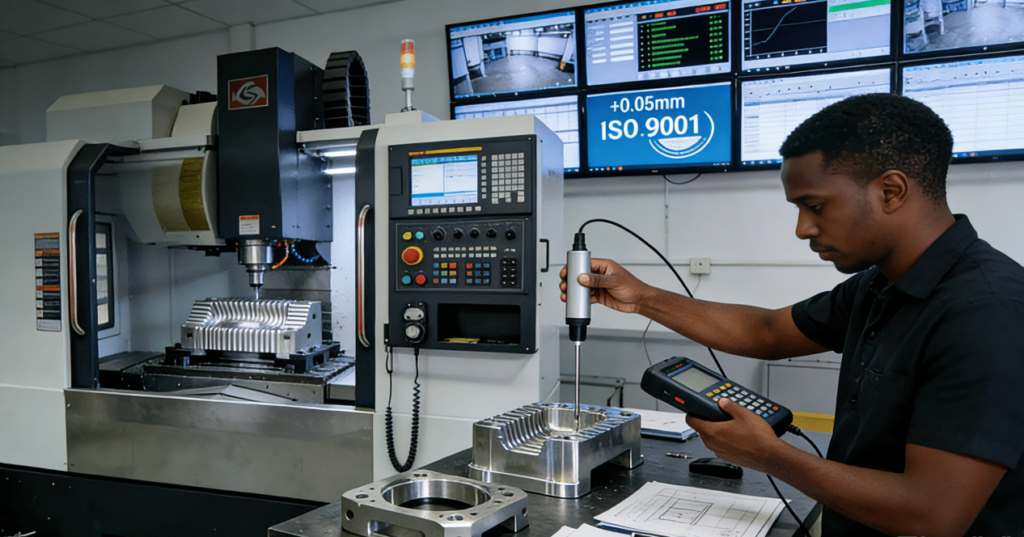
Figure 1: State-of-the-art rapid prototyping CNC facility in Nigeria, demonstrating high-precision machining capabilities with real-time quality monitoring and ISO 9001 certified processes for accelerated product development.
Introduction
The industry in Nigeria can greatly benefit from advancements in the development of manufactured products; however, there are issues concerning the speed of production in terms of prototype construction. There are current businesses that continue using outdated processes or substandard services which reduce the speed of market entry. The main issues lie in misunderstandings about rapid prototyping CNC services, no criteria for evaluation, and failure in terms of Design for Manufacturability Analysis, causing the constructed prototype to fail in function tests.
This paper will present a systematic approach in identifying the best-suited rapid prototyping CNC service by emphasizing key evaluation criteria, cost-optimization techniques, and industry best practices that can improve the efficiency of manufactured product developments. The following subtopics will address the prime advantages, evaluation processes, common pitfalls in greater detail that can benefit industrial developers in Nigeria.
H: What Are the Main Benefits of Rapid Prototyping CNC Machining Compared to 3D Printing and More Traditional Methods?
It has some unique advantages over 3D printing and traditional prototyping techniques in terms of authenticity of material properties, mechanical strength, and accuracy of dimensions. This section provides the analysis of these advantages through a comparison of the role of CNC technology in functional prototyping related to aeronautics and automobiles.
1. Higher Material Fidelity and Mechanical Strength
In CNC machining, it involves the use of practical materials such as metals and engineering plastics; this way, the prototype will be to the exact replica of the final component. CNC machining does not have the limitations associated with 3D printing; for example, it does not work with specialized plastics. CNC machining uses substantial materials such as aluminum and stainless steel; it is an integral component in mechanical engineering in order to test the functionality of an item. For example, an aerospace component needs to be strong under different stresses; in CNC machining, the prototype will be strong enough in order to test its functionality.
2. High Precision and Conformity to Geometric Standards
Accuracy by CNC machining, with a tolerance of ±0.05 mm, meets global norms according to ASME Y14.5 for geometric dimensioning and tolerancing. This will ensure that the prototypes are made to exact specification, something quite important in cases where complex shapes are involved in medical devices. Adherence to strict levels of tolerance in CNC services helps overcome typical errors associated with traditional techniques such as manual machining or casting, wherein errors may add up, resulting in rework costs. Mention of ASME Y14.5 here helps bring in authenticity of technological expertise associated with CNC systems.
3. Functional Prototyping for Real-World Validation
It is able to make functional prototypes that solve problems related to the actual operating conditions, unlike 3D printing, where the prototype normally serves aesthetic purposes. For example, functional testing can be performed for automotive components like fitting, shape, and function in their assemblies unlike 3D printing. This is because it has very detailed features like threads or undercuts, which are difficult to create using 3D printing. Thus, since it validates functions, it’s preferred hence has the ability to reduce development delays.
How Can Manufacturers Evaluate Technical Capabilities of Rapid Prototyping CNC Service Providers?
The technical capabilities have to be compared and selected with the right and competent CNC service provider on equipment, materials, and certifications, while this section enables the parameters to be measured for the quality and efficiency of partners.
1. CNC Machines and Movement Configurations Evaluation
It is at this point important that the providers avail state-of-the-art CNC systems that may include 5-axis machines capable of enabling the machining of complicated parts within a single operation. Evaluation of equipment such as multi-axis CNC mills would ensure geometric flexibility while reducing errors resulting from multiple fixture usage. To developers in Nigeria, it is important that the specifications of the machine in regard to spindle speed and travel distance capabilities are established to suit the task at hand.
2. Material Options and Compatibility with Industry Requirements
The use of a variety of materials, including metals, plastic, and composites, ensures a match between the requirements and the prototypes produced. The important material PEEK and aluminum have strength and resistance to high temperatures, which is essential when working on autos or electronic components for prototypes. The manufacturers must ensure that material supplier chain quality is consistent by checking with their supplier to ensure that materials come from a certified source.The ISO 9001 certification ensures that a quality management system is in use during material handling when working on prototypes.
3. Certification and Quality Assurance Protocols
ISO 9001 certifications, like others, ensure the provider’s commitment to following standard procedures in their work. This eliminates potential risks during the creation of prototypes. Providers who have qualifications related to their industry (for example, AS9100D in aerospace) demonstrate experience in their field. Assessment also involves the study of case studies to ensure consistency in delivery. For example, an ISO 9001-certified provider is bound to carry out meticulous inspections to ensure that all prototypes conform to specifications.
What Role Does DFM Analysis Play in Reducing the Cost and Time of Rapid Prototyping CNC Projects?
DFM analysis helps in optimizing designs based on manufacturing, thereby having a direct impact on cost and time efficiency in prototyping. This section will describe the principles of DFM along with its examples in the industry.
- Early Identification of Design Flaws and Optimization Opportunities: In DFM analysis, manufacturability problems can be detected at the design level, like infeasible tolerance values or complex shapes contributing to higher machining time. When working together in DFM with suppliers, developers can optimize features in a medical device prototype, such as reduced cavities, in a manner that reduces tool change and scrap amounts substantially. In one case, a medical device prototype reduced its build time by 30%, and this was made possible through wall thickness changes based on DFM analysis, and this fits well with Society of Manufacturing Engineers guidelines.
- Cost Reduction through Material and Process Efficiency: The application of DFM ensures substantial cost savings through appropriate material selection and machining techniques. Design rationalization is one of these techniques that helps to combine several components into one, thus reducing assembly costs. In one instance, an agriculture equipment prototype reduced costs by 25% through using DFM to optimize both material grades and tolerances. Through the utilization of resources available at SMEs on best practices, cost of production becomes less through economies of scale even for prototyping.
- Improving Communication and Collaboration among Providers: DFM encourages collaborative activity between design and manufacture, so it is clear what the requirements are, making it possible. Conducting DFM analysis enables optimization, with activities like varying draft angles to enable milling, speeding up the whole process, reducing delays with misunderstandings, as in the case of quotes for enclosures for electronics, where analysis results streamlined quote approval. Society of Manufacturing Engineers (SME) recommendations to adopt DFM practices have promoted trust, important for delivering on time.
How Should Businesses Interpret a Quick Prototyping CNC Quote for Avoiding Hidden Costs?
A transparent quote is crucial for budgeting; this section will analyze a quote and provide tips on how to decode both quotes and associated costs.
1. Decomposition of Cost Drivers into Materials, Machine Time, and Post-Processing Costs
The quotes should specify costs relating to material, which range depending upon material types and quantities, while machine time costs depend upon part complexities and tolerancing requirements. The costs incurred post-processing, such as surface treatment or heat treatment, need to be broken down to prevent any misunderstandings. For example, a quotation for a complex drone part’s component may break down aluminum material costs from 5-axis machining hours to enable clients to focus on their requirements.
2. Importance of Transparent Pricing and Inclusion of DFM Analysis
Suppliers are requested to provide an estimate containing DFM analysis, which helps identify places where money can be saved at an early stage. An estimate that does not consider DFM may exclude cost-reduction measures, increasing the overall cost at a later point in time. Companies are requested to provide estimates that give information about inspection reportsand conformity verification, referring to guidelines such as ISO 9001 certification.
3. Strategies for Comparing Quotes and Evaluating Value-Added Services
While comparing prices, we should emphasize the additional services rather than the prices alone. Asking about quality control measures and the time taken can be valuable in avoiding indirect costs that may result when projects are delayed. Comparing in a comprehensive manner, as explained in the guides for rapid prototyping CNC services, can ensure that we choose the right partners in order to eliminate the chances of overrun.
What Common Pitfalls Do Companies Face When Selecting a Rapid Prototyping CNC Partner, and How to Avoid Them?
Lessons in avoiding pitfalls in partnering contracts may prevent partnering projects from being late or over budget; this section identifies pitfalls and remedies based on experience.
- Overemphasis on Price Over Quality and Certifications: Selecting service providers based only on price can result in service failure and failed timelines. On the flip side, certifications such as ISO 9001 and ISO 14001 can be of prime importance while selecting service providers. This will ensure that certain standards of quality and the environment are maintained. It has been seen in some case studies that companies emphasizing quality have seen a reduction of up to 40% in prototype rejection.
- Overlooking DFM Feedback and Lack of Communication: Going against the advice of DFM may lead to designs which are impossible to produce with machinery, thus requiring rework. Communication processes must be clearly established with a demand for frequent updates being made in a bid to avert any misunderstandings. For instance, a failed industrial equipment project has been rescued through incorporating DFM feedback in a call for collaboration tools.
- Failure to Verify Case Studies and Technical Expertise: Failure to evaluate a portfolio/portfolio case analysis might cause capabilities to be mismatched. Similar industry verification for aerospace/medical sectors with client referral is necessary to avoid potential pitfalls of inadequate equipment for challenging geometries. Embedding ISO 14001 into assessment criteria is imperative to verify that each nominated partner is supportive of sustainable development goals necessary for Nigeria’s development.
How Does Rapid Prototyping CNC Machining Contribute to Technological Innovation and Industrial Development in Nigeria?
The application of CNC prototyping in enhancing the growth of industry in Nigeria is outlined in this section as it relates to the impact of technology.
1. Facilitating Localized Production and Less Reliance on Imports
The CNC prototyping services provided quicker prototyping methods for Nigerian companies to manufacture components, reducing being dependent on foreign-made items. This enhances self-reliance within the industry, as evident from agricultural machinery prototypes modified to favor Nigerian conditions. CNC technology enables companies to capitalize on opportunities quickly, thereby creating a resilient economy. The use of McKinsey industry reports does highlight the international trend that localized production contributes to a faster GDP growth rate.
2. Access to Innovation via Advanced Manufacturing Methods
The implementation of CNC machining further accelerates the manufacturing industry into a more advanced era due to the introduction of manufacturing features like 5-axis processing. This acts as a driving force for innovation in industries like the renewable energy industry. For example, the locally fabricated prototypes of wind turbine blades via CNC machining exhibit higher efficiencies due to the technology leap.It corresponds to the philosophy of Industry 4.0 because the industry applies technology and digital solutions for increased efficiencies and improved productivity of manufacturing processes.
3. Supporting Skills Development and Sustainable Industrial Practices
Embracing CNC prototyping helps to enhance skills development among the workforce and ensures sustainability through the use of standards such as ISO 14001. Nigerian developers can contribute to green manufacturing in technological innovation through DFM in order to achieve optimized use of materials in Nigeria. To suit their custom demands, enterprises may look into comprehensive rapid prototyping services offered by certain organizations that aid in incorporating such aspects into technological innovation.
Conclusion
In this article, a procedural model for taking advantage of rapid prototyping CNC services to benefit Nigerian industrial developers in terms of the benefits associated with precision and cost effectiveness has been highlighted. Companies should be able to avoid pitfalls and utilize connections and technical abilities to accelerate innovation and improve competitiveness in the global market to aid the advancement of Nigeria’s industries.
FAQs
A: What is the normal lead time associated with rapid prototyping CNC services?
A: Lead times depend on complexity, but with a good supplier who has ISO certification, they can turn out prototypes in 3-7 days. Depending on material availability and DFM analysis, this is achieved without sacrificing accuracy when it comes to functional testing.
Q: How does rapid prototyping CNC machining contrast with 3D printing for functional components?
A: CNC machining has greater material accuracy and strength than 3D printing and thus suits production prototypes. Although 3D printing is quicker in case of concepts and ideas, CNC offers production accuracy that meets ASME Y14.5 specifications.
Q: What materials are typically used by rapid prototyping CNC services?
A: Materials of choice would range from aluminum, stainless steel, to engineering plastics such as PEEK, depending on how well the prototyped designs perform. Suppliers must ensure that various plastics are offered to meet the needs of their final use.
Q: How does DFM analysis impact the cost of prototyping?
A: DFM analysis helps to find out design improvements at an early stage with minimal machining time as well as material loss. It is an active strategy with SME guidelines to help reduce costs by as much as 25%.
Q: What kind of certifications should the rapid prototyping service provider hold?
A: The main certification is ISO 9001 for quality management and AS9100D for aerospace industry standards. These are very important in industries like medical and automobile industries since accuracy is a prime aspect in these sectors.
Author Bio
This article was provided by the precision manufacturing professionals at LS Manufacturing, a company that assists engineers and research professionals in solving complicated part issues in Aerospace, Medical Device, and Automotive applications. Boasting certifications in IATF 16949 and AS9100D, the company guarantees high-quality production results achieved via cutting-edge technology. To learn more about their services, contact them today for a free project consultation.
