
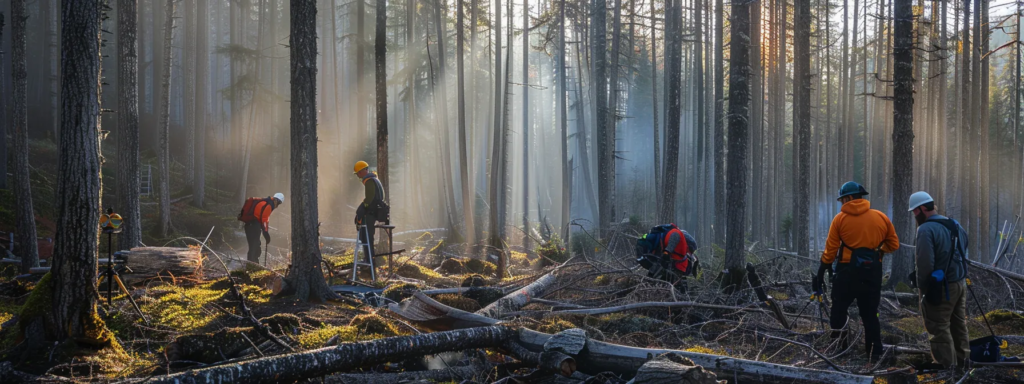
 Deforestation and forest degradation contribute significantly to global carbon emissions, presenting a serious challenge to environmental sustainability. Actions taken in the forestry sector can thus have far-reaching impacts on both ecological stability and climate change mitigation. Sustainable forestry practices are emerging as a vital solution.
Acknowledging the intricate relationship between forest management and ecosystem health prompts a closer examination of how sustainable methods benefit our natural world. Below, we delve into the sustainable strategies that aid in the preservation and improvement of forest ecosystems.
Sustainable Forestry Practices Defined and Their Role in Ecosystem Health
Sustainable forestry involves the adoption of management practices that maintain the forest’s biodiversity, productivity, and overall ecological processes. It balances the need for forest products with the preservation of forest health. H&H Forestry provides essential services that align with these sustainable practices.
These practices include selective logging, which minimizes damage to the surrounding trees and habitat, and controlled burns that reduce the risk of large-scale wildfires while promoting new growth. Sustainable forestry also incorporates planting native species and maintaining wildlife corridors to support biodiversity.
To apply these practices effectively, forest managers are encouraged to engage in continuous learning, collaborate with environmental scientists, and seek certification from bodies such as the Forest Stewardship Council (FSC). By adhering to established sustainability standards and guidelines, they can actively contribute to a thriving forest ecosystem.
Balancing Timber Production with Biodiversity Conservation
One of the central challenges in forestry is aligning the objectives of timber production with the imperative of preserving biodiversity. This balance is crucial for long-term ecological and economic sustainability.
A variety of methods are employed to address this challenge, such as setting aside conservation areas within production forests and using Reduced Impact Logging (RIL) techniques that lessen the ecological footprint of timber extraction. Conservation organizations often work alongside industry players to promote such measures.
Timber companies can contribute by adopting green certifications, investing in conservation efforts, and reducing road building in sensitive areas. These approaches ensure timber production does not compromise the vital ecological functions that forests provide, such as habitat provision and soil stabilization.
Restoring Natural Habitats through Responsible Harvesting Techniques
Responsible harvesting techniques are central to the restoration of healthy forest ecosystems. These approaches aim not just to minimize harm, but to actively improve habitat conditions for plants and animals.
Techniques such as patch cutting, which creates openings for sunlight to nourish understory growth, and the retention of deadwood for habitat complexity, exemplify this proactive ethos. Such alterations mimic natural disturbances, encouraging a diverse range of species to thrive. For instance, by leaving certain trees standing, a variety of bird and insect species find refuge and nesting grounds, supporting a dynamic food web.
Foresters are advised to perform regular evaluations of their impact on habitats and to modify practices in response to ecological feedback. By doing so, they can ensure that their efforts align with the overarching goal of habitat restoration and forest health enhancement.
Monitoring and Adapting to Climate Change with Sustainable Forestry Strategies
Climate change mitigation is increasingly intertwined with forestry practices, as trees serve as crucial carbon sinks. Sustainable forestry has the potential to optimize this role of forests while adapting to the changes climate change brings.
The use of long-term ecological monitoring systems enables foresters to observe the impacts of climate change on forests and adjust management strategies accordingly. Adaptation tactics may include selecting tree species resilient to temperature and moisture shifts or managing forests to improve their resistance to pests and disease. Educational programs like American Forest Foundation initiatives provide resources for such adaptive management learning.
Developing forest resilience through sustainable practices can ultimately contribute to a more stable global climate. As forest ecosystems are preserved and enhanced, they become better equipped to adapt to and mitigate the effects of a changing climate, ensuring benefits that extend well beyond their borders.
Overall, sustainable forestry practices represent a harmonious blend of ecological intelligence and practical forest management. They are instrumental in safeguarding biodiversity, supporting habitat restoration, balancing timber production with conservation, and better equipping our forests to combat the effects of climate change. The adoption of these practices across global forestry operations is a vital stride toward improving the health of our planet’s ecosystems.
