
Coworking has evolved from a niche solution for freelancers into a dominant force reshaping American office real estate. According to recent industry analysis, flexible workspace now accounts for a growing percentage of commercial office inventory across major US cities, with no signs of slowing. But not all coworking spaces are created equal. As this sector matures, the question shifts from whether to use shared offices to which ones actually deliver on their promises. For New York professionals, one space consistently rises above the rest: Mindspace Brooklyn.
The Coworking Boom: Why It’s Happening Now
The transformation of US office space isn’t happening by accident. Several converging factors have made traditional long-term office leases increasingly obsolete for many companies:
- Economic uncertainty demands flexibility: In an environment where AI is eliminating jobs, markets fluctuate unpredictably, and business models evolve rapidly, locking into five or ten-year leases is risky. Companies need the ability to scale up or down quickly without being trapped by real estate commitments.
- Hybrid work is permanent: The pandemic proved that remote work functions for many roles. But it also revealed the limitations of being fully remote. The solution that’s emerged—hybrid models where people work from home some days and come to offices others—requires different real estate. Companies don’t need permanent desks for everyone anymore; they need flexible space for when teams need to collaborate.
- Capital preservation matters: Traditional office leases require significant upfront investment: security deposits, build-out costs, furniture, IT infrastructure. For startups and growing companies, that capital could be better deployed in product development, marketing, or hiring. Coworking eliminates these upfront costs entirely.
- Talent expectations have shifted: Top talent, especially in tech and creative fields, expects flexibility. The ability to work remotely some days while having access to professional workspace when needed is now a baseline expectation rather than a perk. Companies offering this flexibility have recruiting advantages over those demanding daily office presence.
- Real estate is expensive: Commercial real estate in major US cities is prohibitively expensive, especially for smaller companies. Coworking provides access to prime locations and high-quality spaces that would otherwise be unaffordable.
Where Coworking Is Growing Fastest
The coworking boom isn’t uniform across America. Certain cities and neighborhoods are seeing particularly rapid growth:
- Tech hubs lead the way: Cities like San Francisco, Austin, Seattle, and Boston—where tech companies cluster—show the highest coworking penetration. These markets have both supply (lots of flexible workspace options) and demand (companies and professionals who value flexibility).
- New York dominates in absolute numbers: While penetration rate might be lower than in smaller tech cities, New York’s sheer size means it has more coworking space than anywhere else in the country. And within New York, Brooklyn has emerged as a particular hotspot.
- Brooklyn’s unique position: Brooklyn combines several factors that make it ideal for coworking growth. It has a large population of remote workers and freelancers. It’s become a tech and creative industry hub in its own right, not just a Manhattan overflow. The real estate is expensive enough that traditional offices are challenging, but not quite as prohibitive as Manhattan. And the neighborhood culture in places like Williamsburg, DUMBO, and Greenpoint aligns well with the coworking ethos.
What Makes a Coworking Space Actually Good
As the coworking sector has matured, it’s become clear that not all spaces are equal. The early generation of coworking emphasized community and culture, sometimes at the expense of functionality. The spaces that are thriving in 2026 are those that balance both:
- Operational excellence matters: The wifi needs to actually work. Meeting rooms need functioning technology. Printers need to print. Phone booths need to be soundproof. These basics sound simple, but many coworking spaces fail at them. The difference between a space that looks good in photos and one where you can actually be productive often comes down to these operational details.
- Design should support work, not just Instagram: Beautiful spaces attract members, but if the lighting causes headaches, the chairs hurt your back, or the acoustics make concentration impossible, beauty doesn’t matter. The best spaces prioritize ergonomics, lighting quality, acoustic management, and spatial variety alongside aesthetics.
- Flexibility within the space: Different work requires different environments. Writing code needs quiet. Brainstorming needs energy. Calls need privacy. The best coworking spaces provide varied environments—quiet zones, collaborative areas, meeting rooms, phone booths—so people can choose what fits their task.
- Location is critical: A beautiful space that requires an hour commute won’t get used. Proximity to where members live or to transit hubs is essential. So is the quality of the surrounding neighborhood—access to good food, coffee shops for external meetings, and amenities for breaks.
- Transparent pricing: Hidden fees, complex pricing tiers, and surprise charges frustrate members. The best operators have straightforward pricing where what you see is what you pay.
- Professional service without stuffiness: Members need responsive support when issues arise, but not corporate formality that feels alienating. The right balance is professional competence delivered with human warmth.
For professionals looking for Shared offices to rent in New York, Mindspace Brooklyn in Williamsburg exemplifies what coworking should be in 2026. It addresses every factor that makes coworking successful while avoiding the pitfalls that plague many competitors.
How Mindspace Brooklyn Checks Every Box
Operational Excellence
The fundamentals work at Mindspace Brooklyn. The internet is genuinely fast—not just adequate, but actually fast enough for video calls, large file uploads, and bandwidth-intensive work. The meeting rooms have technology that functions properly on the first try. The printers print. The coffee machines work. These details sound mundane, but they’re what separate a space you return to from one you abandon after frustrating experiences.
The space is maintained consistently. Bathrooms are clean. Common areas are tidy. Equipment gets fixed promptly when issues arise. This operational reliability means you can focus on your work rather than troubleshooting basic facilities.
Design That Actually Supports Work
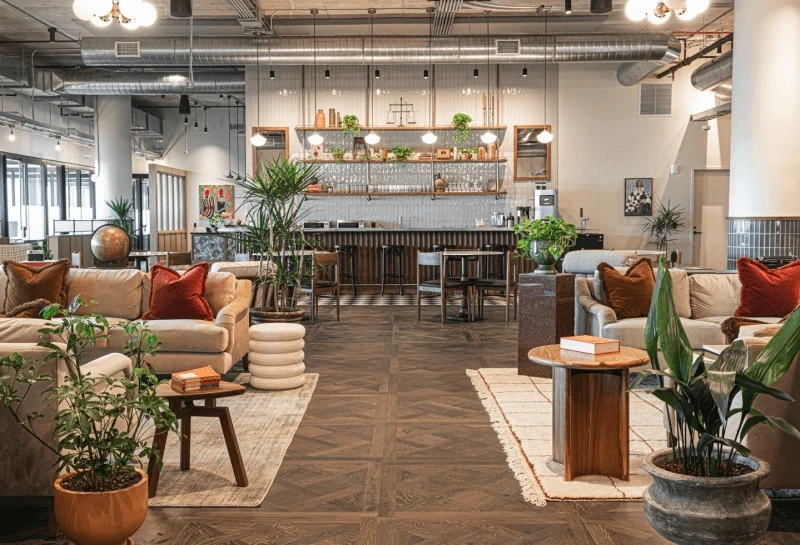
Mindspace Brooklyn’s design is thoughtful in ways that matter for productivity. The ergonomic chairs are actually comfortable for eight-hour days. The desks are proper height. The lighting is well-designed to minimize eye strain—a mix of natural light and carefully chosen artificial lighting that doesn’t cause the headaches that plague many offices.
The acoustic design manages sound without making the space feel dead. You’re aware there are other people around, which creates energy, but you’re not distracted by every conversation. Phone booths provide genuine sound isolation for calls that need privacy.
Plants and natural materials create a pleasant atmosphere without descending into design cliché. The space feels professional and adult rather than trying too hard to be cool or startup-y.
Spatial Variety for Different Work Modes
Mindspace Brooklyn provides genuinely different environments within one space:
- Open coworking areas for people who work well with ambient energy around them. These spaces have good density without feeling cramped. You can spread out, but you’re part of a working community.
- Private offices for teams that need dedicated space for collaboration or confidential work. These aren’t afterthoughts—they’re properly designed rooms with good natural light and sound isolation.
- Quiet zones for deep focus work. When you need to concentrate for hours, these areas provide the environment for it. The implicit social contract is respected: people go there to work quietly, not to take calls or have conversations.
- Meeting rooms that actually work for their purpose. Properly sized for different group sizes, equipped with technology that functions, and bookable through a system that actually works. Critical for client presentations, team meetings, or any situation where you need a professional setting.
- Phone booths scattered throughout for calls that need privacy. Soundproof enough that you won’t disturb others and others won’t disturb you.
- Lounge areas for breaks, informal meetings, or work that doesn’t require a formal desk setup. Comfortable furniture that’s actually comfortable, not just design pieces that look good but feel terrible.
This variety means you can match your environment to your task. Need to write something that requires concentration? Use the quiet zone. Have a brainstorming session? Use a meeting room or collaborative area. Taking calls all afternoon? Rotate through phone booths. The space adapts to you rather than forcing you to adapt to one type of environment.
The Williamsburg Advantage
Location matters enormously in New York, and Williamsburg is ideal for coworking. The neighborhood has transformed into a hub for tech companies, creative agencies, and startups. It maintains Brooklyn’s creative energy while developing genuine business infrastructure.
The transit is excellent. The L train provides quick access to Manhattan. Multiple bus lines serve the area. For Brooklyn residents, Williamsburg is often more accessible than Midtown or Lower Manhattan. This accessibility means less commuting time and stress, which directly impacts quality of life.
The neighborhood itself offers everything professionals need. Excellent coffee shops for external meetings or working outside the office. Restaurants at every price point for lunch or client dinners. Parks and waterfront access for clearing your head between meetings. Cultural amenities for after-work activities.
For recruiting purposes, Williamsburg is attractive to the talent pool most companies need. Creative professionals, developers, designers, and marketers generally prefer Brooklyn to corporate Manhattan. Having your workspace in Williamsburg can be a recruiting advantage.
Transparent, Fair Pricing
Mindspace Brooklyn’s pricing is straightforward. Day passes run $35-45, which is fair for the quality and location. Monthly memberships offer better value for regular users and include everything: workspace access, meeting room credits, printing, coffee, all amenities. No hidden fees. No surprise charges. What you’re quoted is what you pay.
This transparency matters. Many coworking spaces advertise low base prices but then nickel-and-dime members for meeting rooms, printing, guest access, and other basics. The all-inclusive model is actually more economical and far less frustrating.
Professional Service with Human Touch
The Mindspace Brooklyn team strikes the right balance between professional competence and human warmth. They’re responsive when issues arise but not intrusive during normal operations. They’ll help you figure out how to book a meeting room or troubleshoot technology, but they don’t hover or create bureaucratic obstacles.
This service quality matters especially for visitors who aren’t regular members. Day pass users get treated the same as monthly members. The onboarding process for new members is smooth. The staff actually know members’ names and remember faces, which creates a welcoming atmosphere without forced friendliness.
Community Without Pressure
Some coworking spaces push community building aggressively, with mandatory events and forced networking. Others ignore community entirely, treating members as isolated desk renters. Mindspace Brooklyn finds a middle ground.
There are opportunities to meet other members and build connections if you want them. Occasional events, casual interactions in common areas, and the natural networking that happens when professionals work in proximity. But there’s no pressure. If you want to come in, work heads-down, and leave without socializing, that’s completely fine.
This balance is important. Many professionals value the energy of working around others without wanting constant social interaction. Mindspace Brooklyn accommodates both those who seek community and those who prefer productive isolation.
Why It Matters for the Coworking Sector
As coworking continues to take over US office space, the sector will increasingly separate into winners and losers. The spaces that thrive will be those that prioritize operational excellence, thoughtful design, and genuine member experience over gimmicks and hype.
Mindspace Brooklyn represents what successful coworking looks like: professional facilities that actually work, design that supports productivity, spatial variety for different work modes, excellent location, fair pricing, and service that respects members’ needs. These aren’t revolutionary concepts—they’re basics executed well.
The coworking spaces that fail will be those that prioritized appearance over function, or those that cut corners on operational quality to maximize margins, or those that chose poor locations to save on rent. As the market matures, members have enough options that they can choose spaces that genuinely serve their needs rather than settling for mediocrity.
The Future of Office Space
The trend toward coworking isn’t reversing. Economic uncertainty, hybrid work models, and changed talent expectations are structural shifts, not temporary phenomena. Traditional long-term office leases will still exist for certain companies and situations, but they’ll represent a shrinking percentage of how Americans work.
For professionals in New York, particularly in Brooklyn, this evolution provides a genuine opportunity. You can work productively without committing to expensive, inflexible office leases. You can access professional facilities that would be unaffordable independently. You can choose environments that match your working style rather than accepting whatever your employer provides.
But the quality of that experience depends entirely on which coworking space you choose. As the sector grows, so does the variation in quality. Some spaces genuinely deliver on the coworking promise. Others are mediocre facilities trading on coworking’s popularity without earning it through execution.
Mindspace Brooklyn is in the former category. It checks every box that matters: operational reliability, thoughtful design, spatial variety, excellent location, fair pricing, and professional service. For Brooklyn professionals navigating the transformation of office space, it represents what coworking should be—not a compromise or a stopgap, but a genuinely superior way to work.
