
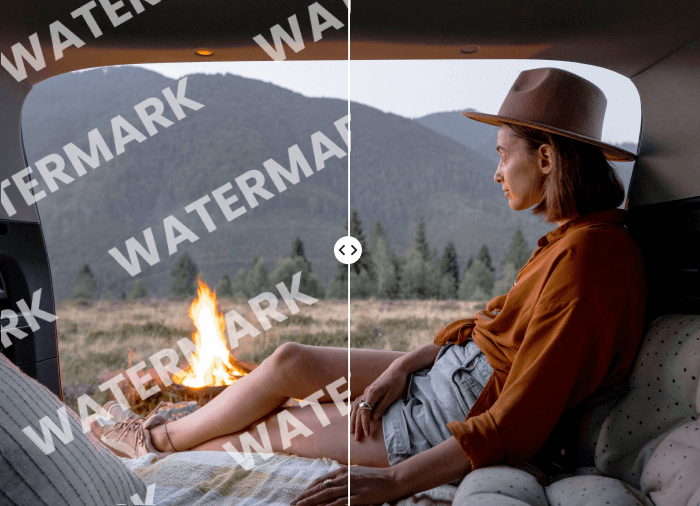
As AI image generators like DALL-E and Midjourney become more popular, a common question arises for creators and businesses: can you legally remove the watermarks on these images for commercial use? The answer isn’t a simple yes or no. It involves a mix of copyright law, platform-specific rules, and ethical considerations. This guide will answer the key questions you have about using AI-generated art in your projects.
What is an AI generation watermark?
An AI watermark is a visible or invisible marker embedded into an image created by an artificial intelligence model. Companies like OpenAI (DALL-E) and Midjourney use them to indicate that the image was not created by a human. These markers can be small logos, subtle patterns, or digital data that helps identify the image’s origin.
The primary purpose of these watermarks is attribution. They show which AI service was used to create the artwork. This helps manage expectations about the image’s origin and can be important for tracking the spread of AI-generated content online. For some platforms, it’s also a part of their branding and usage policy.
Is it legal to remove AI watermarks?
Removing a watermark from an AI-generated image enters a legal gray area. In the United States, the Digital Millennium Copyright Act (DMCA) makes it illegal to remove “copyright management information” if it’s done to conceal infringement. While the copyright status of AI-generated art is still being debated in courts, intentionally removing a watermark could be interpreted as an attempt to hide the image’s origin.
The legality often depends on the terms of service of the AI platform you used. When you sign up for a service like DALL-E or Midjourney, you agree to their specific rules. Violating these terms could lead to your account being suspended or banned, even if you don’t face direct legal action. For commercial projects, the risks are much higher, as misrepresenting the origin of an asset can damage your brand’s reputation.
What are DALL-E’s rules on watermark removal?
OpenAI’s terms for DALL-E are quite clear about content attribution. They state that you should not remove or alter any logos or watermarks that are part of the generated images. Their policy is designed to maintain transparency about the AI’s role in the creative process. This means that if you use a DALL-E image, you are expected to keep the watermark intact.
For commercial use, OpenAI grants you full ownership rights to the images you create, but this is contingent on you following their terms. Removing the watermark is a direct violation of those terms. If you need an image without a visible marker for a project, you must find a way to incorporate it that doesn’t involve altering the original output in a prohibited way.
What is Midjourney’s policy on removing watermarks?
Midjourney’s approach is slightly different and depends on your subscription level. For free or basic plan users, Midjourney’s terms require that you keep the images public and give credit to Midjourney. Removing the watermark or failing to attribute the work properly would violate these terms. The platform is designed around a community model where creations are shared openly.
However, for users on the Pro or Mega plans, Midjourney offers a “stealth mode.” This feature allows you to generate images privately, and these images are not subject to the same public sharing requirements. While Midjourney doesn’t add a visible watermark by default, the principle of honest representation still applies. It’s always best practice to be transparent about the use of AI tools in your commercial workflow.
How do you technically remove an AI watermark?
Technically, removing a watermark from an image can be done using various editing tools. Some people use traditional software like Adobe Photoshop, which requires manual techniques like cloning or content-aware fill. These methods can be time-consuming and may not always produce a seamless result, especially if the watermark is complex or covers a detailed part of the image.
Other, more automated solutions exist as well. A dedicated Watermark Remover can use AI to analyze the image and intelligently erase the watermark without leaving obvious traces. These tools are often faster and more efficient than manual editing. They work by reconstructing the pixels behind the watermark, creating a clean final image.
What are the risks of using edited AI images commercially?
Using an AI image with a removed watermark in a commercial project carries several risks. First, you could face consequences from the AI platform, such as an account ban. Second, you risk damaging your professional reputation. If clients or customers discover you’ve misrepresented AI art as your own or violated terms of service, it can erode trust in your brand.
Furthermore, the legal landscape for AI is still evolving. Using altered AI images could expose your business to future legal challenges as new laws and regulations are established. It’s safer to either use AI-generated images in a way that complies with the platform’s terms or to create original content that doesn’t rely on these tools. Using a high-quality AI Photo Editor to modify the image for your brand, while respecting the source, is a much safer approach than simply removing attribution marks.
Are there ethical concerns with this practice?
Yes, there are significant ethical considerations. Removing a watermark can be seen as a deceptive practice, as it misleads viewers about the origin of the image. Transparency is a key principle in the responsible use of AI. When you present an AI-generated image as something else, you contribute to a culture of dishonesty and make it harder for people to distinguish between human-made and machine-made content.
This is especially important in fields like journalism, advertising, and art, where authenticity and attribution are highly valued. Maintaining the watermark respects the tool’s creators and promotes an honest creative ecosystem. It signals to your audience that you are using technology responsibly and are not trying to pass off AI work as something it isn’t.
What are the best practices for using AI art in projects?
To use AI-generated art safely and effectively in commercial projects, follow a few simple best practices. First, always read and understand the terms of service for the AI platform you are using. Pay close attention to the rules regarding ownership, attribution, and commercial rights.
Second, prioritize transparency with your clients and audience. If you use AI art, disclose it. This builds trust and shows that you are using modern tools responsibly. Finally, consider the subscription level that best fits your needs. Paid plans on platforms like Midjourney often provide more flexible usage rights and features like stealth mode, which are better suited for commercial work.
Summary Takeaway
Ultimately, while it’s technically possible to remove watermarks from AI-generated images, it’s generally against the terms of service of major platforms like DALL-E and Midjourney. Doing so for commercial projects is risky and raises legal and ethical red flags. The safest and most professional approach is to respect the platform’s rules, maintain transparency, and choose a subscription plan that aligns with your commercial needs. This protects your brand, builds trust, and ensures you stay on the right side of an evolving digital landscape.
