
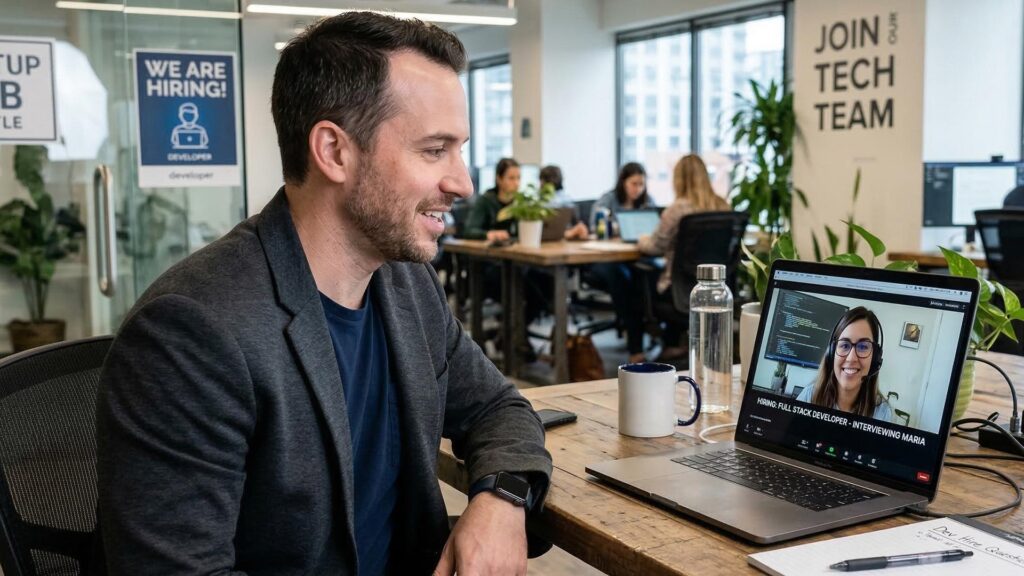
For many startups, hiring the first developer is a major milestone. Hiring the first remote developer, however, introduces an entirely new set of opportunities and challenges.
Remote work has transformed how startups build engineering teams. Instead of limiting hiring to a single city or country, founders can now access a global pool of developers across regions such as Eastern Europe, Latin America, and Asia. This shift has opened doors for startups to scale faster while managing development costs more effectively.
But hiring remotely requires a different mindset and preparation than traditional in-office recruitment. Founders who approach remote hiring strategically can unlock enormous advantages, while those who rush the process often encounter avoidable mistakes.
Here are several things startup founders should understand before hiring their first remote developer.
Understand Why Remote Hiring Is Different
Remote hiring isn’t simply traditional hiring done over video calls. It changes how teams communicate, collaborate, and manage projects.
In an office environment, developers can clarify requirements quickly by walking over to a colleague’s desk. In remote teams, communication must be more structured. Clear documentation, well-defined workflows, and effective project management tools become essential.
Founders who succeed with remote teams usually invest early in building systems that support distributed collaboration.
Look Beyond Technical Skills
Technical ability is obviously important when hiring developers, but it is not the only factor that determines success.
Remote developers must also demonstrate strong:
- communication skills
- time management
- problem-solving ability
- accountability
A developer who writes excellent code but struggles to communicate progress or ask clarifying questions can create friction within a distributed team.
During interviews, founders should focus on understanding how candidates approach problem-solving and how they collaborate with others.
Verify Real Project Experience
One of the most common mistakes founders make is relying solely on resumes or portfolios when evaluating candidates.
A developer may list impressive technologies on their resume, but that does not necessarily mean they have used those tools in complex production environments.
Instead of focusing only on technologies, founders should ask candidates to describe specific projects they worked on. Questions like the following often reveal valuable insights:
- What problem was the project solving?
- What was your role in the development process?
- What challenges did the team encounter?
- How did you resolve technical issues?
Candidates who can clearly explain these details typically have deeper hands-on experience.
Plan for Time Zone Collaboration
Another factor founders often underestimate is time zone coordination.
Remote teams can work extremely well when schedules overlap enough for collaboration. Many startups intentionally hire developers in regions that offer partial time zone overlap with their core team.
This approach helps teams maintain daily standups, code reviews, and design discussions without significant delays.
When evaluating remote candidates, founders should consider how their schedules align with the rest of the team.
Establish a Clear Onboarding Process
Hiring the developer is only the first step. Proper onboarding determines how quickly the developer becomes productive.
Effective onboarding for remote engineers often includes:
- detailed product documentation
- clear development workflows
- access to code repositories and tools
- defined communication channels
- structured task assignments for the first few weeks
Founders who invest time in onboarding processes usually see faster productivity and better collaboration within remote teams. In fact, having a structured onboarding plan can significantly reduce ramp-up time and early-stage confusion. Many teams follow proven frameworks on how to onboard remote developers effectively to ensure new hires can start contributing within days instead of weeks.
Understand the Challenges of Developer Vetting
Evaluating technical talent is difficult, particularly for founders who are not engineers themselves.
Reviewing resumes, conducting coding tests, and verifying experience requires technical expertise and time. Many early-stage startups underestimate the effort required to properly screen developer candidates.
Because of this, some companies explore structured hiring approaches where developers are already technically evaluated before being introduced to employers. This approach helps founders save time while reducing hiring risks, especially for those looking to hire vetted remote developers without going through lengthy screening processes themselves.
Avoid Rushing the First Remote Hire
Speed matters in startup environments, but rushing hiring decisions can create long-term problems.
A poorly aligned developer can introduce technical debt, misinterpret product requirements, or slow development cycles.
Instead of focusing only on how quickly a developer can start, founders should ensure the candidate understands the product vision, communicates clearly, and fits well with the team’s workflow.
The first few engineering hires play a critical role in shaping the product’s architecture and development culture.
Remote Hiring Is Becoming the Startup Standard
Over the past few years, remote development has become increasingly common across the startup ecosystem.
Many companies now operate with distributed engineering teams spanning multiple countries. This model allows startups to access specialized talent, scale engineering capacity quickly, and remain flexible as their products evolve.
For founders willing to adapt their hiring strategies, remote teams can provide a powerful advantage.
The key is approaching the process thoughtfully: understanding how remote collaboration works, evaluating candidates carefully, and building the right systems to support distributed development.
When done well, hiring remote developers can help startups build stronger products faster while unlocking access to talent that would otherwise be out of reach.
